Why Half of First-Year Beekeepers Quit (What the Retention Data Shows)
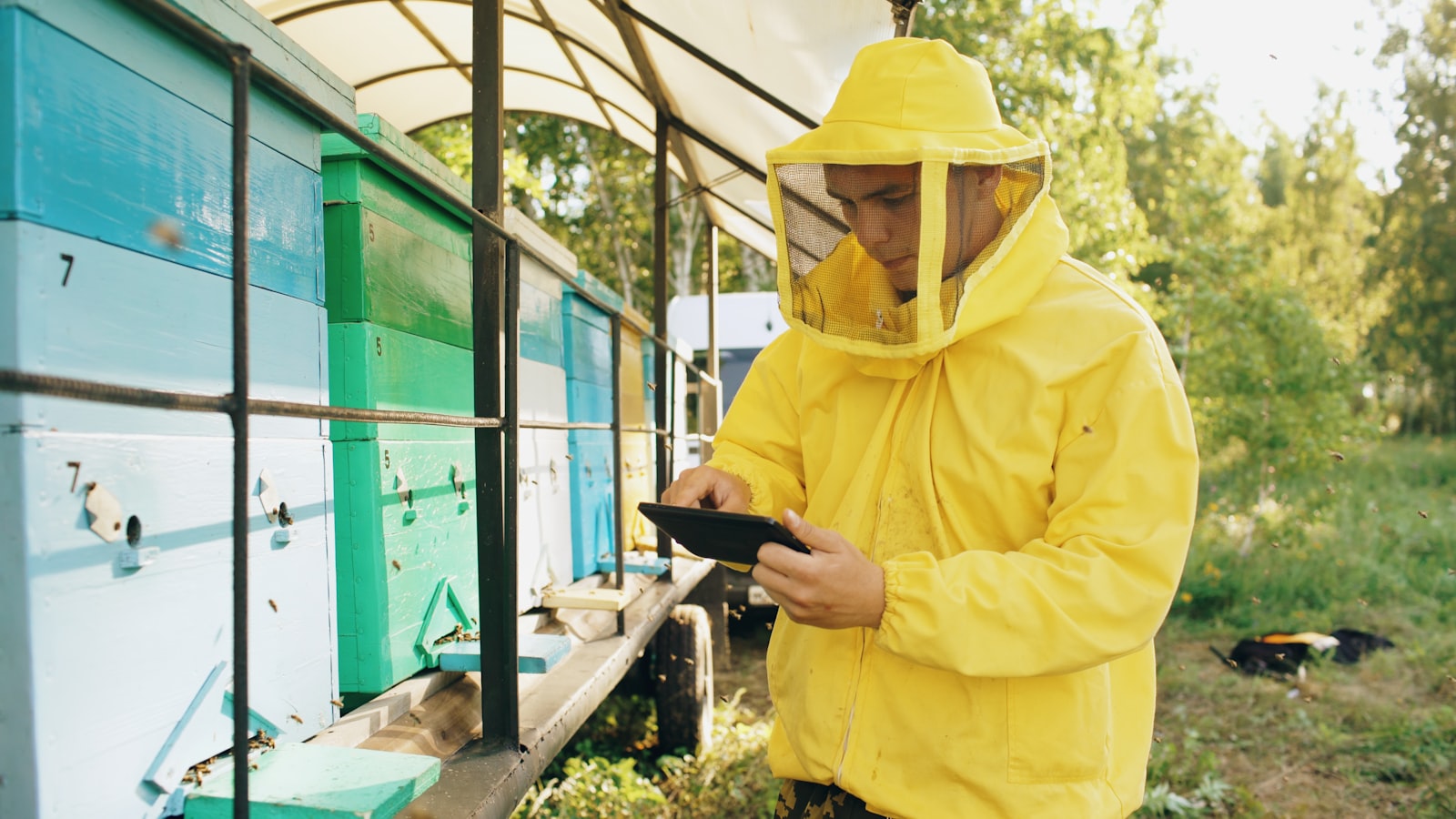
The timeline is predictable enough that experienced beekeepers can recite it from memory.
February or March: the beginner course. Eight to twelve hours in a church basement or extension office. The instructor is enthusiastic. The PowerPoint has too many slides. The attendees are excited. They've already ordered equipment.
April: installation day. The package arrives - a screened box containing 10,000 bees and a caged queen, shipped from Georgia or California. The beekeeper shakes them into the hive with hands that are shaking too. The queen is released. The bees accept her. The hive is alive. Photos are taken. Social media posts are made. The beekeeper checks the hive every three days for a month, which is approximately four times more often than necessary.
May through August: the learning season. The beekeeper learns to read frames, identify brood patterns, spot the queen (sometimes), recognize disease (rarely), and manage the colony with varying levels of competence. They attend club meetings. They ask questions on Facebook groups. They receive contradictory answers. They harvest 15 pounds of honey and give jars to everyone they know.
September through November: the quiet period. The beekeeper feeds sugar syrup, treats for mites (or doesn't), and wraps the hive for winter. The bees are on their own. The beekeeper waits.
January or February: the silence. The hive is quiet. On a warm day, no bees fly from the entrance.
March: the beekeeper opens the hive. A cluster of dead bees, the size of a softball, hangs between two frames. The frames on either side still have honey - the cluster starved inches from food, too small to bridge the gap between frames in the cold. Or the cluster is damp and moldy, dead from moisture condensation. Or the frames are empty of honey - the colony ate through its stores by December and starved in January. Or the bees are scattered dead on the bottom board, wings deformed, Varroa-vectored virus having destroyed the winter bee generation that was supposed to carry the colony through to spring.
The beekeeper stares at the dead colony. They feel responsible. They feel like they failed. They don't know that their experience is statistically typical - that roughly half of all first-year beekeepers lose their colony the first winter. They know only that an animal they cared for is dead, and they think it's their fault.
This is where the dropout happens.
The Numbers
The first-year beekeeper retention rate is not comprehensively tracked at the national level. The data comes from state beekeeping associations, university extension surveys, and beekeeping club membership records. The figures are consistent across sources:
Approximately 40 to 60 percent of people who start beekeeping do not continue past their second year. The primary trigger for dropping out is first-winter colony loss - cited by 60 to 70 percent of departed beekeepers in follow-up surveys. Secondary factors: the time commitment exceeded expectations (20 to 40 hours per hive per year), the cost of starting over after a loss, and the discovery that bee stings are not just an occasional hazard but a routine part of the work.
The retention rate improves dramatically with mentorship. Beekeepers who participate in a formal mentor program - paired with an experienced beekeeper who visits their apiary and provides hands-on guidance - retain at roughly 70 to 80 percent, compared to 40 to 50 percent for unmentored beginners. The mentor doesn't prevent colony loss. The mentor contextualizes it: "This is normal. Here's why it happened. Here's what you do differently next year."
The Apiary Project has free tools for beekeepers - calculators, schedulers, and seasonal guides.
Browse the Tools →Why First-Year Colonies Die
The causes of first-year colony death are overwhelmingly the same causes that kill all honey bee colonies - just amplified by the new beekeeper's inexperience.
Varroa mites. The number one killer, by a wide margin. A first-year colony installed from a package in April starts with low mite levels (the package was shaken from brood-free adult bees, leaving most mites behind in the source colony). By August, the colony has been raising brood for four months, and the mite population has grown exponentially. If the beekeeper doesn't treat - either because they chose the treatment-free approach, because they didn't know treatment was necessary, or because they treated too late - the mite-vectored viruses destroy the fall bee generation. The colony enters winter with a population that can't sustain the thermal cluster through January.
This is the failure mode the beginner course is supposed to prevent. In practice, the messaging about mite management varies wildly between clubs, between YouTube channels, between beekeeping philosophies. A new beekeeper can easily emerge from the information landscape believing that mite treatments are optional, that "natural beekeeping" means letting the colony figure it out, or that sugar dusting is an effective mite treatment (it isn't). The consequences of these beliefs manifest as dead bees in March.
Insufficient stores. A first-year colony has to build all its comb from scratch, raise its population from 10,000 to 50,000, and stockpile enough honey to survive 4 to 6 months of winter - all in one season. In a good year with a strong nectar flow, this is achievable. In a marginal year - late spring, drought-shortened flow, poor forage - the colony enters winter light. The beekeeper may have harvested honey (taking what they thought was surplus), leaving the colony short. Winter feeding (sugar syrup or fondant) can compensate, but new beekeepers often don't know how much is enough or when to start.
Queen failure. Package queens are commercially reared and have variable quality. Some fail within the first season - they stop laying, their brood pattern deteriorates, they're superseded by the colony in late summer. A supersedure in August or September in northern climates is risky - the virgin queen must mate successfully, and drone availability declines in fall. A poorly mated queen produces insufficient brood for the winter population.
Moisture. Winter colony death from moisture is a ventilation problem. Bees metabolize honey and exhale water vapor. In a poorly ventilated hive, the moisture condenses on the inner cover and drips cold water onto the cluster. Wet, cold bees die faster than dry, cold bees. Experienced beekeepers manage ventilation with upper entrances, moisture quilts, or tilted inner covers. New beekeepers often don't know these techniques until after they've found the first dead, moldy colony.
The Emotional Dimension
Colony death in any context is discouraging. But first-year colony death carries a particular emotional weight that experienced beekeepers sometimes underestimate.
The new beekeeper has typically formed an emotional attachment to the colony. They named the queen. They watched bees come and go from the entrance, every day, for eight months. They learned to identify individual behaviors. They anthropomorphized the colony's collective behavior into something like personality - "my bees are gentle," "my bees are productive," "my bees seem agitated today." The colony as superorganism invites emotional projection in a way that a herd of cattle does not.
When the colony dies, the beekeeper experiences something closer to a pet death than an agricultural loss. The grief is disproportionate to the economic value of the colony ($150 to $300 in bees and queen) and entirely proportionate to the emotional investment.
And then the guilt. The beekeeper reviews every decision: Should I have treated for mites earlier? Should I have fed more? Should I have wrapped the hive differently? Was it something I did? The answer is often "probably" - most first-year colonies die from management failures that the beekeeper couldn't have known to avoid without the experience they didn't yet have. The skill to prevent the death requires having experienced the death. The circularity is cruel.
The Second-Year Decision
The moment that determines whether someone becomes a beekeeper or becomes someone who used to keep bees occurs in March of the second year, standing in front of a dead hive with empty equipment and a decision to make.
Buy new bees? That's another $150 to $300. Clean and inspect the equipment for disease? That's a Saturday. Accept the risk of another winter loss? That's emotional.
The beekeepers who stay make the purchase. They install a new package or nucleus colony. They manage the second colony with the knowledge they gained from losing the first. The second winter survival rate is substantially higher - not because the bees are different, but because the beekeeper is different. They treat for mites on time. They don't harvest too much honey. They manage ventilation. They know what 60 pounds of honey in a hive body feels like when you heft it. They learned these things by failing to know them the first time.
The beekeepers who leave put the equipment in the garage, where it sits for three years before being sold on Craigslist at 40 cents on the dollar.
The Structural Problem
The 50 percent first-year dropout rate is a structural problem for beekeeping, not just a personal one. Every beekeeper who drops out after a single season represents:
A net cost to the mentor and the club who invested time in training them. A reduction in the local bee population (the dead colony's genetics are lost). A consumer of equipment that could have been used productively. And - increasingly, as the hobbyist segment drives demand for packages and nucleus colonies - an annual consumer of bees that could have been productive in an experienced beekeeper's apiary.
The beekeeping industry depends on a steady inflow of new beekeepers to replace those who leave (hobbyists have natural attrition even after the first year - life changes, moves, health issues). When half of the inflow drops out in 12 months, the pipeline is inefficient. The clubs, the beginner courses, the mentor programs - they're all fighting the same battle: converting enthusiasm into persistence through the inevitable first loss.
The Information Gap
The beginner course teaches biology, equipment, seasonal management, and honey harvesting. It does not adequately teach loss.
Experienced beekeepers know that losing colonies is part of beekeeping. They know the annual loss rate is 30 to 45 percent nationwide. They know that some winters are worse than others, that some colonies die despite excellent management, and that the measure of a beekeeper is not whether they lose colonies but how they respond to the loss.
The beginner course typically mentions "winter losses" as a topic, allocates 15 minutes to it, and moves on to spring management. The emotional preparation for colony death receives approximately zero minutes. No one stands in front of the class and says: "There is a better-than-even chance that your first colony will be dead by March. This is statistically normal. It will feel like a personal failure. It is not. Your response to this event will determine whether you are a beekeeper."
That speech - or something like it - might be the most valuable 60 seconds in the entire beginner curriculum. It's the speech that reframes colony death as data rather than disaster, as the tuition payment for the education that makes the second year survivable, as the expected outcome for a new practitioner of a skill that takes years to develop.
The bees don't need the speech. The beekeeper does. And the ones who don't get it are the ones standing in the garage in April, looking at a stack of empty equipment and a Craigslist ad that says "beekeeping supplies - used one season."