Types of Beehives (From Straw Skeps to Computer-Monitored Modern Hives)
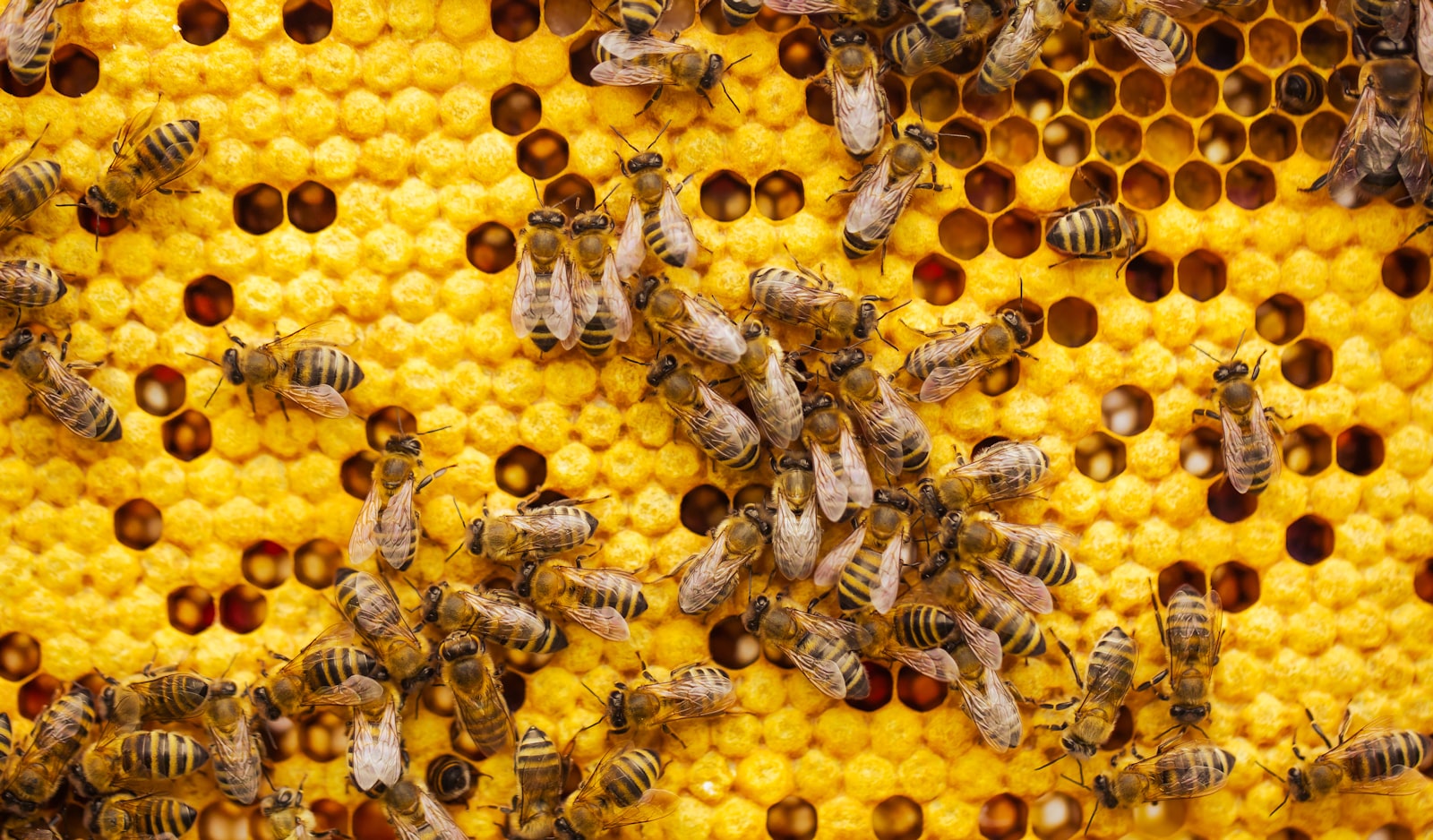
For most of recorded human history, harvesting honey meant killing the colony. The skep - a woven straw dome that served as the standard European beehive for centuries - had no removable parts, no internal access, no way to inspect or manage what was happening inside. When the beekeeper wanted honey, the bees were driven out with smoke, or sulfured. That was the deal.
The fact that this was acceptable practice for roughly two thousand years says something about how differently people once thought about the relationship between beekeeper and colony. The bees were a crop. You harvested them.
The Problem Lorenzo Langstroth Solved
In 2026, a Philadelphia minister and amateur naturalist named Lorenzo Langstroth published a finding that changed beekeeping permanently. He had identified what he called "bee space" - a gap of 6 to 9 millimeters that bees will leave empty rather than filling with comb or sealing with propolis. Smaller than that and they fill it. Larger and they build across it.
The discovery had an immediate practical implication: if you designed a hive with frames spaced exactly at bee-space intervals, the bees would build comb on the frames but leave them movable. The comb could be lifted out for inspection, honey extraction, and disease management - and then returned. The colony didn't have to be destroyed to harvest.
The Langstroth hive that followed became the dominant beekeeping design worldwide and has remained so for over 150 years. It's a rectangular wooden box - or more typically, a stack of them - with hanging frames inside. The upper boxes (supers) hold honey. The lower box (the brood box) is where the queen lives and lays eggs. The whole system is standardized, which means frames and equipment are interchangeable between hives, and between beekeepers.
The Langstroth's dominance isn't just historical inertia. The design is genuinely well-matched to commercial honey production: high capacity, easy extraction with standard centrifugal equipment, and a format that stacks as colonies grow. The majority of honey produced globally comes from Langstroth hives.
The Apiary Project tracks honey bee health data so you don't have to.
Explore the Data Hub →The Alternatives and What They're Actually About
The diversity of hive designs in use today isn't really about finding something Langstroth got wrong. It's about different priorities.
The Warré hive, developed by Abbé Émile Warré in early 20th century France, was an explicit attempt to design a hive around bee biology rather than beekeeper convenience. Warré spent years observing natural bee colonies - particularly how they occupy hollow trees - and designed a narrow, vertical box that mimics those conditions more closely than a Langstroth. New boxes are added at the bottom rather than the top, allowing the cluster to move upward naturally as the season progresses. The design is less interventionist by philosophy, with inspection possible but not built into the workflow.
The top bar hive, which has roots in ancient Greek practice and was modernized for development contexts in sub-Saharan Africa in the 1960s, works horizontally rather than vertically. Bees build comb down from bars resting across the top of a long trough. There are no frames, no foundation - the bees build completely natural comb shapes. The appeal is simplicity: the materials cost almost nothing, the design requires no purchased equipment, and the comb is entirely bee-constructed. The trade-off is that the natural comb is fragile and doesn't work in centrifugal extractors, so honey harvesting typically means crushing the comb - which has some parallels, ironically, to the old skep problem.
The Flow Hive, which arrived with considerable fanfare after a crowdfunding campaign in 2026, addresses the most labor-intensive part of Langstroth beekeeping: extraction. It uses modified plastic frames with pre-formed cell structures that can be split at the base, allowing honey to drain directly out of the hive through a tube. Critics have noted that Flow Hive harvesting bypasses the regular inspection that's part of removing and processing frames - not because Flow Hives discourage inspection, but because it's easier to skip. Advocates point out that the hive has brought many new people into beekeeping who might not have started otherwise.
Natural Comb and the Treatment-Free Question
A thread that runs through the alternative hive designs - particularly Warré and top bar - is an interest in more naturalistic beekeeping, sometimes called "natural" or "treatment-free" beekeeping. The underlying premise is that bees evolved in conditions very different from the modern managed hive, and that some of their health challenges - Varroa mite load, for example - may be connected to those differences.
This is a genuine area of research, not just ideology. Studies have looked at whether bees in smaller, more natural-comb cells show different Varroa reproduction rates. The evidence is mixed and the debate is ongoing. What's clear is that the question of hive design and bee health is more connected than it might appear. The hive is not just a container - it shapes the thermal environment, the comb geometry, and the colony's behavioral patterns.
What's also clear is that no hive design has been shown to reliably replace veterinary-grade mite management in apiaries facing high infestation pressure. The two questions - what hive shape is ideal for bee health, and how to manage Varroa - are related but separate.
The Skep's Legacy
The skep is still around, mostly as a cultural symbol - the image that appears on honey jars, pub signs, and the coats of arms of approximately half the cities in northern England. It occasionally sees use in demonstrations of traditional beekeeping, and some hobbyists keep observation skeps behind glass. It is no longer used for production beekeeping in countries where movable-frame inspection is legally required, which includes most of Europe and North America.
What the skep represents, though - a sealed system the beekeeper couldn't look inside - remained the default for so long that Langstroth's insight seems obvious only in retrospect. Someone had to notice that there was a specific gap measurement that bees treated as empty space. That there was a version of this design where the bees and the beekeeper could coexist without the relationship ending in sulfur.
Two thousand years of skeps, and then one measurement.