What Do Bees Do in Winter? The Winter Cluster Explained
A colony can starve surrounded by food. It's one of the stranger facts about winter bees.
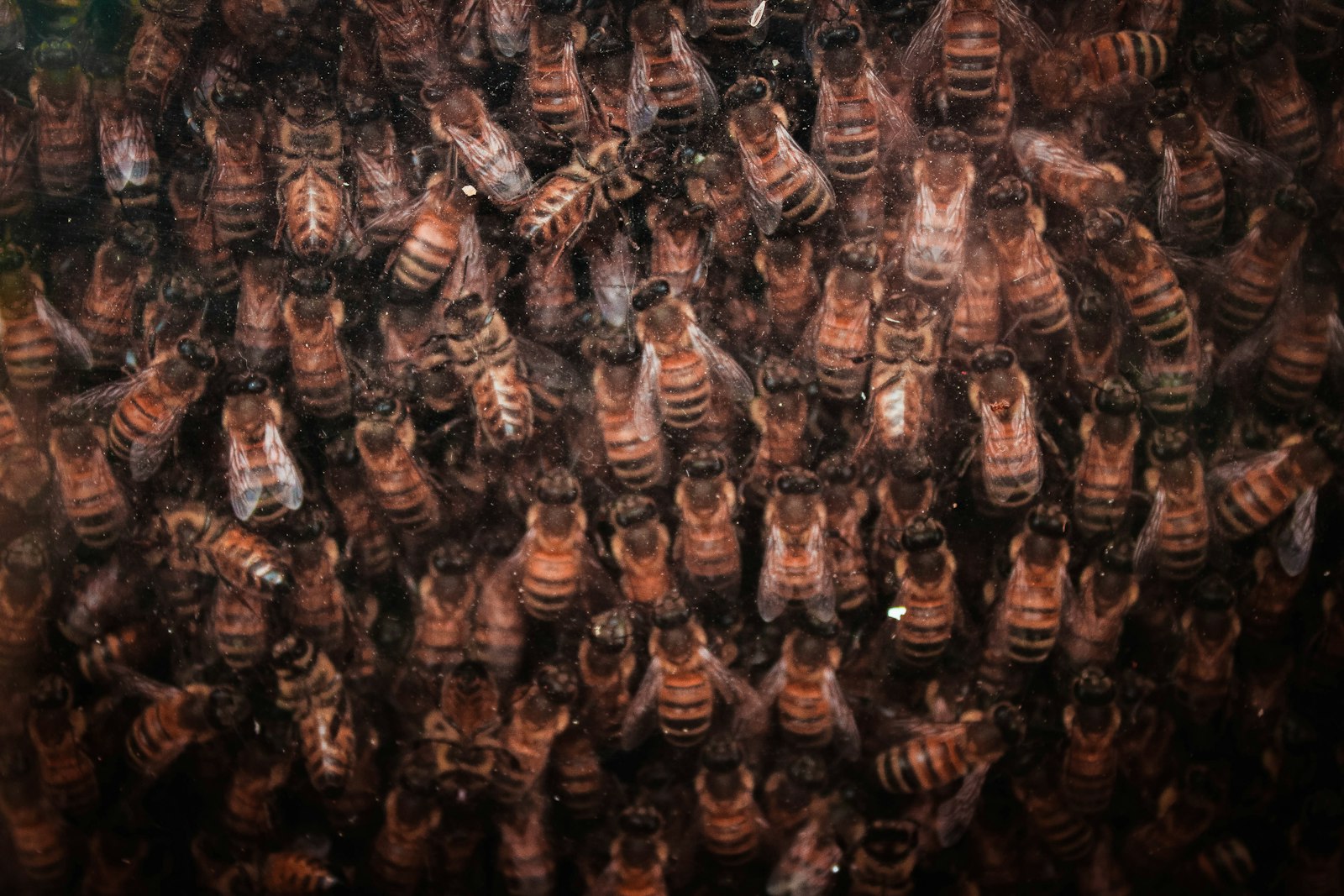
Imagine a cluster of honey bees in February, packed together in a tight ball roughly the size of a cantaloupe. A few inches above them, fifty pounds of honey. Below them, more honey. But the cluster can only move into space it can warm, and warming takes bodies. The colony has been shrinking since September. At some point in a bad winter, the gap between cluster and stores becomes too wide to bridge - too cold, too few bees, not enough metabolic heat - and the colony dies in a hive full of food.
This scenario, called isolation starvation, is how a lot of hives are lost in winter. Not from lack of stores. From the geometry of cold.
What Honey Bees Don't Do in Winter
The first thing to understand is what isn't happening. Honey bees don't hibernate. They don't enter any kind of torpor or reduced metabolic state. They remain fully conscious, fully active, burning energy continuously to maintain heat.
This distinguishes them from other bee species. Bumble bee queens hibernate alone in the soil. Solitary bees - mason bees, leafcutter bees - overwinter as eggs or pupae inside individual cells, metabolically inert until spring. The honey bee colony's winter survival strategy is the opposite: maintain a living, burning, active core of insects through the cold season.
This strategy requires enormous food reserves. A colony entering winter in good shape typically has 40 to 60 pounds of stored honey. The cluster consumes it slowly but continuously - about 30 to 60 pounds across a full winter depending on cluster size, temperature, and how long winter lasts. Smaller clusters are actually more efficient at thermoregulation relative to their size, which is counterintuitive but has to do with the surface-area-to-volume ratio of the ball.
The Apiary Project tracks honey bee health data so you don't have to.
Explore the Data Hub →The Physics of the Cluster
The winter cluster forms in autumn as temperatures drop. Workers release the loose social spacing of the active season and pull together into a dense ball. The queen moves to the center.
Inside, worker bees vibrate their flight muscles - the same muscles that power flight, used here purely as heat generators. The center of the cluster maintains roughly 80 to 93°F (27 to 34°C). The outer shell of the cluster, where bees are packed tightly together with minimal movement, acts as insulation. Outer bees are cooler - down to around 50°F (10°C) at the surface - but rotate periodically toward the center to warm themselves before cycling back out.
The cluster is not stationary. It moves slowly upward through the hive as bees consume honey below them, and it can shift sideways to reach adjacent stores. This movement is continuous but very slow - the cluster doesn't break and reform, it migrates as a unit. Cold snaps that drop the temperature faster than the cluster can respond can temporarily freeze it in place, which is when isolation starvation becomes a real risk.
Winter Bees Are Different Bees
The workers that survive winter aren't ordinary workers. They're a physiologically distinct form.
Worker bees in summer live roughly 6 weeks. The combination of foraging stress, wing wear, and energy expenditure depletes them quickly. Winter bees, which are produced in late summer and early autumn when the brood cycle is winding down, are physically different: they have more developed fat bodies (the bee equivalent of liver function, used for energy storage and protein metabolism), higher levels of a protein called vitellogenin, and significantly lower activity levels once clustered.
These fat bodies allow winter bees to survive for 4 to 6 months - the same genetic program, the same species, but a different physiological expression tuned to the different requirements of the season. The mechanism that triggers this shift is believed to involve day length, decreasing brood to nurse, and dietary factors. A colony that raises brood too late into autumn may not produce enough proper winter bees, which is one of the ways colonies enter winter under-prepared.
The queen stops laying eggs around October in most temperate climates, giving her ovaries a rest period that appears to reset certain physiological systems. She resumes as early as late December or January in some regions - not in response to warming temperatures but to day length, which begins increasing after the winter solstice. By February, a healthy colony has a growing brood nest even while snow is on the ground outside.
The Drones Are Gone
One of the cleaner seasonal events in a honey bee colony is what happens to drones in late summer and autumn. Drones - the male bees - don't forage, don't thermoregulate, and can't survive without worker care. Once the colony begins shifting to winter mode, workers stop feeding drones and begin harassing them toward the hive entrance. The drones are expelled. Outside in autumn temperatures, without the colony to sustain them, they die within days.
The behavior is systematic and not particularly gentle to observe. Workers physically drag drones toward the exit. The drones, which lack stingers, can't resist effectively. By October in most of the temperate US and northern Europe, the drone population of a healthy colony is zero.
A colony that still has drones in November is a signal of something off - possibly a laying worker, a poorly-mated or failing queen, or a colony that hasn't made the expected seasonal transition.
What Happens When It Goes Wrong
Starvation is the most common cause of winter colony loss, but it takes several forms. Isolation starvation - cluster cut off from stores - is one. Another is simply insufficient stores entering winter. A colony that didn't build adequate honey reserves in summer goes into winter thin and runs out before spring.
Cold temperature itself kills healthy, well-fed colonies less often than people assume. A robust cluster in a well-ventilated hive can survive temperatures well below zero Fahrenheit if it has adequate stores and a large enough population. The issue is usually a combination: marginal stores, smaller-than-ideal cluster, extended cold snap. Any one factor alone might be survivable. Together, they tip the balance.
Varroa mite load entering winter is increasingly identified as a primary factor in winter mortality in managed colonies. Mites reproduce in capped brood through summer, and if populations are high in August and September, they damage the fat bodies of the winter bees being produced - the exact bees the colony needs to survive. A colony with heavy mite load in early autumn may produce a winter cohort that looks adequate in number but lacks the physiological reserves to last until spring.
The Spring Signal
The transition out of winter is gradual. The queen's renewed laying in January or February produces the first new workers, which begin emerging 21 days later. These new workers are fewer than needed to replace those dying off, so the colony actually continues to contract into early spring before the population inflection point arrives - the paradox of spring dwindle that many first-year beekeepers find baffling.
The colony that comes out of winter is not the same one that went in. Most of the summer bees are gone. The population may be as small as 10,000 workers - a third of peak strength. The winter bees that survived have been waiting, patient, burning honey in the dark for months.
The first warm day above roughly 50°F (10°C) breaks the cluster. Bees make cleansing flights - their first flights in months, to void waste they've been holding since autumn. The hive sounds different: louder, more active. Pollen begins arriving within days as early bloomers like snowdrops and willows open.
The colony is alive. It ran the numbers correctly: enough bees, enough food, enough heat. The geometry of cold turned out to be navigable after all.