Why Do Bees Swarm - The Colony Logic Behind the Spectacle
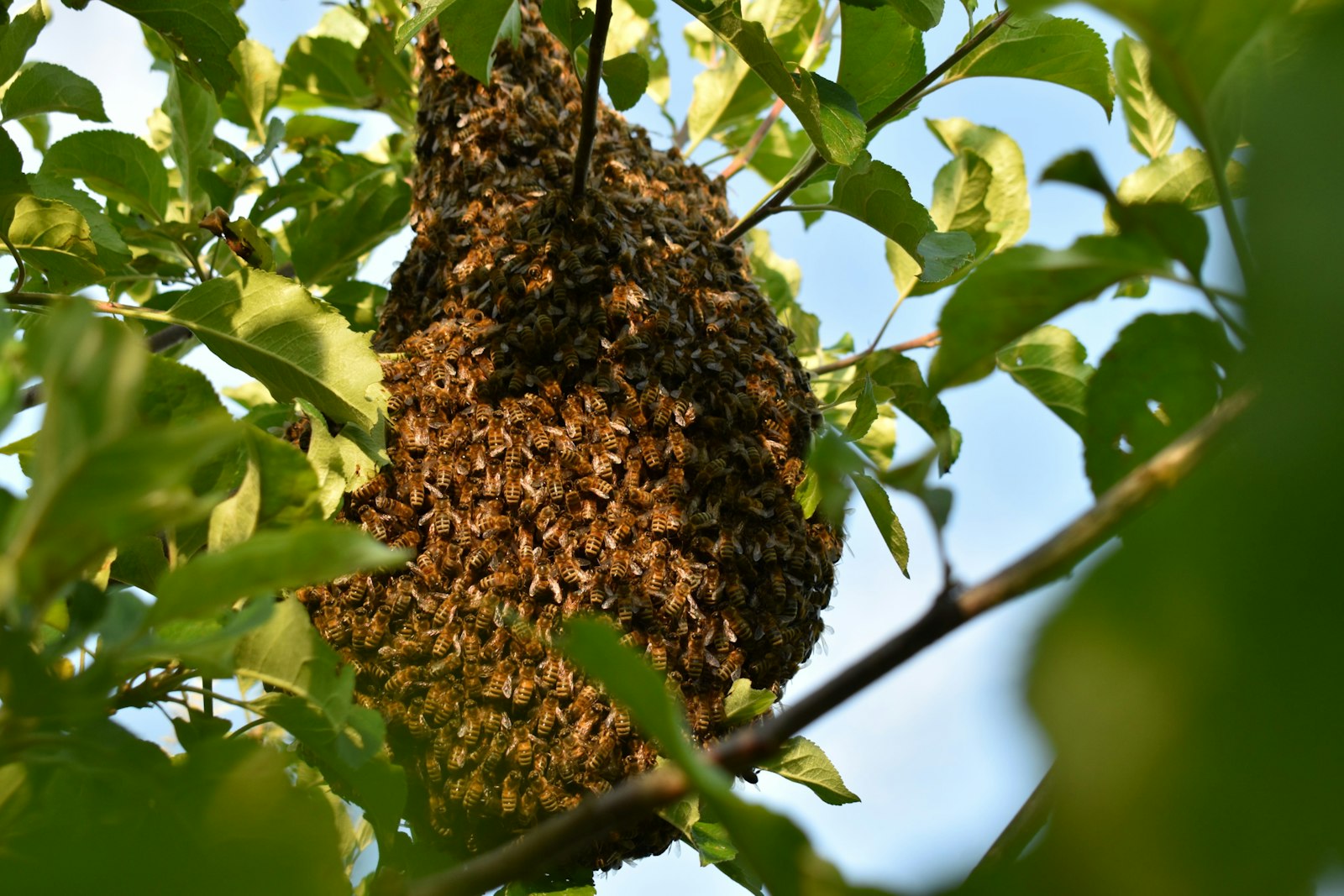
A cluster of 20,000 bees hanging from a tree branch in someone's backyard looks, to the uninitiated, like a disaster in progress. It is actually one of the more orderly events in the natural world. The bees are calm. They're clustered tightly around a queen. Scouts are flying in and out, reporting back on potential nest sites. There's a decision being made, and the process for making it has been refined over millions of years.
Swarming is how honeybee colonies reproduce. Not individual bees - the colony itself, as a superorganism. When a hive swarms, a new colony is born.
What Triggers a Swarm
The immediate trigger is almost always space. A colony that has been building population through spring - a queen laying 1,500 to 2,000 eggs per day, new bees adding to a total that can reach 60,000 to 80,000 at peak - eventually runs out of room. Brood frames are fully occupied. Honey storage is at capacity. Foragers are returning with nectar and finding nowhere to put it. The physical constraints of the hive are pressing against the colony's instinct to keep growing.
When the congestion reaches a certain threshold, the colony begins preparing to swarm. Workers construct queen cells - elongated, peanut-shaped cells typically found along the bottom edges of frames - and the queen begins laying eggs in them. These cells will produce the next queen for the original hive.
About a week after queen cells are capped, before the new queen emerges, the old queen leaves. She takes roughly half the colony's workers with her - sometimes 10,000 to 20,000 bees. This is the swarm. The remaining bees stay behind with the developing queen cells and will have a new queen within days.
The Apiary Project tracks every major threat to US honey bee colonies.
Explore the Issues Hub →The Cluster and the Decision
The swarm doesn't fly directly to a new home. It can't - the scouts haven't found one yet. Instead, the swarm clusters temporarily on whatever surface is convenient: a tree branch, a fence post, occasionally a mailbox or lawn chair. The cluster protects the queen at its center and waits, sometimes for a few hours, sometimes for a day or two, while scouts do their work.
Scout bees from the swarm fly out in all directions searching for suitable nest sites. A suitable site has specific requirements: a cavity of roughly 40 liters in volume, an entrance small enough to defend but large enough to use, ideally elevated, ideally facing south or southeast in the northern hemisphere, ideally dry and protected from drafts. Scouts that find candidate sites return and perform waggle dances - the same communication system honeybees use for reporting food sources - to indicate the location and, crucially, to signal their enthusiasm for the site.
Here's where the process becomes genuinely remarkable. Scouts for different candidate sites dance simultaneously. Scouts that found better sites dance more vigorously and longer. Other scouts watch, visit the sites they're seeing danced about, form their own assessments, and begin dancing for whichever site they find most promising. Over hours or days, the consensus shifts toward the best site. A critical threshold is reached - most scouts dancing for the same location - and the swarm departs.
This is distributed decision-making without any central authority. No single bee knows the full picture. The quality assessment emerges from the aggregated behavior of hundreds of individual scouts, each reporting honestly about what they found. Researchers studying swarm decision-making have described it as one of the most striking examples of collective intelligence observed in any animal.
The Seasonal Pattern
Swarm season in the United States runs roughly from late March through June, peaking in April and May in most regions. The timing tracks colony buildup: swarming happens when population expansion is fastest, before the main nectar flow begins to slow it down naturally.
Southern states see swarm season earlier - Florida and Texas can have active swarms in March. Northern states, including the upper Midwest and New England, see peak swarm activity in May and into June. Higher elevations follow their own compressed schedule.
A single colony can swarm multiple times in a season. The first (primary) swarm leaves with the old, mated queen. If the colony's population is still substantial after the primary swarm, subsequent swarms - called afterswarms or casts - can leave with virgin queens before they've had a chance to mate. These secondary swarms are typically smaller and less likely to establish successfully.
What Happens to the Original Hive
The bees left behind in the original hive aren't in disarray. They have developing queen cells, ample population, and established comb, stores, and foraging routes. The new queen will emerge within about a week, take her mating flights over the following days (mating with drones from other colonies in the area), and begin laying within two to three weeks of the swarm departing.
The colony experiences a temporary brood break during this transition - the period between the old queen leaving and the new queen beginning to lay. This brood break has an interesting secondary effect: Varroa mites, which reproduce in capped brood cells, have no brood cells to enter during this period. Their population growth pauses. Colony losses in colonies that swarmed naturally sometimes show lower Varroa pressure for this reason, though the effect is temporary.
Swarms Are Not Aggressive
The cluster of bees on your neighbor's tree branch is, despite appearances, not a threat. A swarm has no hive to defend. It has no honey stores, no brood, no established nest. The bees are focused entirely on staying clustered and awaiting the decision about where to go. Defensive behavior in honeybees is triggered by the need to protect the hive - and a swarm has no hive yet.
This doesn't mean a swarm should be provoked or disturbed. Any bee will sting if it feels individually threatened. But the mass defensive response associated with disturbed hives doesn't apply to a resting swarm. People have walked through swarm clusters without being stung. It's not advisable, but it illustrates the point.
Beekeepers collect swarms deliberately - setting up boxes or bags to catch the cluster before it moves on - because a swarm represents a free, locally adapted colony ready to be hived. A swarm that established a nest in a wall cavity or other inconvenient location is a different and more complicated situation, but a swarm in a tree is just a colony between homes, briefly visible in a way that hive-dwelling bees never are.
What looks alarming is, from the bees' perspective, perfectly ordinary. They've been doing it since long before there were people around to watch.