US Colony Loss Rates (Why State Numbers Tell Very Different Stories)
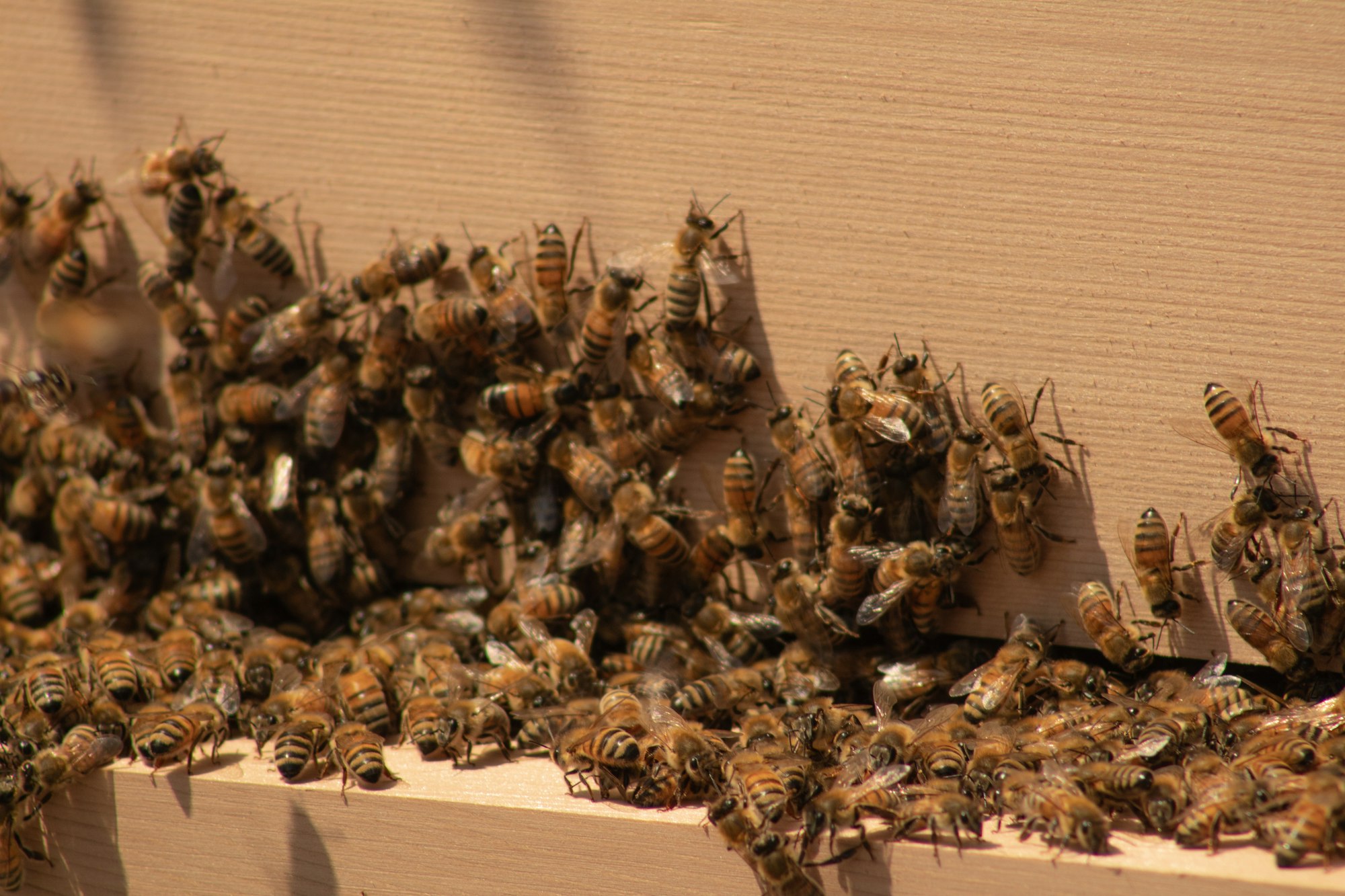
The Bee Informed Partnership published its first national colony loss survey in 2007, covering the 2006-07 winter season. The number they found was 32%. Researchers called it alarming. Eighteen years later, the 2024-25 annual loss figure came in at 55.6% - the highest the survey has ever recorded, nearly double where it started.
Here's the thing about 55.6%. It sounds like a category error. You don't lose more than half of anything important and keep going. But American beekeeping does keep going, because the industry has built an extraordinary replacement infrastructure around the fact that colonies die constantly and in large numbers. The count stays stable. The treadmill just runs faster every year.
What the national figure doesn't tell you is how differently this plays out across states. The same species, the same mite, the same basic problem - and yet what a beekeeper in Florida is dealing with in January looks almost nothing like what a beekeeper in North Dakota is managing in January. Geography matters in beekeeping in ways that get flattened entirely when you look only at a single national percentage.
The Two Ways the Data Gets Made
Two organizations track US colony losses at meaningful scale, and they measure different things.
The Bee Informed Partnership runs voluntary annual surveys. Beekeepers report what they lost over winter and over the full year. The data is self-reported, which creates a selection problem immediately: beekeepers who participate in surveys tend to be more engaged and better informed than the general population of hive owners. The ones who lost every colony often don't complete year-end surveys. So the BIP numbers probably understate losses somewhat, even before you account for the beekeepers who don't know the survey exists.
The USDA National Agricultural Statistics Service takes a different approach. Rather than asking about mortality directly, NASS counts colony inventories at four points each year - January, April, July, October - and tracks the numbers over time. This is cleaner in some ways, messier in others. A colony that dies in February and gets replaced by a package in April is invisible in the July count. High turnover can happen without leaving a mark.
What both approaches do reliably is show patterns that persist across multiple years. The year-to-year swings are noise. The decade-long trend is the signal, and that trend has been running in one direction since the first survey.
The Apiary Project tracks every major threat to US honey bee colonies.
Explore the Issues Hub →Where the Bees Actually Are
Before getting to losses, the colony distribution map is worth understanding, because it's much stranger than most people expect.
California hosts the largest concentration of honey bee colonies in the country for roughly six weeks every winter - somewhere between 1.6 and 1.8 million, depending on the year. That's about 70% of the entire US commercial bee population, concentrated in a handful of Central Valley counties, all arriving within the same narrow window. They're there for almond pollination. When that's over, they scatter.
By July, North Dakota is frequently the state with the highest colony count in the country. The Northern Plains - North Dakota, South Dakota, Montana - produce a disproportionate share of US honey specifically because the conditions are good: abundant prairie forage, relatively low pest pressure during the growing season, low humidity that helps bees ripen honey quickly. Then winter arrives, and the same conditions that make summer productive create the kind of losses that require serious management to survive.
Florida runs the inverse pattern. Mild winters, year-round bloom from invasive Brazilian peppertree and other species - it's the primary overwintering destination for commercial operations, holding somewhere around 400,000 to 500,000 colonies through the cold months. But Florida's subtropical climate that makes it attractive for overwintering also creates year-round small hive beetle pressure. The beetle is native to sub-Saharan Africa. It arrived in the late 1990s and has been thoroughly at home in Florida's warmth ever since.
Why State-Level Losses Diverge
The same varroa mite causes different amounts of damage in different places, and the reasons are specific enough to be worth tracking.
In Northern states with genuine winters, colonies go through a broodless period. Varroa reproduces in capped brood. No brood means no reproduction, which gives chemical treatments and natural mite mortality a window to reduce infestations. Florida and other warm-climate states often have colonies raising brood year-round, removing that natural suppression window entirely. The mite never stops.
Colony density amplifies everything. During California almond pollination, 1.5 million colonies sit within a few hundred miles of each other. Robbing behavior, drift, and equipment moving between operations create pathogen transmission pathways that simply don't exist when colonies are scattered across a rural landscape. Operations that winter in Florida, move to California in February, and summer in the Dakotas are exposing their bees to both high-density disease pressure and the stress of two 2,000-mile truck journeys every year.
Pesticide exposure concentrates in certain agricultural regions in ways that show up in residue testing. The Corn Belt - Iowa, Illinois, Indiana, Ohio - represents some of the highest pesticide application density in the country. Neonicotinoid seed treatments on corn and soybeans coat enormous acreages. Colonies foraging there carry elevated pesticide residues in pollen and wax. The relationship between sublethal pesticide exposure and colony health is well-documented in laboratory settings. Isolating its contribution to actual field losses, as distinct from varroa and everything else, is considerably harder.
Then there's forage quality, which is easy to overlook because it's less dramatic than parasites and pesticides. Northern Plains prairie offers diverse, abundant pollen through the summer months. Monoculture agriculture provides episodic nectar flows but limited nutritional variety. California's almond orchards deliver massive, reliable pollination income for commercial operators but virtually no dietary diversity - protein-poor pollen for two weeks, then months of very little. A colony that's nutritionally stressed is a colony that handles every other stressor worse.
The Commercial-Hobbyist Divide, by Region
The BIP data consistently shows commercial operations losing more colonies annually than hobbyists - typically 10 to 15 percentage points more. But that gap isn't the same everywhere.
In the Northern Plains, commercial operators who move colonies to optimal summer forage locations perform relatively well during honey production season. Winter is the vulnerable period, and commercial operators there have more resources for proper winterization than most hobbyists. The gap between the two narrows.
In the Southeast, the dynamic inverts. Year-round varroa pressure combined with small hive beetle stress means colonies need constant active management. A commercial operator running one employee per 1,000 colonies can't provide the per-colony attention that catches problems early. A hobbyist with 20 hives can inspect frequently and intervene fast. The gap widens.
California represents its own category. The almond pollination rental fee - $200 to $250 per colony in recent seasons - creates an economic logic that accepts colony stress as a cost of doing business. Operations budget for almond-associated losses because the revenue justifies it. That's a rational calculation, but it pushes commercial loss figures higher in ways that have nothing to do with management incompetence.
The Hawaii Exception
Hawaii's colony loss history reads like a controlled experiment that nobody designed on purpose.
Federal law prohibits bee imports to the islands, and the state has restricted bee movement since 1908 - fourteen years before the federal Honeybee Act. This isolation meant Hawaii had no Varroa destructor until 2007, nearly two decades after varroa arrived on the mainland. For those two decades, Hawaiian beekeepers reported loss rates consistently lower than any other state. The Big Island still had no varroa as late as 2006.
Varroa arrived in 2007. Small hive beetle followed in 2010. Within a few years of the first varroa detection, Hawaiian loss rates had approached mainland levels. A century of effective isolation collapsed within a decade of the first breach.
The state now restricts inter-island movement as well, trying to preserve islands where certain pests haven't yet established. It's a rearguard action, defending smaller perimeters after the outer wall is gone. Whether it holds longer than the original fortress is an open question.
The Replacement Treadmill
Annual loss figures get reported and discussed as if they represent net losses. They don't.
A 40% annual loss does not mean the US ends the year with 40% fewer colonies. It means 40% of colonies died, and beekeepers replaced them - by splitting surviving colonies, buying package bees and nucleus colonies, purchasing queens. The USDA colony count has remained relatively stable over the past decade, hovering around 2.5 to 2.7 million. The losses are real. So is the replacement.
What changes as the loss percentage rises is the economics of staying on that treadmill. A three-pound package of bees costs $150 to $200. A nucleus colony runs $200 to $350. A commercial operation losing 40% of 3,000 hives needs to replace 1,200 colonies - a replacement cost of $180,000 to $240,000 before labor. At 55%, that's 1,650 colonies and upward of $330,000. The math doesn't stop working, but it gets considerably worse.
This is why the 2024-25 record loss figure matters differently than it might appear at first. The question isn't whether the industry survives this year. It's whether the replacement economics remain viable if the trend line keeps running where it's been running.
What the Trend Has Been Trying to Say
Pre-varroa baseline winter colony mortality was roughly 5 to 10%. Varroa arrived in US apiaries in 1987. The 2006-07 BIP survey - the first systematic national measurement - found winter losses at 32%. By the time of 2024-25, the annual figure hit 55.6%.
That's eighteen years of surveys. Each one taken after significant investment in varroa treatment research, increased beekeeper training, and wider adoption of integrated pest management. The management has improved. The losses have improved in the opposite direction.
Varroa-resistant breeding programs represent the most credible long-term path toward changing that trajectory structurally - VSH traits and other resistance characteristics exist in research populations and some commercial queen lines. Scaling resistant genetics across 2.6 million US colonies is a different kind of problem, one that requires time and economic incentives that don't yet exist at the necessary scale.
In the meantime, the USDA colony count holds steady in quarterly reports. The replacement infrastructure keeps pace. The national average percentage climbs. And somewhere in a Central Valley almond grove, 1.5 million colonies are sitting close enough together to share every pathogen any of them carries, because the almonds need pollinating and the economics work out, and that's where American beekeeping is right now.
The colonies in the count look the same. The work required to keep them there keeps getting harder.