Types of Bees: The Honey Bee Is Actually the Outlier
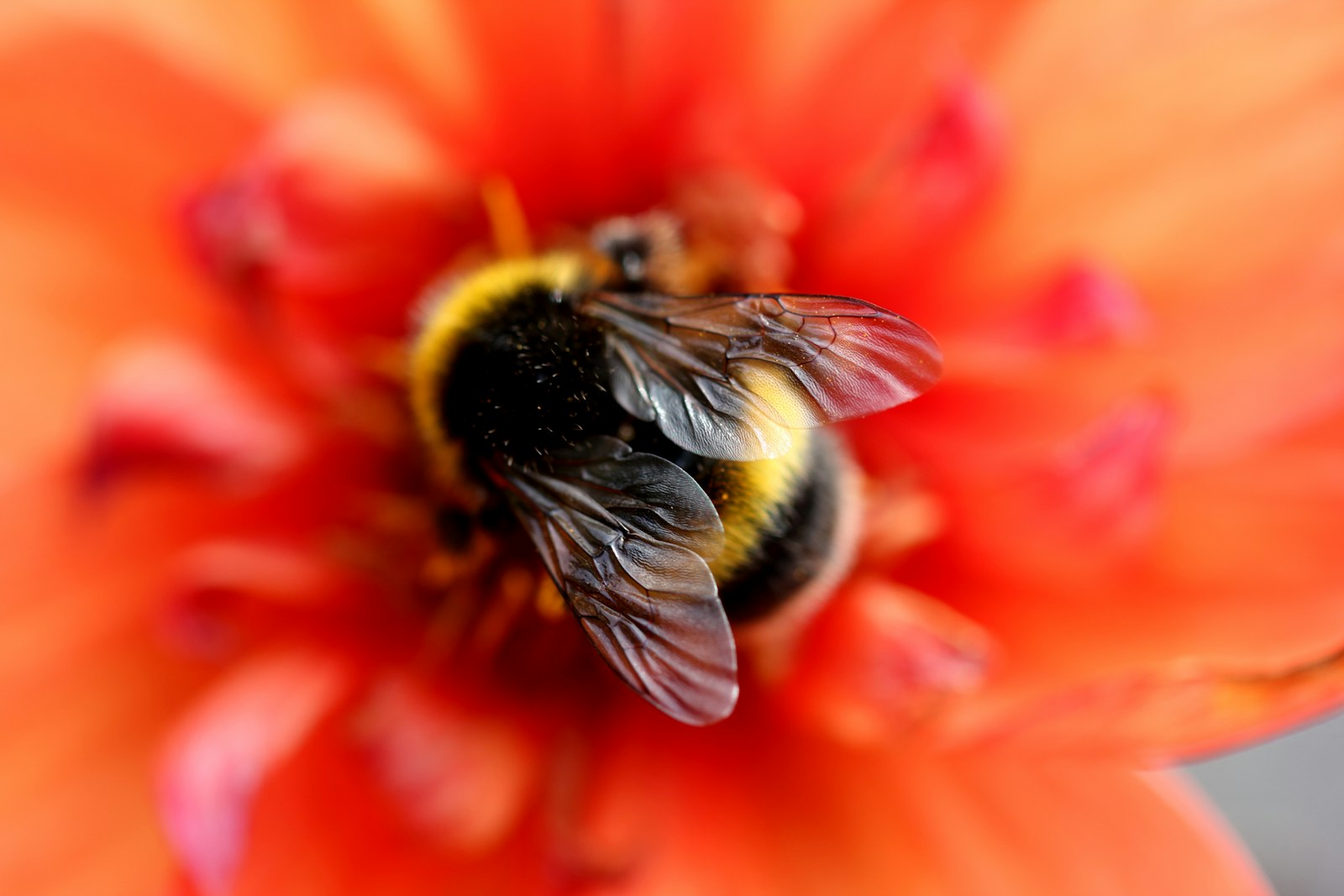
There are roughly 4,000 species of bee native to North America. The honey bee isn't one of them.
Apis mellifera - the honey bee, the one on every "save the bees" bumper sticker, the one people picture when someone says the word "bee" - originated in Europe and Africa. It was brought to North America by European colonists in the 1600s as a managed livestock species. It has since naturalized so thoroughly that most people assume it belongs here. It doesn't. It's an import with very good public relations.
The 4,000 native species largely go unnoticed. Most don't produce surplus honey. Most don't sting easily. Many are so small - sweat bees can be 5 millimeters long - that people walk through clouds of them without registering anything unusual. This is what the actual bee fauna of North America looks like: mostly solitary, mostly small, mostly invisible to the people standing right next to them.
The One with the Colony
The honey bee's defining characteristic isn't honey production - it's the colony. A mature colony contains 40,000 to 80,000 individuals, a hierarchy of castes, a coordinated communication system, and a collective decision-making process sophisticated enough to still generate active research. This level of social organization is genuinely unusual in the animal kingdom.
Of the roughly 20,000 bee species worldwide, only a handful are eusocial in this way. The honey bee sits at the extreme end of a social spectrum that most bee species never approach. Colony life runs on the queen, who lays 1,500 or more eggs per day during peak season, with the entire population oriented around supporting that reproductive output.
This is the bee beekeepers manage, that pollinates commercial crops at scale, and that produces the stored honey filling grocery shelves. It's also, in many ways, a heavily domesticated animal - the closest thing the insect world has to dairy cattle.
The Apiary Project makes the case for evidence-based pollinator conservation.
See How to Take Action →Bumblebees: The Louder, Fuzzier Version
Bumblebees (genus Bombus) are the closest thing to honey bees in terms of social structure, but they're not close. A large bumblebee colony has 200 to 400 workers at peak. The colony doesn't overwinter - only the mated queen survives underground, emerging in spring to found a new colony essentially from scratch each year.
There are about 46 bumblebee species in North America. They're recognizable by their size, dense fuzz, and the loud buzz they use for a technique called sonication: vibrating flowers at a specific frequency to shake loose pollen that honey bees can't access. Tomatoes, blueberries, and a range of other crops are pollinated primarily by bumblebees and other native species, not honey bees. The honey bee's tongue geometry simply doesn't work as well with those flower structures.
Several North American bumblebee species are in significant decline. The western bumblebee (Bombus occidentalis), once common across the western US, has seen its population collapse by over 90% since the 1990s. The rusty-patched bumblebee (Bombus affinis) became the first bee in the continental US listed as endangered under the Endangered Species Act, in 2026.
The Solitary Majority
If honey bees are the exception in social structure, solitary bees are the rule. The majority of North America's native species live alone - no colony, no workers, no queen. A female solitary bee excavates or locates a nest, provisions it with pollen and nectar, lays an egg, seals the cell, and moves on. She will never encounter her offspring.
Mason bees (genus Osmia) are cavity nesters, using hollow stems, beetle holes in dead wood, or narrow gaps in stone or brick. They pack each cell with a pollen ball, lay an egg on top, and seal the entrance with mud - hence the name. A single mason bee visits an estimated 2,000 flowers per day, considerably more than a honey bee working the same flowers. They're used commercially in orchard pollination, particularly for stone fruits, almonds, and blueberries.
Leafcutter bees (genus Megachile) cut circular sections from leaves and petals to line their nest cells. If you've seen a rose leaf with clean semicircles removed from the edges, a leafcutter bee was responsible. They carry pollen on the underside of the abdomen rather than in leg pollen baskets, which makes them somewhat messier pollinators but no less effective. The alfalfa leafcutter bee (Megachile rotundata) is a significant commercial pollinator of alfalfa in the western US.
Mining bees (family Andrenidae) excavate tunnels in bare or sparse soil that can extend several feet deep. They often emerge in large spring aggregations that look alarming from a distance but are largely non-aggressive - males can't sting, and females sting only when directly handled. Certain mining bee species emerge within days of their target flowers blooming, tracking plant phenology with a precision researchers are still working to understand.
Carpenter Bees: The Ones Mistaken for Bumblebees
Carpenter bees (genus Xylocopa) are large, black, and frequently misidentified. The visible difference from bumblebees: carpenter bees have a shiny, hairless abdomen. Bumblebees are fuzzy all over. Male carpenter bees, which have yellow faces, hover aggressively in front of people investigating their territory - an intimidating display from an insect that cannot sting. Females can, but rarely do.
Females bore perfectly circular entrance holes into untreated wood to create nest galleries. The species is solitary in the technical sense, but daughters sometimes return to their mother's gallery and extend it, leading to multigenerational nesting sites with surprisingly elaborate tunnel networks.
Sweat Bees: The Ones Already on You
Sweat bees (family Halictidae) are the most likely bees to have landed on your arm without you recognizing them as bees. They range from 5 to 15 millimeters long and come in black, metallic green, striped, and combinations thereof. They're attracted to human perspiration because it contains salts and moisture they can use.
The metallic green species common in the eastern US look more like iridescent flies than bees. They sting only when physically trapped - a brief, mild sting that most people don't register. There are over 500 halictid species in North America, ranging from completely solitary to what researchers call primitively social: small groups of females sharing a nest entrance, without developing the caste differentiation of a honey bee colony. The Halictidae have become a useful study organism for understanding how social behavior evolves in insects, precisely because they show intermediate states that other social insects have left far behind.
The Distribution of the Unnoticed
There is a rough way to categorize North American bees: one species that makes surplus honey in managed colonies, a few dozen that form small temporary societies, and roughly 4,000 that live and die alone. The honey bee is the one with the industry built around it. The others are doing what bees have been doing for tens of millions of years - pollinating, nesting, foraging - in the margins of gardens and meadows and forest edges that most people walk through without looking down.
The one with all the cultural weight, the one that ended up on the state flag of Utah and the emblems of half the counties in France, is the immigrant. The native pollinators were here first. Most of them still are.
The next time something small lands on your arm, the odds are it's not the one you think it is.