How Bees Make Wax: The Energy Math Behind the Honeycomb
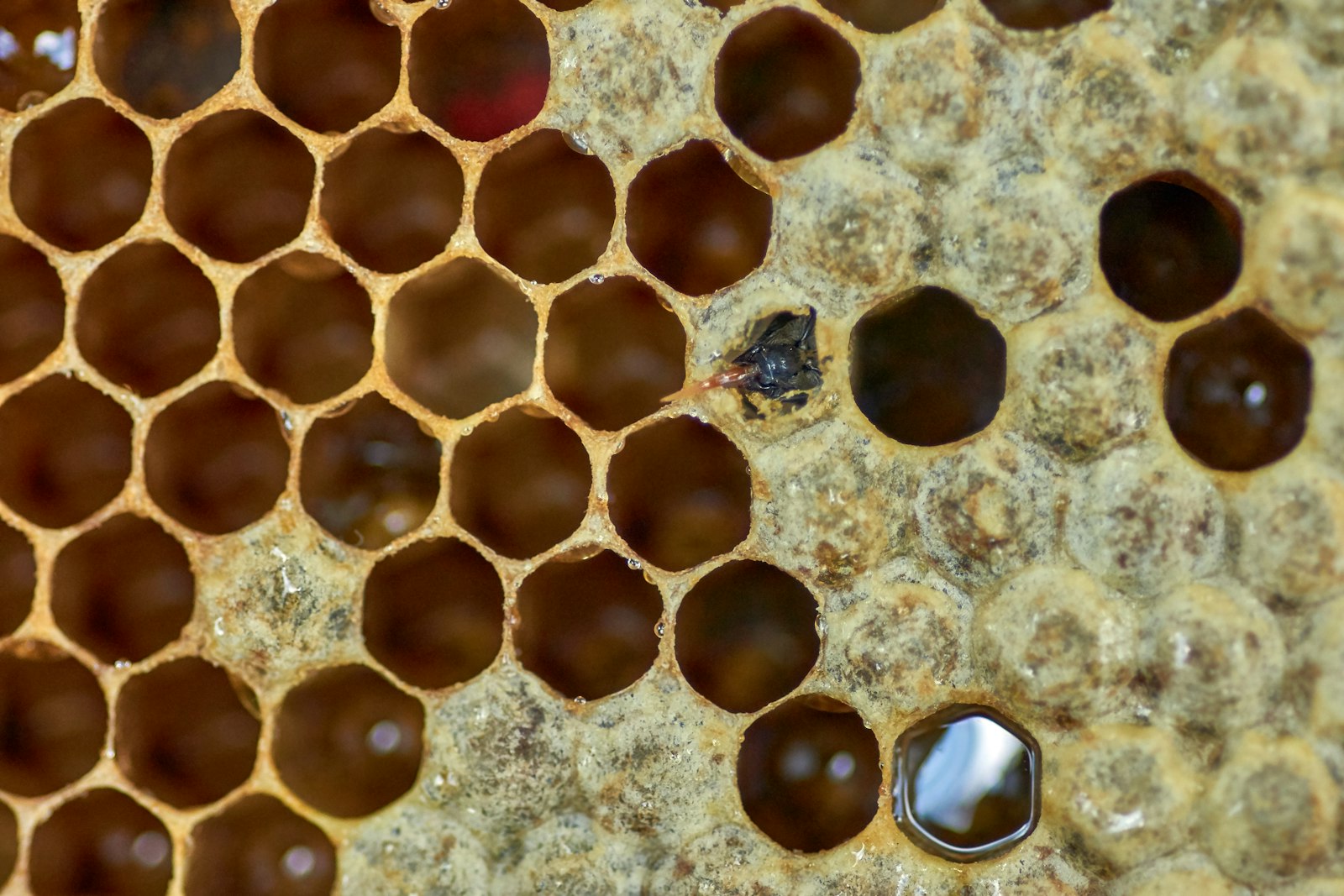
A bee has to eat 6 to 8 pounds of honey to produce a single pound of wax. That's not a typo. Making the container costs more - energetically - than filling it.
This is one of those biological facts that sounds like it shouldn't work, and yet the math holds up under scrutiny. A hive that produces 60 pounds of honey in a season might burn through 8 to 10 pounds of honey just building and maintaining the comb to store it in. The logistics of being a honey bee are genuinely strange.
The Wax-Making Window
Here's the part most people don't know: not all bees can make wax. Only workers can produce it, and only during a very specific window of their lives. Between roughly day 12 and day 18 of their adult lives, workers possess functional wax glands - four pairs of them, arranged on the underside of the abdomen, between the overlapping plates.
Before day 12, the glands haven't developed. After day 18 or so, they begin to atrophy as the bee transitions into her foraging phase. The entire wax-building workforce of a colony is essentially a rolling cohort of middle-aged bees, each in a brief biological window. When colonies expand rapidly in spring, the surge in young bees creates a corresponding surge in wax production capacity - the timing is not accidental.
The glands don't work at room temperature, either. Wax secretion requires the bee's body to reach roughly 91 to 97°F (33 to 36°C). To achieve this, wax-secreting bees often cluster together in chains called festoons, vibrating their flight muscles to generate heat. The behavior looks like bees simply hanging around doing nothing. They are, in fact, running a biological furnace to get their wax glands working.
The Apiary Project tracks honey bee health data so you don't have to.
Explore the Data Hub →What the Wax Actually Is
Once the gland temperature is high enough, tiny wax scales appear between the abdominal plates - each about 3mm across and thinner than a human hair. The bee reaches back with her hind legs, removes the scale, and passes it to her mouth. There, she chews it repeatedly, mixing it with salivary secretions. The chewing changes the wax's consistency from a brittle flake into something pliable and workable.
The raw material that emerges from the gland is white and nearly transparent. Fresh comb has that same clean, pale look. The yellow and amber colors associated with older beeswax come later, from contact with pollen, propolis, and the successive generations of bee pupae that develop within the cells. Wax that's been in a hive for several years ranges from deep gold to almost brown, a kind of geological record of hive activity.
A worker bee produces only small amounts of wax in her lifetime. The glands are most productive when she's consuming large quantities of honey and pollen, which is why young bees in a well-provisioned hive produce more wax than those in a colony under nutritional stress. The 6-to-8-pound honey conversion figure is an average. Under poor conditions, the ratio gets worse.
The Geometry That Baffled Mathematicians
The hexagonal honeycomb cell isn't an accident of aesthetics - it's a solution to a geometric optimization problem. A hexagonal grid tiles a flat surface using fewer total wall lengths than either a square or triangular grid while enclosing the same area. The cells share walls with their neighbors, so each unit of wax serves double duty. The result is maximum storage capacity for minimum wax input.
How bees arrive at such precise hexagonal geometry has been studied and debated for centuries. The current understanding is that bees start with roughly circular cells, and the wax - pliable from the heat of bee bodies working nearby - flows and settles into hexagonal shapes through surface tension. The bees don't so much engineer the hexagons as create the conditions in which hexagons naturally emerge.
The cell dimensions are also strikingly consistent across colonies and geography. Worker brood cells measure approximately 5.2 to 5.4mm across. Drone cells are larger, around 6.4mm. The consistency isn't coincidental - bee larvae develop to fit the cells they're placed in, and the cells are calibrated to the bee.
The Most Expensive Real Estate in the Hive
Wax is the hive's most energy-intensive construction material, which is why bees treat it with a conservatism that borders on the obsessive. Old comb gets repaired rather than replaced. When colonies abscond or collapse, other bees will often raid the abandoned structure for whatever wax remains. Beekeepers have long known that returning drawn comb - comb that's already been built out - to a colony at the start of the season saves the colony significant energy compared to building from scratch.
The wax in a functional hive is also constantly being recycled internally. Capping wax, which seals honey cells for storage, gets removed when honey is consumed and the waxy debris is often reworked into other structures. Nothing is wasted if the colony can avoid it.
Propolis - the resinous plant material bees collect and use as sealant and antimicrobial coating - is sometimes mixed into wax for specific applications, particularly in drafty spots or areas prone to mold. The two substances have different mechanical properties, and bees appear to use them selectively based on function. Whether this reflects something like material judgment or is purely a product of behavioral instinct is a question researchers are still working out.
Why the Energy Cost Makes Sense
The 6-to-8:1 honey-to-wax ratio seems inefficient until you consider what beeswax accomplishes. It's food storage, nursery, and the structural skeleton of the entire colony - all in one material. It's waterproof, moldable within a temperature range that bees can control, antimicrobial in combination with propolis, and durable enough to be reused across multiple seasons. A material with that profile, produced biologically on demand, at the exact scale the colony needs - the energy cost starts to look like a reasonable trade.
The colony's wax budget also explains something that surprises new beekeepers: the difference in colony output between a first-year hive and an established one. A first-year colony spends a substantial fraction of its early honey production building comb. An established colony with drawn frames already in place directs that same energy toward honey storage instead. The wax infrastructure, once built, pays for itself across years.
It is, when you step back, a remarkably coherent system. The bees that build the comb are the same ones that will never forage. The bees that forage will never build comb. The colony has divided a complex production chain into distinct biological roles, each with its own narrow window, each dependent on the others. That an insect brain coordinates this without any central authority remains one of the more interesting facts in biology.