Bee Forage (How Monoculture Is Quietly Starving Managed Colonies)
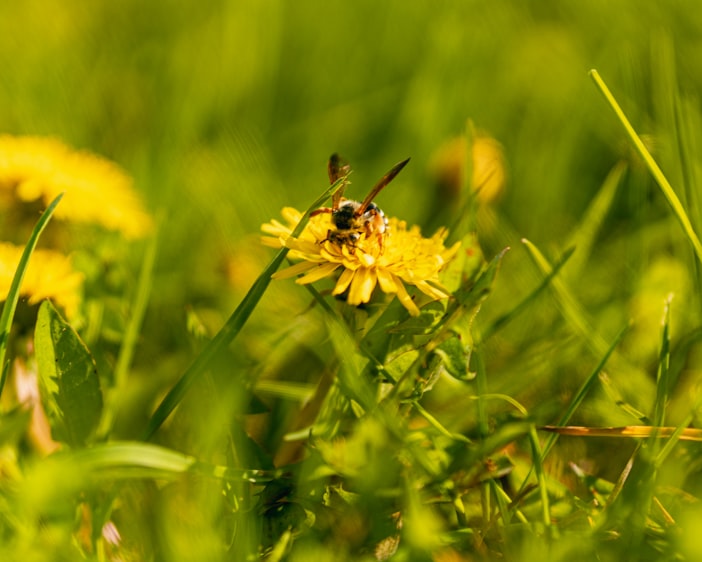
A honey bee colony eats roughly 200 to 400 pounds of nectar and 35 to 55 kilograms of pollen per year. Those numbers are so large that they're difficult to conceptualize without context. A single colony visits approximately 2 billion flowers per year. Two billion. The foraging force - roughly half the colony's population at peak season - flies collectively hundreds of thousands of miles per year to gather enough food to survive, reproduce, and store a surplus that beekeepers call honey and the bees call winter.
The food comes from a foraging radius of approximately 2 to 4 miles from the hive - an area of roughly 8,000 to 30,000 acres, depending on conditions. When that area contains diverse flora - wildflowers, trees, shrubs, crops in rotation, weedy field margins, hedgerows - the colony has access to a varied diet that provides complete nutrition across the growing season. Different plants bloom at different times, creating a rolling buffet that starts with early spring willows and maples and ends with late-season goldenrod and asters.
When that area contains an industrial monoculture - tens of thousands of acres devoted to a single crop - the colony's world narrows to a single food source available for a few weeks, surrounded by a nutritional desert for the rest of the year.
The Nectar Flow Calendar
Every location has a nectar flow calendar - a schedule of what blooms when and how much nectar and pollen each bloom provides. The calendar varies dramatically by region. A beekeeper in Vermont has a different nectar flow than a beekeeper in Texas, and both have a different flow than a beekeeper in California's Central Valley.
A generalized temperate-US calendar looks something like this:
Early spring (March-April). Maples, willows, fruit trees (apple, cherry, pear), dandelions. The colony is building up from its winter cluster configuration, the queen is ramping up egg-laying, and the first pollen is critical for feeding the first generation of spring brood. Maple pollen and dandelion pollen are nutritionally adequate and arrive precisely when the colony needs protein most. This is why experienced beekeepers don't spray their dandelions. The yellow weed is the first real food source of the year.
Late spring (May-June). Black locust, tulip poplar, clover, raspberry, blackberry. This is often the primary nectar flow in many eastern and midwestern locations - the 2 to 4-week period when nectar production exceeds the colony's consumption and surplus honey accumulates. A colony on a strong tulip poplar flow can store 10 to 20 pounds of honey per week.
Summer (July-August). Basswood (linden), sumac, wildflowers, goldenrod (early), sunflowers where planted. The mid-summer period is variable. In some locations, there's a "summer dearth" - a gap between the spring flow and the fall flow where little is blooming. Colonies in these areas may consume their stored honey during the gap, producing less surplus for the beekeeper.
Late summer/fall (August-October). Goldenrod, aster, buckwheat, smartweed. The fall flow produces honey with a distinctive strong flavor (goldenrod honey has a smell that beekeepers either love or describe as "wet socks"). The fall flow is also critical for building the colony's winter stores. A colony that doesn't store enough honey in September and October doesn't survive to March.
The gaps matter. A colony that has abundant forage from March through October has no nutritional issues. A colony that has 3 weeks of bloom in May, nothing in June, 2 weeks in July, nothing in August, and 4 weeks in September has three dearth periods during which its foragers return empty, its brood production slows, and its nutritional reserves deplete.
The Apiary Project tracks every major threat to US honey bee colonies.
Explore the Issues Hub →The 4-Mile Problem
A forager bee's economically productive foraging radius is about 2 miles - the distance at which the energy cost of the flight (honey consumed) roughly equals the energy content of the nectar collected. Bees can fly up to 5 to 7 miles from the hive, and have been tracked at distances of 8 miles in extreme conditions. But beyond 2 miles, the return on investment declines sharply. A bee that flies 5 miles to a flower patch burns most of the nectar she collects on the return flight.
The practical implication: the forage within a 2-mile radius of the hive determines whether the colony thrives. That's roughly 8,000 acres. In a diverse agricultural landscape with field margins, woodlots, hedgerows, and pastures, 8,000 acres contains a rolling sequence of bloom from April through October. In the American Midwest, 8,000 acres may be 6,000 acres of corn, 1,800 acres of soybeans, and 200 acres of everything else.
Corn is wind-pollinated. It produces pollen - abundant pollen, sometimes visible as yellow dust drifting from the tassels - but it produces no nectar. Bees collect corn pollen when nothing else is available, but corn pollen is nutritionally poor: low in protein compared to broadleaf flowers, deficient in certain essential amino acids. Corn pollen is the fast-food equivalent - calorie-dense, nutrient-sparse.
Soybeans bloom for approximately 3 weeks and produce modest nectar. During soybean bloom, colonies in the corn-soy belt can collect respectable honey crops. Before and after soybean bloom, the landscape is nutritionally barren. The colony is surrounded by food it can't use.
The CRP Collapse
The Conservation Reserve Program (CRP) was established in the 1985 Farm Bill to pay farmers to take highly erodible cropland out of production and plant it with grasses and wildflowers. At its peak in 2007, CRP enrolled approximately 37 million acres. The grasslands, meadows, and wildflower plantings created by CRP were, unintentionally, the largest pollinator habitat program in American history.
Then commodity prices rose. Corn ethanol mandates increased demand for corn acres. Crop insurance programs reduced the financial risk of farming marginal land. CRP enrollment declined. By 2026, enrolled acreage has dropped to approximately 23 million acres - a loss of roughly 14 million acres of pollinator habitat, concentrated in the Great Plains and Midwest where bee forage was already limited.
A 2019 study by Clint Otto and colleagues at the USGS Northern Prairie Wildlife Research Center found that honey bee colony health in the Northern Great Plains - the summer production area for a significant portion of US honey - was positively correlated with CRP acreage. More CRP meant more forage, more honey production, and better winter survival. Less CRP meant less forage, less honey, and higher colony losses.
The Dakotas and Montana - historically the top honey-producing states - have seen honey yields per colony decline over the same period that CRP acreage declined. The correlation isn't proof of causation, but the mechanism is straightforward: fewer wildflower acres within foraging range means less food, means weaker colonies, means less honey.
The European Experiment
The European Union's Common Agricultural Policy (CAP) includes agri-environment schemes that pay farmers to plant wildflower strips along field margins - typically 3 to 5 meters wide, planted with a mix of native wildflowers and grasses. The idea is simple: convert a tiny fraction of cropland to pollinator habitat and see what happens.
What happens: a meta-analysis of European wildflower strip studies found that strips covering as little as 3 percent of farmland area increased wild bee abundance by 25 percent and bee species richness by a similar margin. The strips also improved pest control (by supporting predatory insects), reduced erosion, and increased crop pollination in adjacent fields.
The cost-benefit analysis is favorable. The lost crop production from 3 percent of field area is typically offset by improved pollination of the remaining 97 percent - particularly for pollinator-dependent crops like fruit, vegetables, and oilseed rape. Several studies found net positive returns: the improved pollination increased crop value by more than the wildflower strip cost in foregone production.
The US has a smaller-scale version in the USDA's Conservation Stewardship Program and NRCS pollinator habitat initiatives. Adoption is voluntary and incentive-based. The scale is nowhere near the EU's mandatory greening requirements. The USDA's Plants for Bees program maintains a database of recommended plants by region, but the decision to plant them rests with individual landowners.
The Monoculture Nutrition Problem
The nutritional consequences of monoculture aren't limited to energy shortfalls. They include protein quality, lipid diversity, and micronutrient adequacy.
Different pollen sources provide different amino acid profiles. A colony foraging on diverse wildflowers gets a balanced amino acid diet - the same principle that applies to human nutrition (eating a variety of foods provides complete nutrition; eating one food doesn't). A colony foraging exclusively on corn pollen gets abundant protein but with an unbalanced amino acid ratio - insufficient isoleucine, low valine, low tryptophan. The tryptophan deficiency is particularly relevant because tryptophan is a precursor to serotonin, and the gut bacteria that influence bee learning and memory require tryptophan as a substrate.
Lipid diversity matters too. Pollen from different plant species provides different fatty acid profiles. Bees can't synthesize several essential fatty acids and must obtain them from pollen. A diverse pollen diet provides alpha-linolenic acid, linoleic acid, and various sterols. A single-source diet may be deficient in one or more of these.
The research on nutritional stress and disease susceptibility is consistent: colonies with access to diverse pollen sources show stronger immune responses, lower pathogen loads, and better tolerance of Varroa compared to colonies with access to single-source pollen, even when total protein quantity is the same. Diversity matters as much as quantity.
This is the nutrition version of the neonicotinoid story: the effect isn't dramatic enough to produce immediate visible harm. It's chronic, subtle, and cumulative - weakening the colony's baseline resilience so that the next stressor (mites, disease, cold weather, pesticide exposure) hits harder than it otherwise would.
What Bees Actually Prefer
Given the choice, bees show clear preferences among flower species. Studies using pollen trap data (traps that remove one pollen pellet from each returning forager) reveal consistent patterns.
Clover (white clover, Trifolium repens) is one of the most consistent nectar and pollen sources in temperate North America. It blooms for months, tolerates mowing, grows in poor soils, and produces nectar at concentrations of 40 to 60 percent sugar - highly attractive to bees. Clover honey is the "default" honey flavor in the US because, historically, clover was everywhere. It's declining as agricultural intensification reduces pastureland and herbicide-tolerant crop systems eliminate clover from field margins.
Goldenrod (Solidago species) is the dominant fall nectar source across most of the eastern US. It produces abundant nectar and pollen over a long bloom period (August through October in many areas). Goldenrod honey is dark, strong-flavored, and aromatic.
Trees are underappreciated pollen and nectar sources. Basswood (American linden) produces one of the most prized honeys - light, delicate, mildly floral. Black locust produces a light, mild honey during a brief but intense bloom in May. Tulip poplar produces a dark, rich honey. Maples are critical early-season pollen sources. A landscape with mature trees provides substantial bee forage that most people don't associate with beekeeping.
Buckwheat, planted as a cover crop, produces a dark, molasses-like honey and abundant pollen over a 3 to 4-week bloom. Some beekeepers specifically plant buckwheat as a mid-summer forage crop to fill the dearth gap. The honey is strong-flavored and not to everyone's taste, but it sells at premium prices at farmers markets.
The Suburban Paradox
In an ironic twist, suburban and urban areas sometimes provide better bee forage than agricultural areas. A typical suburban neighborhood contains ornamental plantings, vegetable gardens, flowering shrubs, lawn weeds (dandelions, clover), street trees, and park plantings that collectively provide a diverse, season-long bloom. No single source is dominant. The diversity is accidental - the product of thousands of individual landscaping decisions by homeowners who were optimizing for aesthetics, not pollination.
By contrast, a 10,000-acre cornfield provides zero floral resources for 95 percent of the growing season. The suburban yard - with its mix of marigolds, lavender, fruit trees, clover patches, and garden vegetables - is, square-foot-for-square-foot, a more productive foraging landscape than the most productive agricultural land in the country.
This is why beekeepers in Des Moines sometimes produce more honey per colony than beekeepers in rural Iowa. The urban foraging radius contains gardens, parks, and landscaping. The rural foraging radius contains corn.
2 Billion Flowers
The colony needs 2 billion flower visits per year. The flowers need to be within economical foraging range. The bloom needs to span the growing season without extended gaps. The pollen needs to provide balanced amino acids, adequate lipids, and essential micronutrients. The nectar needs to be concentrated enough that the energetic return exceeds the energetic cost of collection.
When all of those conditions are met, the colony builds up in spring, produces surplus honey in summer, stores adequate reserves in fall, and survives winter. When any of them isn't met - when the forage radius is nutritionally barren, when there's a 6-week dearth in midsummer, when the only pollen available is corn pollen - the colony limps through the gap, depletes its reserves, and enters the next stressor with less resilience than it needs.
The forage problem is the quietest of the major challenges facing honey bees. It doesn't have the drama of Varroa or the political controversy of neonicotinoids. It's not a disease with a name or a parasite with a treatment. It's the slow, large-scale transformation of the landscape from diverse to simplified, from many plants to one plant, from habitat to production.
The bees are adaptable. They'll forage on whatever's available. They'll fly farther when they have to. They'll eat corn pollen when nothing else is blooming. But they can't create flowers that aren't there. They can't diversify a monoculture. They can't replant the 14 million acres of CRP grassland that was converted back to corn.
Two billion flowers. That's the bill. The question is whether the landscape can pay it.