The Honey Bee Gut Microbiome (How Bacteria Keep Colonies Alive)
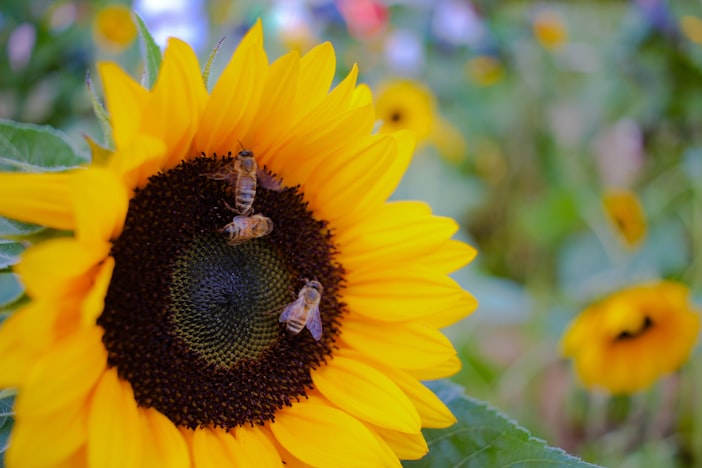
The human gut contains roughly 1,000 bacterial species at any given time - a roiling, competitive, constantly shifting community that researchers have spent decades and billions of dollars trying to map. The honey bee gut contains 9. Sometimes 5. Depending on the season and who's counting, maybe 7. These few species make up approximately 95 percent of all gut bacteria in every adult honey bee, regardless of geography, subspecies, or the flowers the bee was visiting.
This is either the most boring microbiome in the animal kingdom or the most elegant. It's both, actually - boring because there's almost nothing there, and elegant because the almost-nothing turns out to do almost everything.
The Residents
The gut of an adult honey bee is a tube with distinct neighborhoods, and the bacteria that live there have sorted themselves with the specificity of apartment tenants who've been negotiating leases for 80 million years.
In the ileum - the narrow passage between the midgut and the hindgut - two species form a structured biofilm directly on the gut wall. Snodgrassella alvi colonizes the innermost layer, pressed against the epithelium like a biological wallpaper. Gilliamella apicola layers on top of it. The two were formally named and described in 2013 by Waldan Kwong and Nancy Moran at the University of Texas at Austin. They form a partnership so consistent that disrupting one disrupts the other.
In the rectum - the large, expandable chamber where bees store waste between defecation flights - the community shifts to lactic acid bacteria. Lactobacillus Firm-5 (recently reclassified as Apilactobacillus) and Lactobacillus Firm-4 (now Bombilactobacillus) dominate, alongside Bifidobacterium asteroides - a species first described in 1899 that turned out to contain at least 8 genetically distinct sub-clusters hiding under one name.
Then there's Bartonella apis (proposed for reclassification as Ditibartonella apis), described by Kesnerova, Moritz, and Engel in 2016. Frischella perrara, described by Engel, Kwong, and Moran in 2013, which does something unusual: it colonizes the pylorus region and causes a visible melanization response - a dark scab - at the point where it attaches. The bee's immune system recognizes it, reacts to it, and tolerates it anyway.
And Bombella apis - formerly Parasaccharibacter apium until Smith et al. reclassified it in 2020 - which isn't technically a gut bacterium at all. It lives in the crop, in royal jelly, in larval food. It thrives in royal jelly's acidic, antimicrobial environment where almost nothing else survives, and it makes the jelly more nutritious by increasing amino acid content.
Nine species. That's the list. The human gut is a megalopolis. The bee gut is a small town where everyone knows everyone and every resident has a job.
The Apiary Project tracks every major threat to US honey bee colonies.
Explore the Issues Hub →The Weight Problem
In 2017, Hao Zheng and colleagues in Nancy Moran's lab published a paper in PNAS that established the bee microbiome as a model system for the field. The experiment was straightforward: raise bees in sterile conditions so they emerge with no gut bacteria - germ-free - then compare them to bees colonized normally.
Germ-free bees gained significantly less weight. Their whole bodies were lighter. Their guts were lighter. The weight difference wasn't subtle - it was the kind of result that makes researchers check their scale.
The mechanism turned out to be metabolic signaling. The gut bacteria produce short-chain fatty acids - primarily acetate and propionate - by breaking down complex plant polysaccharides from pollen. These metabolites influence the bee's vitellogenin levels (a protein critical to bee health and longevity), insulin signaling, and gustatory response - how sensitive the bee is to sugar. A bee without gut bacteria processes food less efficiently and responds to nutritional cues differently. The microbiome doesn't just help with digestion. It rewires the host's metabolic programming.
This paper - showing that nine species of bacteria could do in a bee what a thousand species do in a human, with the effects traceable and reproducible in ways human microbiome research rarely achieves - is the reason honey bees became a premier model organism for gut microbiome studies. Simple system. Clear results. The kind of experimental clarity that complex organisms don't offer.
The Brain Connection
The microbiome-gut-brain axis - the idea that gut bacteria influence brain function and behavior - has been one of the most discussed and least proven concepts in human medicine. In bees, the evidence is concrete.
Bifidobacterium asteroides, when used to monocolonize germ-free bees, elevates gut concentrations of juvenile hormone III derivatives. Juvenile hormone III governs the nurse-to-forager transition - the behavioral shift that determines whether a worker bee stays inside the hive tending brood or goes outside to collect food. A single bacterial species, acting through a single hormonal pathway, influences the most important behavioral transition in a worker bee's life.
In 2022, a paper in Nature Communications showed that honeybee gut Lactobacillus modulates host learning and memory behaviors via tryptophan metabolism. Tryptophan is a precursor to serotonin - the same neurotransmitter pathway that antidepressant medications target in humans. The bacteria in a bee's rectum influence how well the bee learns and remembers through the same amino acid pathway that pharmaceutical companies spend billions trying to manipulate.
Philipp Engel's lab at the University of Lausanne demonstrated that the gut microbiota affects colony social network structure itself - increasing the frequency and altering patterns of head-to-head interactions between bees. The microbiome shapes how bees talk to each other. Social behavior - the foundation of everything a colony does - is partially a product of bacterial metabolism in the hindgut.
The Glyphosate Paper
On October 9, 2018, Erick Motta, Kasie Raymann, and Nancy Moran published a paper in PNAS that connected one of the world's most used herbicides to honey bee health through the gut microbiome.
Glyphosate - the active ingredient in Roundup - kills plants by targeting the shikimate pathway, specifically the EPSPS enzyme. Animals don't have this pathway. That's the basis of glyphosate's safety claim: it targets plant biology, not animal biology. But bacteria do have the shikimate pathway. And some of those bacteria live inside bees.
The key finding: bee gut bacteria vary in their susceptibility to glyphosate based on whether they encode class I EPSPS (sensitive) or class II EPSPS (insensitive). Every strain of Snodgrassella alvi - the bacterium that forms the innermost layer of the ileum biofilm, the wallpaper on the gut wall - encodes a sensitive class I EPSPS.
Bees exposed to glyphosate at environmentally realistic concentrations showed decreased relative and absolute abundances of their dominant gut species. When those same bees were subsequently challenged with the opportunistic pathogen Serratia marcescens, mortality increased significantly. The glyphosate didn't kill the bees. It degraded the microbiome. The degraded microbiome couldn't protect against a pathogen that a healthy microbiome handles routinely.
Follow-up studies examined intensity, duration, and timing of exposure. A 2022 study showed glyphosate induces immune dysregulation in honey bees. The mechanism is the same as the neonicotinoid story in one critical respect: the chemical doesn't need to kill the bee directly. It just needs to weaken one system enough that something else finishes the job.
How Bees Get Their Bacteria
A newly emerged worker bee is essentially germ-free. It chews through its wax cell cap and enters the hive with a blank gut - a sterile tube waiting to be colonized. Within 4 to 6 days, a typical hindgut microbiota establishes. The larval and adult microbiome stages are effectively decoupled: whatever bacteria were present during larval development are gone. The adult microbiome starts from scratch.
The traditional explanation was trophallaxis - mouth-to-mouth food exchange between bees, the same mechanism that distributes pheromone signals and nutrition through the colony. But a 2023 study found that trophallaxis with nurse bees was "not sufficient and even unnecessary" for newly emerged bees to acquire the core gut microbiota. Natural eclosion, brief exposure to the emergence frame, and a diet of fresh beebread produced hindgut microbiomes highly similar to those that established in the full colony environment.
The bacteria are in the hive environment itself - on the comb, in the stored pollen, on every surface the bees touch. The colony is the inoculum. A bee doesn't need to be fed bacteria mouth-to-mouth. It just needs to live in a hive where the bacteria already are.
This has implications for everything from package bee installations to antibiotic treatment protocols. A package of bees installed on brand-new foundation in a brand-new box is a colony that needs to establish not just comb and brood and food stores but an entire microbial ecosystem. A colony treated with antibiotics that disrupts its resident bacteria may take longer to recover than the treatment schedule assumes.
The Antibiotic Problem
American foulbrood has been treated with oxytetracycline (Terramycin) for decades. European foulbrood gets tylosin (Tylan). As of January 1, 2017, both require a veterinary prescription under FDA regulation - a change that acknowledged these are real drugs with real consequences, not just powders you dump in a hive.
The consequences to the gut microbiome are significant. Tetracycline application causes major changes in community size and structure and leads to decreased survivorship. Oxytetracycline and tylosin produce an immediate decrease in gut microbiome size, and over the longer term produce what researchers describe as "very different and persistent dysbiotic effects." The antibiotic kills the pathogen. It also kills the commensal bacteria that were protecting the bee from other pathogens. A bee treated for foulbrood and subsequently exposed to Nosema has higher disease burden and the highest mortality rates of any treatment group.
Decades of oxytetracycline and tylosin use have made antibiotic resistance widespread among core microbiome species. The bacteria that survived treatment passed on their resistance genes. The next round of treatment selected for more resistance. The spiral is the same one that drives antibiotic resistance in human medicine, playing out in miniature inside a bee's gut.
The $25 Probiotic
SuperDFM-HoneyBee, made by Strong Microbials, is the most prominent commercial bee probiotic. Available on Amazon for roughly $25 per 100 applications, it's a blend of 6 probiotic bacteria marketed to "combat chalkbrood and Nosema, activate pesticide detoxification, increase hive immunity." Field-tested by commercial beekeepers since 2014.
In 2023, a peer-reviewed study in Probiotics and Antimicrobial Proteins tested a commercially sold probiotic and found that the microbiota of bees from hives given the probiotic following antibiotic treatment was not any more similar to control bees than bees from hives given only the antibiotic. The probiotic did not help restore the microbiome.
A 2024 study in Scientific Reports was more direct. Title: "A longitudinal field study of commercial honey bees shows that non-native probiotics do not rescue antibiotic treatment, and are generally not beneficial." The conclusion: non-native probiotics did not rescue antibiotic treatment effects and were "generally not beneficial" under field conditions.
The fundamental problem is simple: none of the commercially available bee probiotics contain native bee gut bacteria. They use generic Lactobacillus and Bacillus strains - the same genera, but not the same species. Not Apilactobacillus. Not Bombilactobacillus. Not Snodgrassella. Not Gilliamella. The bacteria in the jar aren't the bacteria in the bee. It's like trying to restore a coral reef by dumping freshwater aquarium fish on it - same kingdom, wrong species, wrong environment.
Lab research with actual native bee gut bacteria tells a different story. Individual native strains show genuine protective effects in controlled studies. A 2024 study showed a honeybee gut bacterial strain improved survival and gut microbiota homeostasis in bees exposed to clothianidin. Engineered symbiotic bacteria interfering with the Nosema redox system can inhibit microsporidian parasitism. The science works when the right bacteria are used. The products don't use the right bacteria.
80 Million Years of Coevolution
The corbiculate bees - honey bees, bumble bees, stingless bees - form a clade dating to approximately 80 million years ago. The emergence of eusocial corbiculate bees from solitary ancestors coincides with the acquisition of the five core gut bacterial lineages. Kwong et al.'s 2017 paper in Science Advances revealed a dynamic evolutionary history marked by multiple gains and losses of gut associates, with diversification patterns driven partly by host ecology.
Solitary and primitively eusocial bees have microbiomes consisting mostly of environmentally acquired microbes - whatever they pick up from flowers and soil. Social bees have host-specific microbiomes transmitted through the colony. Sociality creates what amounts to an island ecosystem - a semiclosed system where specialized bacteria can persist across generations because transmission is guaranteed by social behavior.
A 2024 study found that honey-producing wasps independently evolved gut communities dominated by host-restricted bacteria, converging on a pattern similar to social bees. Sociality plus a sugar-rich diet appears to drive microbiome specialization regardless of the host lineage. The pattern keeps evolving independently because the ecological conditions keep recurring.
The implication is that the bee gut microbiome isn't an accessory. It's a co-evolved organ system, as integral to the bee as its flight muscles or its venom gland. When antibiotics disrupt it, or glyphosate degrades it, or a probiotic fails to restore it, the consequences aren't limited to digestion. They cascade through immunity, behavior, weight regulation, hormone signaling, and social interaction - because 80 million years of coevolution wired those bacteria into every system the bee has.
9 Species
Nancy Moran's lab at UT Austin. Waldan Kwong, now at the Instituto Gulbenkian de Ciencia in Portugal. Philipp Engel at the University of Lausanne. Irene Newton at Indiana University, who created the first metatranscriptome of the bee gut and discovered that Bombella apis inhibits fungal growth. These researchers, and their overlapping networks of students and collaborators, have built the most complete picture of any animal's gut microbiome - precisely because the system is simple enough to understand completely.
Nine species. A structured biofilm in the ileum. Lactic acid bacteria in the rectum. A crop bacterium that makes royal jelly more nutritious. A 2017 weight-gain paper. A 2018 glyphosate paper. A 2022 learning-and-memory paper. A 2024 paper showing probiotics don't work. The field is moving fast because the organism is tractable and the questions are answerable.
The human gut microbiome remains a wilderness - 1,000 species, unmappable interactions, irreproducible results, and a supplement industry valued in billions selling products with evidence measured in marketing copy. The bee gut microbiome is a small town: 9 residents, known addresses, documented relationships, and a growing understanding of what happens when you disrupt the neighborhood.
The bees figured out this arrangement 80 million years ago. The researchers are still catching up. The probiotic companies haven't started.