Queen Supersedure (When Colonies Quietly Replace Their Queen)
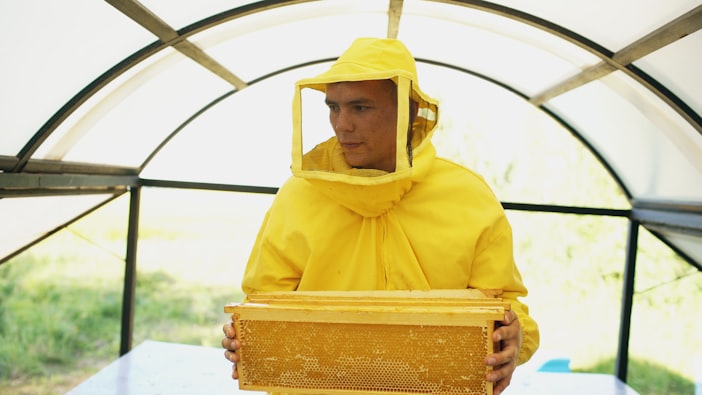
A beekeeper opens a hive and finds two queens on the same frame. Both are laying eggs. Workers are attending both. Nobody is fighting. The hive is functioning normally, just with twice as many queens as the beekeeper expected.
This is supersedure, and the reason it surprises beekeepers is that everything in the beginner course implied it was impossible. One queen per hive. That's the rule. Except when the colony is in the middle of replacing her, at which point it runs both of them in parallel for days, weeks, or occasionally months - using the overlap to ensure the replacement is successfully mated and proven before retiring the original.
The colony didn't ask permission for this. Workers built the queen cells. Workers chose the larvae. Workers reared the replacement. The old queen continued laying through all of it, presumably unaware that a few frames away, her successor was growing in a wax cell flooded with royal jelly.
Three Types of Queen Cells, Three Different Situations
Not all queen cells mean the same thing. Their location on the comb tells the story.
Swarm cells appear along the bottom edge of the frame - hanging down like peanut-shaped appendages, often 5 to 20 of them. These signal that the colony is preparing to reproductively divide. Half the population will leave with the old queen; half stays with a new queen raised from these cells. Swarm cells appear in spring when the colony is at peak population and indicate vigor, not failure.
Emergency queen cells appear on the face of the comb, anywhere, often in clusters. These appear when the queen has died suddenly - crushed during an inspection, lost on a mating flight, or killed by a predator. The workers have no gradual pheromone decline to work from; the signal simply vanishes. They respond by converting whatever young larvae are available, building cells hastily around them. Emergency cells look rougher and less deliberate than swarm or supersedure cells.
Supersedure cells appear on the face of the comb, typically near the center - one to three of them, carefully constructed, appearing while the old queen is still alive and still laying. This is the planned replacement. A few cells in the middle of the comb face, the old queen actively laying nearby, and 50,000 workers who have collectively decided she needs to be replaced.
The distinction matters because the management response is different for each. Swarm cells mean the colony intends to divide. Emergency cells mean the queen is already gone. Supersedure cells mean the colony has evaluated its queen and found her insufficient.
The Apiary Project has free tools for beekeepers - calculators, schedulers, and seasonal guides.
Browse the Tools →What Triggers Replacement
The trigger is chemical. A queen produces queen mandibular pheromone (QMP) - a blend of compounds that circulates through the colony via worker contact and transfer. QMP does several things simultaneously: it suppresses worker ovary development, it attracts workers to attend the queen, and critically, it suppresses queen cell construction.
When QMP production declines, the suppression weakens. Workers begin building queen cells. This is the colony's read of a chemical signal falling below threshold, distributed across 50,000 individuals simultaneously, producing a collective response with no coordinator.
QMP declines for predictable reasons. A queen's output peaks in her first year and decreases gradually with age - a 3-year-old queen produces measurably less than a 1-year-old. A queen that mated with too few drones, or whose stored sperm is running low, lays increasing proportions of unfertilized eggs in worker cells, producing stunted drones that emerge from the wrong cell type. Workers detect the pattern. A queen injured during an inspection develops a spotty laying pattern - scattered empty cells where there should be solid brood. Workers detect that too. A queen infected with Nosema or varroa-transmitted viruses produces fewer eggs and less pheromone. Each case produces the same outcome: the chemical threshold drops, the workers respond.
The Conversion
When the colony decides to supersede, it selects one to three young worker larvae - less than three days old from hatching - and builds queen cells around them. The selected larvae receive royal jelly in quantities that aren't slightly more than a worker larva receives - they're dramatically more, the larva literally swimming in it from selection until the cell is sealed.
The royal jelly triggers a developmental cascade. Queen larvae and worker larvae carry identical genomes. What changes is gene expression. The result is a completely different organism from the same genetic raw material: fully developed ovaries, a spermatheca for sperm storage, a longer abdomen, different mandible shape, the pheromone glands that produce QMP, and a body plan oriented toward a lifespan of three to five years rather than six weeks.
The queen cell is sealed around day 8 from egg-laying. The pupa develops for another 8 days. The new queen emerges on approximately day 16 - five days earlier than a worker bee's 21-day development, and that shorter timeline is itself a queen-specific trait: in swarming situations, the first queen to emerge has a significant competitive advantage.
The Mother-Daughter Question
In swarming, the old queen leaves with the swarm. In emergency replacement, she's already dead. Supersedure is the strange one, because the old queen is alive when the replacement emerges, and what happens next is genuinely variable.
Sometimes the new queen kills the old one - stings her, or the workers ball the old queen in a tight cluster that overheats her. Clean transition. Sometimes, as in the scenario the beekeeper found above, they coexist. Both lay eggs. Workers attend both. The colony runs two queens simultaneously, apparently using the overlap to confirm that the replacement is mated and productive before retiring the original. The coexistence period ends eventually - the old queen dies naturally, is killed by the new queen, or is killed by workers - but the colony tolerates it in a way it would never tolerate during swarming, where two queens meeting is immediately fatal to one of them.
Occasionally, supersedure fails. The new queen emerges but fails to mate - bad weather, insufficient drones at the mating zone, predation during the mating flight. The colony has a failed replacement and an aging original queen. If the original is still laying, the colony may kill the failed replacement and try again. If the original has stopped, the colony is in trouble.
The Emergency Version
When a queen dies suddenly, the response is faster and less deliberate.
The loss of QMP is detected within hours. Workers begin locating larvae young enough to convert - the critical window is less than three days from hatching. Older larvae have been fed the worker diet for too long, and the developmental switch can't fully activate. Emergency queens raised from near-limit larvae may emerge with partially developed ovaries and reduced pheromone output - functional but suboptimal.
The colony builds multiple emergency cells, hedging its bets. The first queen to emerge destroys the other queen cells - chewing through the wax and stinging the pupae inside. If two emerge simultaneously, they fight. One inherits the colony.
The practical consequence is a brood gap. No new eggs are laid until the emergency queen emerges (day 16 from the original queen's death), mates (around day 20 to 25), and begins laying (day 23 to 30). The first worker brood from the new queen doesn't emerge until day 44 to 51. During this six-to-seven-week gap, the colony loses roughly 1,000 to 2,000 workers per day to normal forager attrition with no replacements emerging. A queen failure in late summer often means a colony that enters winter critically understrength.
The Laying Worker Problem
If a colony fails to raise a replacement queen at all, it becomes hopelessly queenless. Without QMP, the suppression of worker ovary development lifts. Within two to three weeks, some workers develop functional ovaries and begin laying eggs.
Worker-laid eggs are always unfertilized, because workers never mate. Unfertilized eggs develop into drones. The colony produces only drones - no new workers. Population declines as existing workers age and die. A laying-worker colony is almost impossible to requeen by introducing a new queen: the laying workers produce enough pseudo-QMP to make the colony believe it has one, and a caged queen introduced into this environment is typically killed.
The standard remedy is to combine the laying-worker colony with a queenright one using the newspaper method - stacking the two hives with a sheet of newspaper between them. The bees chew through it over 24 to 48 hours, the pheromones mix, the queenright colony's QMP suppresses the laying workers, and the combined colony accepts the queen. The laying workers revert to normal worker behavior. It is, like most bee management solutions, more elegant in practice than it sounds in description.
The Genetic Consequence
Supersedure carries an underappreciated genetic consequence. The replacement queen mates with a new set of drones at the congregation area. The old queen's workers were fathered by drones from colonies that existed in the area one, two, or three years ago. The new queen's workers will be fathered by drones from colonies that exist now. The colony's genetic composition changes completely in one generation.
Beekeepers sometimes report a colony's temperament shifting after supersedure - a gentle colony becomes defensive, or vice versa. This is the colony's genetic composition changing as the old queen's offspring age out and the new queen's daughters take over, a turnover that takes roughly six to eight weeks. It's not behavioral change. It's population replacement.
For breeding programs, uncontrolled supersedure is a problem: a breeder who selected a queen for Varroa resistance or productivity loses that investment when the colony supersedes and the replacement mates with unselected local drones. Queen breeders mark their queens with paint specifically to detect supersedure - if the marked queen is gone and an unmarked one is laying, the colony replaced her.
The Silent Coup
Supersedure is one of the most common events in a beehive and one of the least observed. The colony builds a few cells. A queen emerges. The old queen disappears. The colony continues. Many beekeepers never see it happen. They open the hive one week and everything looks normal. Three weeks later the queen is different - younger, smaller, unmarked - and the only evidence is an empty queen cell or two on the comb face.
The process is distributed, chemical, and invisible. No single worker decided to supersede. The aggregate pheromone level dropped below a threshold. Workers near young larvae began building cells. Other workers fed the selected larvae royal jelly. The whole thing emerged from thousands of individual responses to chemical signals with no coordinator, no vote, and no debate.
It's a coup carried out by chemical consensus. The workers don't overthrow their queen with violence - usually. They start building her replacement, and the pheromone math does the rest. The old queen doesn't resist. She continues laying eggs while, a few frames away, her successor is growing in a peanut-shaped wax cell flooded with royal jelly.
Fifty thousand workers. One failing queen. One to three cells. A 12-minute mating flight. A new genetic future. The colony didn't ask anyone's opinion. It read the pheromone data, found the numbers insufficient, and made a change. The decision was unanimous because it wasn't a decision. It was chemistry.