Commercial Beekeeping (What Running the Business Actually Costs)
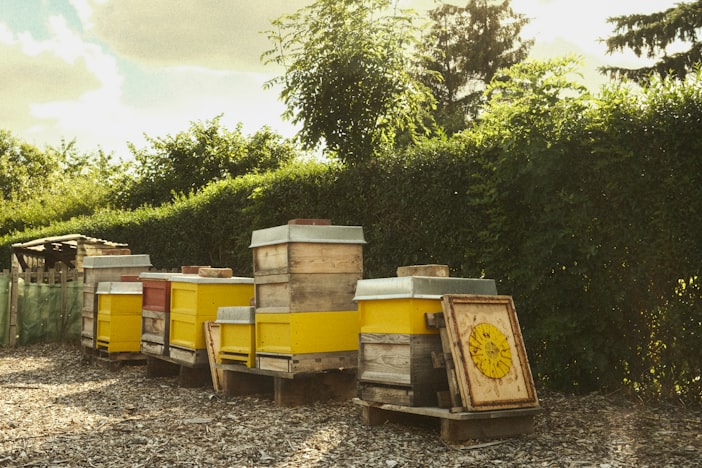
Since 2022, beekeepers have made more money renting their bees than selling honey.
Let that settle for a moment, because it rearranges everything you think you know about what beekeeping is. The image - the beekeeper pulling frames, extracting golden liquid, selling jars at a farmer's market - isn't wrong, exactly. It's just not where the money lives anymore. The money lives in almonds. Specifically, 1.7 million acres of almond orchards in California's Central Valley that require approximately two colonies per acre every February, creating an annual demand for roughly 3.4 million honey bee colonies in a country that maintains about 2.7 million.
The math doesn't work. It hasn't worked for years. And the economics of making it sort-of-work are stranger than the honey business ever was.
The $400 Million Pollination Economy
The USDA's National Agricultural Statistics Service tracks pollination costs the way it tracks crop prices - with the flat bureaucratic precision of an agency that has been counting things since 1862. In 2024, US producers spent more than $400 million on pollination services across 1.728 million acres of crops that require or benefit from managed honey bee pollination.
Of that $400 million, almonds consumed $325.8 million. Eighty-one percent. One crop, in one state, accounting for more than four-fifths of the entire national pollination economy. The average almond pollination fee ran $181 per colony in 2024 - nearly triple the average of $66 per colony for all other crops combined. Cherries, apples, blueberries, cranberries, watermelons - everything that isn't almonds splits the remaining 19%.
The Pacific Southwest region - Arizona, California, and Hawaii - accounted for 88% of all pollination service revenue, approximately $353 million. The geographic concentration is extreme enough that a single natural disaster in the Central Valley during February bloom would send ripple effects through the food system that would take years to resolve.
The pollination fee structure reveals something important about what a bee colony is actually worth. At $181 per colony for almonds, a beekeeper running 1,000 colonies generates $181,000 in pollination income from a single crop in a single month. That same beekeeper might produce 60 pounds of surplus honey per colony over the entire season - at wholesale prices around $2.50-3.00 per pound, that's $150-180 per colony per year from honey. The almond pollination check for one month equals or exceeds the honey revenue for the entire year.
This is why the trucks roll across America every January. This is why beekeepers in Florida, the Dakotas, and Texas spend thousands on diesel to move bees 2,900 miles to California at $3 per mile in trucking costs. A Florida-to-California haul costs over $8,000 one-way. But 500 colonies at $181 each is $90,500. The round-trip trucking cost is a rounding error against the pollination revenue.
The Apiary Project has free tools for beekeepers - calculators, schedulers, and seasonal guides.
Browse the Tools →The $621 Million Industry
The US beekeeping industry's total market size was approximately $621 million in 2024, according to IBISWorld - a slight decline from the previous year. Honey dominates at roughly 60% of revenue, with pollination services, beeswax, propolis, pollen, royal jelly, and bee sales making up the remainder.
But the industry's apparent size obscures its actual structure. The vast majority of America's estimated 115,000-125,000 beekeepers are hobbyists running fewer than 25 colonies. The USDA classifies operations with 500 or more colonies as "commercial." These commercial operations - perhaps 1,500-2,000 in number - manage the majority of the nation's 2.7 million colonies and produce the majority of its honey. Hobbyists and part-time beekeepers now account for about 40% of US honey production, up from a much smaller share in previous decades, but the commercial operators are the ones who show up for almond pollination and drive the industry's economic engine.
The consolidation pattern mirrors American agriculture broadly: fewer, larger operations doing more of the work. The largest - operations like Adee Honey Farms in South Dakota, historically one of the biggest in the country - run tens of thousands of colonies across multiple states. These aren't people tending bees. They're logistics operations that happen to involve insects.
What It Actually Costs
Running a commercial beekeeping operation involves a cost structure that reads like a small trucking company crossed with a veterinary clinic.
Transportation is the headline expense for migratory operations. At $3 per mile and routes stretching 1,000-2,900 miles per move, a single migration can cost $3,000-$9,000 in trucking. Most commercial beekeepers make 3-6 moves per year, chasing blooms and pollination contracts from Florida citrus to California almonds to Dakotas clover to Maine blueberries. Annual transportation costs for a 1,000-colony operation can easily exceed $30,000-50,000.
Feed costs have become a permanent line item. Colonies that once fed themselves between pollination events now often require supplemental feeding - sugar syrup in spring and fall, pollen substitute patties when natural forage is insufficient. A colony consumes roughly 80-90 pounds of honey just to survive winter in northern climates. If that honey isn't there, the beekeeper buys sugar.
Varroa mite treatments are non-optional. Oxalic acid, formic acid, Apivar strips, thymol-based treatments - the specific products vary by season and preference, but the cost per colony per year for mite management runs $5-15 in materials alone, before labor. An untreated colony in most of the US is a dead colony within 1-2 years.
Equipment replacement is constant. Hive bodies, frames, foundation, lids, bottom boards, queen excluders - wooden equipment lasts 5-10 years with maintenance, but a commercial operation cycling through thousands of boxes is always building, repairing, or replacing something. A complete new Langstroth hive setup runs $150-250 before you put a single bee in it.
Queens cost $25-50 each, and commercial operations requeen annually - sometimes twice. At 1,000 colonies, that's $25,000-50,000 per year just in queen replacement.
The labor math is its own challenge. Beekeeping is physically demanding, seasonally unpredictable, and requires skills that take years to develop. Commercial operations need experienced workers who can handle bees confidently, drive trucks loaded with hives at 3 AM, and make colony management decisions independently in remote bee yards. Finding and retaining these people at sustainable wages is a persistent industry problem.
The Colony Loss Arithmetic
Here is the number that makes the rest of the economics make sense: in the 2024-2025 season, commercial beekeepers reported average losses of 62% between June and February.
Sixty-two percent. If you started the year with 1,000 colonies, you had 380 by February. The Bee Informed Partnership, coordinated by Auburn University and the University of Maryland, has tracked these numbers since 2006. The 14-year running average for annual colony loss is 41.4%. Beekeepers themselves report that approximately 18.7-20% would be an "acceptable" loss rate. Actual losses are consistently more than double what the people keeping the bees consider sustainable.
At a conservative replacement cost of $200 per colony, the 2024-2025 losses were estimated at $224.8 million in direct colony replacement costs - not including the labor, feed, and treatments required to rebuild. Some individual beekeepers reported losses exceeding $1 million when accounting for unfulfilled pollination contracts and the cascading cost of rebuilding colony numbers.
The industry's total colony count hasn't collapsed only because beekeepers aggressively split surviving colonies every spring - dividing one strong colony into two or three smaller ones, adding purchased queens, and feeding them into production strength. It's the agricultural equivalent of running on a treadmill: the colony numbers look stable from a distance, but the effort required to maintain them keeps increasing.
The Bee Informed Partnership's year-by-year data tells the trajectory: 32% winter loss in 2006/07. 36% in 2007/08. A brief dip to 22% in 2011/12 - the lowest recorded. Then upward: 30% in 2012/13. 37.7% in 2018/19. 37.3% in 2023/24. 40.2% in 2024/25, with individual states ranging from 13.6% to 76.6%. The trend line isn't ambiguous.
The Honey Price Trap
American honey production in 2024 generated wholesale prices around $2.50-3.00 per pound, depending on variety, color, and source. A strong colony produces 60-80 pounds of surplus honey in a good year. At $3 per pound wholesale, that's $180-240 per colony per year in honey revenue.
Against that revenue, the per-colony costs run roughly: $25-50 for requeening, $5-15 for mite treatments, $10-20 for supplemental feed, plus allocated portions of transportation, equipment, labor, and land costs. The per-colony honey margin - the actual profit from honey alone - is slim to negative for many commercial operations, especially in years with poor nectar flows or high losses.
The US honey market is further complicated by import competition. Imported honey, particularly from countries with lower production costs, has depressed domestic prices for decades. Anti-dumping duties on Chinese honey have been in effect since 2001 and were renewed in 2023. New anti-dumping investigations found in 2022 that exporters in Argentina, Brazil, India, and Vietnam were shipping honey to the US at less than fair value. The trade actions helped, but domestic honey still competes with global supply in a market that most consumers navigate primarily by price.
The result is an industry where honey - the product most people associate with beekeeping - is increasingly a byproduct of the pollination business rather than the primary revenue stream. Honey pays some bills. Almonds pay the mortgage.
The Pollination Dependency
The concentration of beekeeping economics around almond pollination creates a fragility that the industry openly acknowledges and has no plan to address.
California's almond industry requires roughly 3.4 million colonies every February. The US maintains approximately 2.7 million. The gap is filled by colonies imported from other countries (primarily Canada and Australia) and by beekeepers pushing colonies into production condition earlier than biology really supports. Colonies that should still be building up from winter are instead being loaded on trucks and shipped to orchards.
If the almond industry contracted - due to water shortage, market shifts, or disease - the pollination revenue that subsidizes the rest of American beekeeping would shrink proportionally. Operations that survive because almond fees cover the losses from honey would be left with the honey math alone. The honey math, as established, doesn't work.
The alternative crops pay less. Apple pollination fees run $65-90 per colony. Blueberries pay $70-100. Cherries $60-80. These are meaningful revenues, but none of them approach the $181 per colony that almonds command, and none of them require the same volume of colonies. There is no second almond.
The Business of Replacement
The most telling statistic in commercial beekeeping isn't the honey price or the pollination fee or even the loss rate. It's this: the stabilization of managed bee populations in the United States has only been possible through intense splitting - the act of reproducing colonies through artificial division of healthy surviving colonies.
The colony count isn't maintained by colonies surviving. It's maintained by beekeepers continuously manufacturing new colonies from the survivors. The business model has quietly shifted from "keep bees alive and sell what they produce" to "replace the bees that die fast enough to have bees available when the almonds bloom."
A beekeeper who loses 62% of colonies between June and February needs to rebuild those colonies by the following June. Each split requires a surviving colony strong enough to divide, a purchased queen ($25-50), supplemental feeding to build the split into production strength, and 6-8 weeks of development time. The labor and material costs of splitting are in addition to the $200 per colony replacement figure, which only covers the bees and basic equipment.
The industry runs on replacement. The economics of replacement determine which operations survive and which don't. The beekeepers who can split efficiently, requeen quickly, and rebuild colony numbers between February's almond pollination and June's honey flow are the ones who stay in business. The ones who can't are the operations that quietly disappear from the USDA census every year.
The $621 million industry, the $400 million pollination economy, the 2.7 million colonies - these numbers describe a system that functions but doesn't thrive. The margins are tight. The losses are high. The dependency on a single crop in a single state is absolute. And the bees, who have no opinions about economics but strong opinions about varroa mites and forage quality, keep dying at rates that the people who depend on them consider unsustainable.
The trucks will roll to California again in January. The almonds will bloom. The checks will clear. And the beekeepers will spend the rest of the year trying to rebuild what they lost, so they can rent those colonies again next February.