Do Bees Sleep? Circadian Rhythms in the Hive
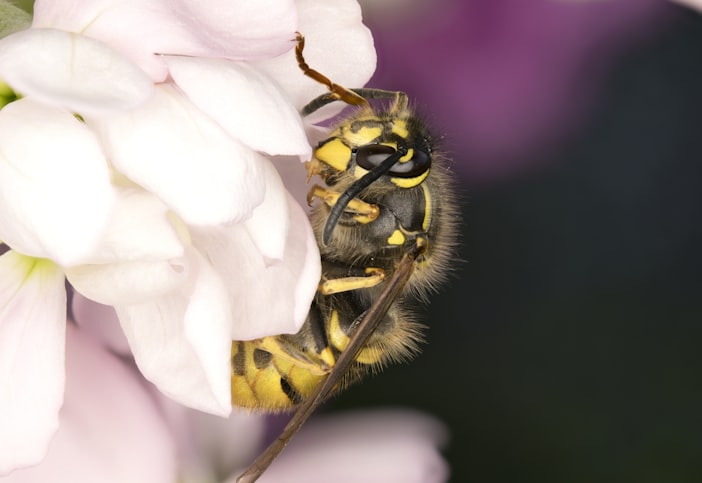
In 1983, Walter Kaiser published a paper that made an oddly controversial claim: honey bees sleep. He had filmed bees inside observation hives at night and documented a distinct behavioral state that met the established criteria for sleep in insects - reduced muscle tone, specific posture, decreased responsiveness to stimuli, and rebound (increased sleep) following deprivation. The bees weren't just sitting still. They were asleep.
The controversy wasn't about whether bees rest. Obviously they rest. A hive at 2 AM is quieter than a hive at 2 PM. The controversy was about whether the resting state constituted "sleep" in the biological sense - a regulated state with specific neural and physiological characteristics, distinct from simple inactivity. Kaiser's work, and the decades of research that followed, established that it does. Bees sleep. They have circadian rhythms. They need sleep to function. And the relationship between sleep and age-based task performance in bees turns out to be one of the more fascinating intersections of chronobiology and social behavior.
The Sleeping Bee
A sleeping honey bee looks like a bee that has stopped. She's motionless on the comb surface, her legs slightly flexed, her body pressed against the wax. But two features distinguish sleep from simple immobility.
The antennae. An awake bee's antennae are in constant motion - scanning, sampling air chemistry, touching surfaces and other bees, processing the pheromonal and chemical environment. A sleeping bee's antennae droop. They hang limply or rest against the comb. The antennal muscles relax. This is the single most reliable indicator of sleep in honey bees - the biological equivalent of closed eyelids.
The response threshold. A sleeping bee requires a stronger stimulus to respond than an awake bee. Kaiser tested this by directing puffs of air at resting bees. Awake bees responded immediately to a light puff. Sleeping bees required significantly stronger stimuli - sometimes physical contact - before they startled and resumed activity. The elevated arousal threshold confirms that the state isn't voluntary inactivity. The bee is less responsive because her nervous system is in a different operational mode.
Additional features: body temperature drops slightly during sleep. Ventilation movements (the rhythmic pumping of the abdomen that drives air through the tracheal system) slow. The thorax lowers, and the bee sometimes tilts to one side or tucks her head under her thorax - postural changes that indicate muscle tone reduction.
Sleep occurs in short bouts - typically 15 to 30 seconds each. A bee doesn't sleep for hours continuously the way a mammal does. She cycles between brief sleep episodes and brief awake episodes, accumulating total sleep time across many bouts. Total sleep time is approximately 5 to 8 hours per 24-hour period for forager-aged bees.
The Apiary Project tracks honey bee health data so you don't have to.
Explore the Data Hub →Who Sleeps and Who Doesn't
The most striking finding in bee sleep research is that sleep is age-dependent - and the pattern maps precisely onto the age polyethism schedule.
Young nurse bees barely sleep. Bees in the first 2 weeks of adult life - the nursing phase, when they're feeding larvae around the clock - show very little sleep behavior. They work day and night with roughly equal activity levels. Their behavior is arrhythmic - no clear distinction between day and night activity. They don't have a functional circadian clock. Or, more precisely, their molecular clock is running but it's not connected to their behavior.
This makes biological sense. Larvae need to be fed every few minutes. The brood doesn't observe business hours. A nurse bee that slept 8 hours per night would leave larvae unfed for 8 hours. The colony solves this problem not by having night-shift nurses and day-shift nurses, but by having nurses that don't sleep much at all.
Older forager bees sleep clearly. When a bee transitions to foraging - typically around day 21 - her behavior becomes strongly rhythmic. She forages during the day. She sleeps at night. Her circadian clock, which was running but decoupled from behavior during the nursing phase, locks onto the light-dark cycle and begins driving behavior. The forager is diurnal - active by day, asleep by night - with a precision that mirrors diurnal mammals.
The transition from arrhythmic nurse to rhythmic forager happens over a few days and coincides with the same physiological transition - declining vitellogenin, rising juvenile hormone - that drives the behavioral shift to foraging. The clock doesn't start when the bee is born. It starts (or rather, it connects to behavior) when the bee's social role requires it.
Guy Bloch at the Hebrew University of Jerusalem has done extensive work on this connection. His research shows that the molecular clock genes (period, timeless, clock, cycle - the same genes that drive circadian rhythms in flies and mammals) are expressed in both nurse bees and forager bees, but their expression patterns differ. In foragers, the clock genes oscillate with a clear 24-hour rhythm. In nurses, the oscillation is dampened or absent. The clock is present in both. It's regulated differently.
Where Bees Sleep
Barrett Klein and Thomas Seeley published a study in 2010 mapping the sleeping locations of individual bees within a colony. They marked bees with paint dots, filmed them through observation hive glass at night, and tracked where each bee slept.
Foragers sleep preferentially on the outer edges of the comb - away from the brood nest, away from the active areas of the hive. They sleep on empty comb, on honey cells, on the periphery. They cluster together loosely, sometimes sleeping adjacent to other foragers.
Nurse bees, during their minimal sleep, sleep on or near the brood comb - close to their work area. They don't travel to the periphery. Their sleep bouts are brief, and they resume nursing activity within seconds of waking.
The spatial segregation makes functional sense. The brood nest is noisy - bees walking, larvae moving in cells, heater bees vibrating, ventilation activity. The periphery is quieter. A forager that needs consolidated sleep goes where the disturbances are fewer. A nurse that naps for 15 seconds between feeding bouts stays where the larvae are.
The Sleep Deprivation Experiment
Ada Eban-Rothschild, Guy Bloch, and colleagues published a landmark study in 2012 showing that sleep-deprived bees perform worse at their most critical communication task: the waggle dance.
The experimental design was elegant and somewhat cruel. Bees were individually marked and placed on a platform that rotated slowly, preventing them from sleeping. (The same basic approach - a rotating platform or moving surface - is used to sleep-deprive rodents in laboratory studies. The technique prevents sleep without causing direct physical harm.) The sleep-deprived bees were then allowed to forage and perform waggle dances, and the precision of their dances was compared to that of well-rested bees.
The result: sleep-deprived bees danced less precisely. Their waggle runs were less accurately oriented relative to the food source. The directional error increased. The information content of the dance degraded.
This matters because the waggle dance is the primary mechanism by which a colony allocates its foraging effort. A dance that points 30 degrees away from the actual food source sends recruits in the wrong direction. If enough foragers are sleep-deprived and dancing inaccurately, the colony's foraging efficiency drops - fewer bees find the advertised food source, more bees waste time searching.
The finding established a functional consequence of sleep loss in bees - not just a behavioral deficit (less activity, slower responses) but a cognitive deficit (impaired spatial communication). Sleep isn't rest. It's maintenance. Something happens during sleep that the bee's nervous system requires to perform complex learned tasks accurately.
The Molecular Clock
The circadian clock in honey bees operates through the same conserved molecular mechanism found across insects and mammals: a transcription-translation feedback loop involving clock genes and their protein products.
The core loop: the genes Clock and Cycle produce proteins that activate transcription of Period and Cryptochrome. The Period and Cryptochrome proteins accumulate, form complexes, and eventually inhibit Clock and Cycle activity, shutting down their own production. The proteins are then degraded, the inhibition lifts, and the cycle starts again. One complete cycle takes approximately 24 hours.
This molecular oscillator runs in every cell of the bee's body. In the brain, it drives behavioral rhythms - the alternation between activity and sleep. In the fat body, it drives metabolic rhythms. In the antenna, it drives olfactory sensitivity rhythms (bees smell better at certain times of day).
The zeitgeber - the environmental cue that synchronizes the clock to the 24-hour day - is light, detected through the compound eyes and ocelli. But social cues also synchronize the clock. Bloch's research showed that young bees raised in isolation develop circadian rhythms faster than young bees raised in the social environment of the hive. The social environment of the brood nest - the constant activity, the chemical signals, the temperature stability - actually suppresses the expression of circadian rhythmicity. The hive keeps young bees arrhythmic because the hive needs them arrhythmic.
When a nurse bee is experimentally removed from the brood nest and isolated, she develops clear circadian rhythms within days. The clock was there all along. The social context was overriding it.
Night Work
The colony doesn't shut down at night. Activity levels decrease - foraging ceases because flowers close and navigation becomes unreliable in darkness - but in-hive tasks continue around the clock.
Nectar processing. House bees continue evaporating and ripening nectar at night, fanning over open cells to reduce moisture content. The work goes faster at night when foragers aren't constantly adding new loads.
Comb building. Wax production and comb construction occur at all hours. The wax glands don't observe a schedule.
Brood care. Nurse bees feed larvae day and night, as noted above. The feeding schedule is driven by larval demand, not by the clock.
Guarding. Guard bees remain at the entrance at night, though in reduced numbers. Nocturnal predators (mice, moths, small hive beetles) are deterred by the guards' presence.
Thermoregulation. Heater bees maintain brood nest temperature continuously. The thermal demand actually increases at night as ambient temperatures drop.
The colony's night shift is staffed primarily by young bees - the arrhythmic nurses and house bees who don't distinguish between day and night. The foragers sleep. The young bees work. The division of labor between rhythmic and arrhythmic bees creates a colony that operates 24 hours a day while allowing the oldest, most physiologically stressed workers to get the sleep they need.
The Nap Room
Klein's spatial mapping of sleep behavior revealed an unexpected feature of hive architecture: the colony effectively has a sleeping area. The peripheral comb zones where foragers congregate at night function as dormitories - regions of the hive where activity levels drop, where the comb is primarily used for honey storage rather than brood rearing, and where the social disturbances that would wake a sleeping bee are minimized.
This spatial organization isn't planned by any bee. It emerges from individual preferences - each forager seeks a quiet, peripheral spot to sleep - and from the hive's functional geography (the brood nest is central, the honey stores are peripheral). The result is a sleeping zone that nobody designed but everybody uses.
The observation has implications for hive management. A beekeeper who inspects a hive at night (which is uncommon but not unheard of) will find the foragers clustered on the outer frames, apparently inactive. A beekeeper who removes outer frames to "create space" or "reduce congestion" may be displacing the colony's sleeping quarters. The bees will find new places to sleep, but the disruption to sleep patterns could affect foraging accuracy and efficiency the following day.
Do Bees Dream?
This question appears regularly in popular science articles about bee sleep, and the honest answer is: we don't know, and we probably can't know with current technology.
What we can say: bees in deep sleep bouts show reduced neural activity that is distinct from waking neural activity. There are hints - from electrophysiological recordings in other insects - that sleeping insect brains replay patterns of neural activity experienced during the day. If this replay occurs in bees, it would be functionally analogous to the memory consolidation that occurs during mammalian sleep (and that is associated with dreaming in humans).
But "functionally analogous to memory consolidation" is very different from "dreaming." Dreaming involves subjective experience - conscious awareness of internally generated imagery. We have no way to assess whether a bee has subjective experience at all, let alone during sleep.
What we can say with confidence: sleep in bees serves a function related to learning and memory. Sleep-deprived bees communicate less accurately. Bees that have learned new foraging locations show sleep architecture changes (more sleep in the period following learning). The behavioral evidence suggests that sleep serves a neural maintenance function in bees, just as it does in mammals - consolidating memories, restoring neural function, and preparing the system for the next day's demands.
Whether that maintenance comes with mental imagery is a question that the bees, if they could answer it, would probably find less interesting than we do.
The Social Clock
The colony's circadian organization is a microcosm of how superorganism coordination works. The colony needs some bees to be active at night and some to sleep. It achieves this not by assigning shifts but by linking clock expression to age-based social role. Young bees don't have behavioral rhythms because their job requires around-the-clock availability. Old bees have strong rhythms because their job (foraging) is daytime-only and because their physiology requires recovery time.
The clock is the same in every bee. The social context determines whether it runs behavior or not. The colony's temporal organization - who works when, who sleeps when, how 24-hour operations are maintained without a night manager - emerges from the interaction between an individual molecular oscillator and a social environment that modulates its behavioral output.
No schedule. No clock-in. No overtime. Just a molecular timepiece in every brain, tuned by the colony's needs, producing a workforce that covers every hour of every day through the simple mechanism of letting the young ones skip sleep and the old ones take it.
The forager on the outer frame, antennae drooping, body pressed into the wax, sleeping in 30-second intervals through the night - she'll wake at dawn, fly to the feeding station she memorized yesterday, perform a waggle dance whose accuracy depends on the quality of sleep she got, and do it again until her wings wear out.
The nurse on the brood comb, awake at 3 AM, feeding a larva for the thousandth time today - she doesn't know it's 3 AM. Her clock isn't telling her. Her clock won't tell her anything about time until she's old enough to need it. By then, she'll need the sleep too.