Small Hive Beetle (How Africa Accidentally Exported Its Worst Pest to America)
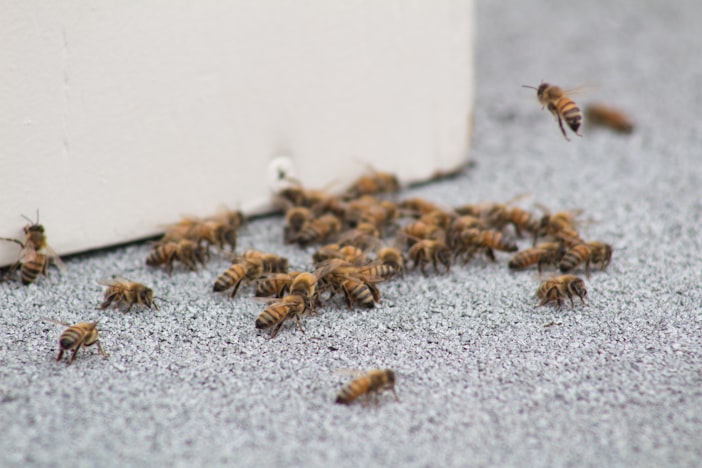
The beetle is 5 to 7 millimeters long. Oval. Reddish-brown to nearly black, with club-shaped antennae and flattened legs that tuck underneath its body in a turtle-like posture. It is not impressive-looking. It does not need to be.
Aethina tumida Murray - the small hive beetle - arrived near Charleston, South Carolina in 1996, though positive species identification didn't come until spring 1998 at Fort Pierce, Florida. By summer of that year, more than 20,000 honey bee colonies in Florida were gone. The beetle had probably traveled on a cargo ship, possibly accompanying a swarm of African honey bees, and landed in a country whose bees had never encountered it before and had no evolutionary playbook for dealing with it.
In its native sub-Saharan Africa, the small hive beetle is a minor inconvenience. In North America, it's a colony killer. The difference is not the beetle. The difference is the bee.
The Biology of a Hive Wrecker
A female small hive beetle begins laying eggs within 24 hours of entering a hive. She deposits them in clusters of 5 to 10, tucked into cracks and crevices smaller than 1 millimeter - including, remarkably, inside capped brood cells. The eggs are rarely noticed during inspections. They hatch in 24 to 48 hours.
The larvae - white, worm-like, 10 to 12 millimeters long, distinguished from wax moth larvae by characteristic dorsal spines - feed for 7 to 16 days depending on temperature. Three instars. They eat honey, pollen, and brood. Everything, essentially, except wax. A quick field identification: if you can easily squish it between thumb and forefinger, it's a wax moth larva. If not, it's a hive beetle.
Over a lifetime, a single female produces 1,000 to 2,000 eggs across multiple clusters. The math scales fast. And the feeding isn't the worst part.
The worst part is the yeast.
The Apiary Project tracks every major threat to US honey bee colonies.
Explore the Issues Hub →The Yeast That Rewrites the Rules
Small hive beetles carry Kodamaea ohmeri - a symbiotic yeast present at every life stage, from egg mucilage to cuticle to internal tissues. The relationship is facultative for the beetle but transformative for the hive.
K. ohmeri ferments honey. It converts the contents of comb cells into a slimy, malodorous mess that beekeepers describe as smelling like rotting oranges. Honey contaminated by it is unfit for human consumption. But the fermentation does something more insidious than ruining honey: the volatile compounds produced by the yeast mimic honey bee pheromones.
The yeast's fermentation byproducts essentially broadcast a chemical signal that means "come here" - to more beetles. A hive with an active K. ohmeri infection is advertising its own infestation to every small hive beetle within flight range. More beetles arrive. More yeast spreads. More honey ferments. More signal broadcasts. It's a positive feedback loop powered by a microorganism that was sequenced in 2019 by the USDA, revealing a tripartite relationship between bee, beetle, and yeast that operates like a biological sabotage system.
The "slimeout" - the industry term for when a colony's comb has been so thoroughly colonized by beetle larvae and K. ohmeri that the entire operation is lost - represents the endgame. By the time visible slime appears, the colony is usually past saving.
The Underground Phase
When beetle larvae finish feeding, they enter a wandering phase - one to two days of movement toward light, exiting the hive at dusk, then burrowing into soil within 36 inches of the hive. Some travel up to 200 yards. They can survive 60 days without food while searching for suitable pupation sites.
Once they find soil, they burrow 2 to 10 centimeters deep - with 80 percent staying within 10 centimeters of the surface - and pupate. The transformation takes 3 to 6 weeks depending on temperature: roughly 15 days at 35 degrees Celsius, 21 days at optimal summer temperatures, 33 days at 21 degrees, and up to 100 days below 10 degrees.
Two factors determine whether pupation succeeds: depth and moisture.
In one study, larvae placed in soil at 4 to 8 centimeters depth achieved 95.6 percent pupation success. Minimum depth required: 2 centimeters. The optimal temperature is 28 degrees Celsius, where survival exceeds 90 percent. Above 35 degrees, pupation fails regardless of depth - the soil is too hot.
And then the moisture data, which is the number that stops you: 3,000 larvae placed in moist soil produced 2,746 adults. In dry soil, the number was zero. Not "reduced." Not "significantly lower." Zero. Moisture is not a factor in pupation success. Moisture is the factor.
This is what makes the small hive beetle so frustrating to manage. The soil phase is invisible. Once larvae leave the hive and burrow underground, there is no way to detect them, no way to count them, no way to know how many adults will emerge 3 to 6 weeks later. A beekeeper who corrects every problem inside the hive today will still face a wave of newly emerged adults from the underground generation that was already developing when the corrections were made. The feedback loop has a 3-to-6-week delay built into it.
New adults emerge ready to fly up to 4.3 miles to find hives. Up to six overlapping generations occur per season in southern states. The pipeline never stops.
Why African Bees Handle It and European Bees Don't
In its native range, the small hive beetle cohabits with the Cape honey bee - Apis mellifera capensis - and rarely causes significant damage. Strong African colonies contain beetle populations at cryptic levels. The beetle exists, reproduces at low rates, and the colony goes about its business.
The defense mechanisms are specific and effective. Cape bees "jail" beetles in propolis prisons - encasing individual beetles in resinous deposits that immobilize them within the hive. Workers mount quick, aggressive responses to beetle larvae. And when a colony is genuinely overwhelmed - when the beetle population exceeds what the bees can contain - African bees do something that looks like defeat but is actually the most effective defense of all: they abscond.
Absconding - the entire colony abandoning the hive - is an adaptive response in the African context. The colony leaves. The beetles are left with an empty hive and no brood to feed on. African bees prepare for absconding efficiently; their colony structure is smaller and more mobile, allowing rapid evacuation.
European honey bees - the subspecies that American beekeeping relies on - lack these adaptations. They will harry beetles into corners but don't construct propolis prisons as effectively. And crucially, European bees don't abscond well. They stay and try to fight even when overwhelmed. They are, as a 2018 study in Apidologie described it, "less prepared for the process of absconding relative to African bees."
The paradox is exact: the very traits that make European honey bees valuable for commercial beekeeping - large colony sizes, reluctance to abscond, heavy honey storage, willingness to stay put on managed frames - are precisely what makes them vulnerable to a pest that evolved alongside bees with opposite traits. A colony that won't leave is a colony that a beetle can exhaust. A colony that stores enormous quantities of honey is a colony that offers enormous quantities of food. What makes a bee profitable and what makes a bee defensible turn out to be opposing evolutionary strategies, and the small hive beetle sits exactly in the gap between them.
The Spread
By 1998 - two years after the first detection - the beetle had been confirmed in Georgia, South Carolina, North Carolina, and throughout Florida. By 2004, it had reached Virginia and expanded widely east of the Mississippi. In 2026, it's present in nearly every US state except Alaska, plus several Canadian provinces, and has gone global: Australia in 2002, Italy in 2014, South America, the Philippines.
The spread mechanisms are the mechanisms of modern beekeeping itself. Migratory operations move beetles on equipment between states. Package bee sales redistribute populations. Standard hive management practices - moving frames between colonies, extracting honey in shared facilities - provide transportation that the beetle never had to evolve wings sophisticated enough to manage on its own.
Northern states experience annual reintroduction rather than permanent establishment. The beetle doesn't overwinter outside hives where the ground freezes. Small numbers of adults survive winter inside hive clusters, using the bees' own generated heat as an overwintering strategy. Each spring, migratory beekeeping and package sales reseed northern populations. Climate change projections show what researchers describe as a "vehement increase in climatic suitability" for the beetle in temperate Northern Hemisphere regions.
The geographic pattern in 2026: highest pressure in the Southeast, where the subtropical climate matches the beetle's native African conditions. Lower establishment in arid Western states, where dry soil inhibits the pupation that moisture makes possible. The line between "chronic pest" and "manageable nuisance" runs roughly along the line between moist southeastern soil and dry western soil - which is to say, along the line that determines whether 3,000 larvae produce 2,746 adults or zero.
The Varroa Interaction
The relationship between small hive beetles and varroa mites is indirect but devastating.
One commercial operation reported 75 percent colony losses to beetles before implementing mite management. After reducing mite loads, beetle losses dropped to near zero. The beetle population hadn't changed. The bees' ability to defend against it had.
Varroa weakens colony defense capacity. It suppresses immune function. It vectors deformed wing virus. It reduces the population of healthy workers available to patrol, harry, and contain beetle intruders. The small hive beetle doesn't interact directly with varroa in any biological sense. It doesn't need to. It just waits for the mite to weaken the colony's defenses, then exploits the opening.
Colonies with varroa below treatment thresholds rarely show beetle problems even in high-pressure areas. The beetle is fundamentally an opportunistic pest. Strong colonies contain it. Weak colonies - weakened by mites, by disease, by poor nutrition, by pesticide exposure, by queenlessness - collapse under it. The compound effect of multiple stressors is not additive. It's multiplicative. A colony fighting varroa and small hive beetle simultaneously is not facing two problems. It's facing one problem that has two names.
The Honey House Problem
The part of small hive beetle management that catches beekeepers off guard isn't always what happens in the hive. It's what happens in the honey house.
Supers removed from hives for extraction must be processed within 48 hours. After 48 hours, beetle eggs - which were invisible in the comb's crevices when the super was pulled - hatch into larvae. By day 5 to 7, visible damage appears. By day 10, the super may be unsalvageable. A single adult beetle that finds unprotected comb in a warm, humid extraction room can produce hundreds of larvae in days.
The speed of the timeline is the problem. A beekeeper who pulls 50 supers on a Friday afternoon and plans to extract on Monday morning may open the honey house to find slime. The honey is contaminated. The comb is destroyed. The weekend that seemed like a reasonable delay was, from the beetle's reproductive perspective, an open invitation.
The Genome and What Comes Next
The first SHB genome was published by the USDA in 2018 - a draft that provided the initial genetic blueprint. In 2023, Qiang Huang and colleagues achieved a chromosome-level assembly: 259 megabase pairs organized into 38 gapless contigs representing 99.1 percent of conserved arthropod genes. Jay D. Evans at the USDA-ARS Bee Research Laboratory in Beltsville contributed to the work.
The genome revealed an XY sex determination system - Chromosome 1 (the longest) as the X, Chromosome 8 (the shortest) as the Y. A female-skewed primary sex ratio was detected: 46 female versus 33 male in 79 eggs, though the skew wasn't statistically significant. PCR primers were developed to distinguish male from female eggs - tools that didn't exist before and that open the door to understanding and potentially manipulating sex ratios.
On the biological control front, entomopathogenic nematodes - microscopic soil-dwelling worms that parasitize insect larvae - represent the most promising non-chemical approach. Steinernema carpocapsae achieved 87 percent parasitization of wandering beetle larvae in Alabama soil studies, hitting 94 percent in loamy sand at the highest nematode density. The nematodes enter beetle larvae and pupae, release symbiotic bacteria, and cause septicemia within 24 to 48 hours.
Soil type matters enormously: 94 percent parasitization in Kalmia loamy sand versus 47 percent in Decatur silt loam. Sandy southeastern soils - exactly the soils where beetle pressure is highest - are also the soils where the biological control agent works best. The geography of the problem and the geography of the solution overlap.
Jamie D. Ellis at the University of Florida, W. Michael Hood at Clemson, Keith S. Delaplane at the University of Georgia - the researchers who've spent decades on this beetle have assembled an increasingly detailed picture of how it works, how it spreads, and where the intervention points are. The trap-based monitoring system that beekeepers use to track beetle populations is one output of that research. The genome, the nematode data, and the K. ohmeri yeast studies are building toward others.
The 5-Millimeter Problem
The small hive beetle is not the most destructive pest in American beekeeping. That distinction belongs to varroa, which kills more colonies, costs more money, and has reshaped the entire industry's economics. The beetle is the secondary pest - the one that finishes off colonies that varroa or other stressors weakened.
But the beetle is the one that reveals the deepest irony in managed beekeeping. The bees that American agriculture depends on - the large, productive, site-faithful European subspecies that pollinate $18.9 billion in crops and make commercial operations viable - are the bees least equipped to handle a pest that the bees' African relatives have been managing for millennia. The traits that built the industry are the traits that the beetle exploits. The solution that works best in nature - absconding - is the solution that destroys the beekeeper's investment.
Five to seven millimeters long. A yeast that rewrites the chemistry of the hive. A soil phase that's invisible. A lifecycle that loops faster than management can follow. And a vulnerability that's built into the biology of the bees we chose to keep - not because we chose wrong, but because the beetle evolved to exploit exactly what we selected for.
The fortress that worked in Africa doesn't work in an American apiary. The beetle knows this. The bees are learning it. The beekeepers have been living it since 1996.