Honey Varietals (Why the Same Bee Produces Hundreds of Different Flavors)
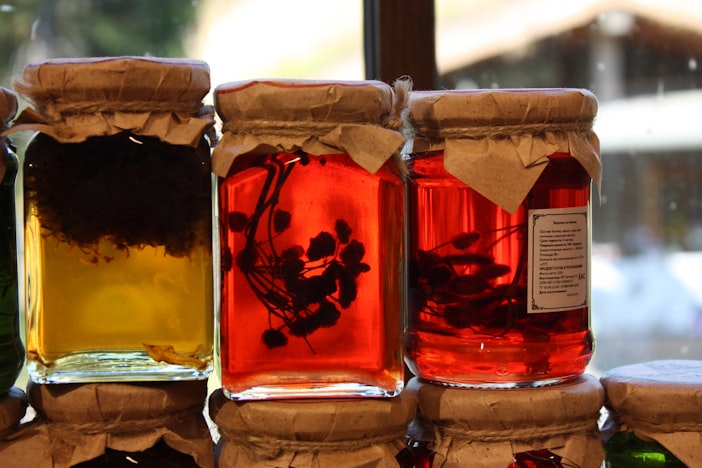
Most Americans have had exactly one conversation with honey. It happened in a grocery store, lasted about five seconds, and ended with a plastic bear in the cart. The label said "pure honey" or "clover honey" or, with remarkable candor, "blend of US and imported honeys." It tasted like honey. It cost around $6. Case closed.
The thing is, there are over 300 identified varietal honeys in the United States alone. Tupelo honey that pours like liquid gold and has never crystallized in recorded history. Buckwheat honey so dark it looks like motor oil, with a flavor that punches you in the sinuses. Fireweed honey from Alaska that's practically white. Sourwood honey from Appalachia that beekeepers ration like vintage wine and sell out before they've finished setting up the table. Goldenrod honey that smells, when uncured, like a gym locker - but cures into something perfectly pleasant, which is a sentence you'd be skeptical of if you hadn't smelled the uncured version.
Each varietal is defined by the dominant nectar source the bees visited during production. The differences between them - in color, flavor, crystallization rate, sugar chemistry, mineral content - are real and measurable. The plastic bear doesn't tell that story. The beekeeper's jar, with the source and harvest date, does.
What Makes a Varietal
A honey is classified as varietal or monofloral when at least 45 percent of the nectar - as determined by pollen analysis - comes from a single botanical source. True monofloral honey requires that hives are positioned in an area dominated by the target plant during bloom, and that the beekeeper harvests immediately after that bloom ends, before nectar from subsequent flowers dilutes the character.
The practical consequence: varietal production requires geographic specificity, precise timing, and an element of luck. A beekeeper with hives surrounded by sourwood trees harvests immediately after the June bloom and gets a premium product. Wait two weeks and the sourwood gets diluted with wildflower nectar and becomes "mountain wildflower" - perfectly nice, at half the price.
The chemistry of each varietal is determined by the nectar's composition. Different plants produce nectars with different sugar ratios, amino acid profiles, organic acids, volatile aromatic compounds, and secondary metabolites. The bees process the nectar into honey - evaporating water, adding enzymes, inverting sucrose into glucose and fructose - but the original chemical fingerprint of the flower carries through. The bee is a transformer, not an eraser.
The Apiary Project tracks honey bee health data so you don't have to.
Explore the Data Hub →The Light End: Acacia, Fireweed, Clover
The lightest honeys in the US are acacia (technically black locust, Robinia pseudoacacia), fireweed, and white clover. All run pale gold to nearly water-white, with mild, delicate flavors and high fructose-to-glucose ratios. The high fructose content explains two things simultaneously: the gentle sweetness (fructose tastes sweeter than glucose at the same concentration, so these honeys taste sweet without being cloying) and the slow crystallization rate (glucose crystallizes; fructose doesn't).
Acacia is prized in European markets and increasingly in the US. The trees bloom for approximately 10 days in May - one of the shortest windows of any major honey plant. Get rained out during black locust bloom and you get nothing. Catch it on a warm, dry week and you get a honey that's nearly transparent, with a flavor that whispers vanilla and flowers. European acacia honey, primarily from Hungary and Italy, is the default table honey in much of continental Europe.
Fireweed (Chamerion angustifolium) grows in logged or burned forest areas across the Pacific Northwest and Alaska - it's a pioneer plant, first to colonize disturbed ground. The honey is nearly white, with a buttery, slightly floral flavor. It's produced in small quantities because fireweed only dominates a landscape for a few years after a disturbance. Once the forest canopy closes back in, the fireweed disappears and so does the honey.
Clover - white clover, sweet clover, alsike clover - is the standard against which American honey is measured. Mild, floral, inoffensive. It's the honey most Americans grew up eating, because clover used to be everywhere. As agricultural herbicides have reduced clover populations along with the field margins and CRP acreage that once supported it, pure clover honey has become less common than the label suggests. Much of what's sold as "clover honey" is now wildflower honey with some clover in the blend.
The Dark End: Buckwheat, Avocado, Goldenrod
Buckwheat (Fagopyrum esculentum) honey is very dark amber to nearly black, with a robust, malty, molasses-like flavor that includes notes of chocolate, earth, and something vaguely mineral. It's strong. Some people can't stand it. Others won't eat anything else. Buckwheat is produced primarily in the Northeast, Upper Midwest, and parts of Canada where buckwheat is grown as a cover crop. One notable distinction: buckwheat honey has the highest antioxidant content of any common US varietal - roughly 20 times the antioxidant capacity of acacia honey. The mild clover honey that's been the American default is also, by this measure, the least nutritionally interesting option on the table.
Avocado honey from Southern California is dark amber, thick, and tastes like butterscotch or dark caramel. It comes from orchards that depend on honey bee pollination - the bees are there for pollination fees, and the honey is a bonus that happens to be excellent. The flavor is nothing like avocados. People who try it for the first time ask "this is from avocados?" with visible confusion. The answer is yes, technically.
Goldenrod is the most divisive honey in American beekeeping. The flavor is strong, slightly spicy, with an aftertaste some people describe as peppery. The aroma when uncured is the issue: beekeepers describe uncapped goldenrod honey as smelling like "dirty socks," "a gym locker," or, more dramatically, "something died in the hive." This is accurate. The smell fades after the honey is capped and cured. The finished product is perfectly pleasant. But that uncured harvest-time aroma has inspired more colorful language from beekeepers than any other honey in the American apiary.
The Unicorns: Tupelo, Sourwood, Sage
Some varietal honeys are so geographically restricted, so seasonally unpredictable, and so consistently excellent that they've achieved something like cult status.
Tupelo honey comes from the white Ogeechee tupelo tree (Nyssa ogeche), which grows along a narrow strip of river swamp in the Apalachicola River basin of the Florida Panhandle. The trees bloom for two to three weeks in late April to early May. Beekeepers stage their hives on platforms above the swamp water and harvest immediately after the bloom. The supply is limited by geography - you cannot grow more tupelo swamp.
Tupelo has the highest fructose-to-glucose ratio of any common honey - approximately 44 percent fructose to 30 percent glucose. This ratio means it doesn't crystallize. Ever. A jar bought in 2026 will still be liquid decades later. The flavor is delicate and faintly fruity, with notes people describe as pear, vanilla, or green apple. It sells for $20 to $30 per pound at source and more online.
Van Morrison wrote a love song called "Tupelo Honey." The honey deserves the analogy.
Sourwood (Oxydendrum arboreum) grows in the Appalachian Mountains from Virginia to Georgia, with the heaviest concentrations in western North Carolina and eastern Tennessee. The trees bloom in June and July. The honey is light amber with a complex flavor that defies simple description - slightly spicy, slightly anise, slightly caramel, with a finish that's uniquely sourwood and nothing else. Some people taste gingerbread. Some taste butterscotch. Everyone agrees it tastes like something they haven't encountered before.
Sourwood sells for $25 to $35 per pound and routinely sells out before the season ends. The complication: nectar production varies dramatically from year to year depending on rainfall and temperature during the bloom. A great sourwood year produces a crop. A poor one produces nothing. Beekeepers who specialize in sourwood maintain waiting lists with the quiet confidence of sommeliers who know what they have.
Sage honey from the California coastal ranges - from black sage (Salvia mellifera) and white sage (Salvia apiana) - is water-white to pale gold, with an exceptionally mild, clean flavor and a very slow crystallization rate. It was once the dominant California varietal, produced in large quantities from chaparral-covered coastal hills. Urban development, drought, and wildfire have reduced sage habitat significantly enough that it's transitioned from commodity to specialty product within living memory.
The Crystallization Variable
Honey varietals crystallize at dramatically different rates, and the mechanism is the glucose-to-fructose ratio. Glucose forms crystals. Fructose doesn't. A honey with high glucose content crystallizes quickly - sometimes within weeks of harvest. A honey with high fructose content stays liquid for months or years.
Rapeseed (canola) honey has one of the highest glucose ratios and can crystallize within days of harvest - sometimes in the comb, before extraction. It must be processed quickly or it turns solid. Tupelo, acacia, and sage sit at the opposite extreme, resisting crystallization almost indefinitely.
This variable matters commercially because consumers associate liquid honey with freshness and crystallized honey with spoilage - incorrectly, since crystallization is a natural process that doesn't degrade honey, but the perception persists. Honey packers blending for grocery store brands select for slow-crystallizing varietals and use ultrafiltration to remove the seed crystals that accelerate the process. The result is shelf-stable but characterless.
Color as Chemistry
Honey color runs from water-white to nearly black, and the color correlates reliably with flavor intensity, antioxidant content, and mineral content. The darkness comes from phenolic compounds, melanoidins (Maillard reaction products from amino acid-sugar interactions), mineral content, and secondary metabolites from the source plant. Dark honeys have higher concentrations of all of these.
The American commodity market historically paid a premium for light-colored honey and discounted dark. This is shifting as specialty markets grow. Buckwheat honey that sold at a discount 20 years ago now commands a premium at farmers markets. The market is learning what beekeepers have always known: dark doesn't mean inferior. It means different.
The Wine Parallel
The wine industry built a $300 billion global market on terroir - the idea that a specific combination of soil, climate, geography, and agricultural practice produces something unreplicable. A Pinot Noir from Burgundy and a Pinot Noir from Oregon share a grape and almost nothing else.
Honey has the same phenomenon, at higher intensity. Two wines from different regions are at least the same varietal processed through different soils. Tupelo honey and buckwheat honey aren't even from the same plant. They share a name and the bees that made them.
The honey industry hasn't built its marketing around terroir the way wine has - partly because most honey enters the market as a blended, homogenized commodity, and partly because consumer education hasn't caught up with what the specialty end already knows. But the consumer who pays $45 for a bar of single-origin chocolate or $30 for a bottle of single-origin olive oil is the same consumer who will pay $25 for a jar of sourwood honey, once they've tasted it.
The bees don't care about any of this. They forage on whatever is blooming within four miles of the hive. The honey they produce is a chemical record of the landscape they flew through - the specific flowers, in the specific soil, in the specific season, in the specific year. The plastic bear doesn't tell that story. A sourwood jar with a harvest date does.