Why Local Honey Costs More (The Price Gap Is Real and Growing)
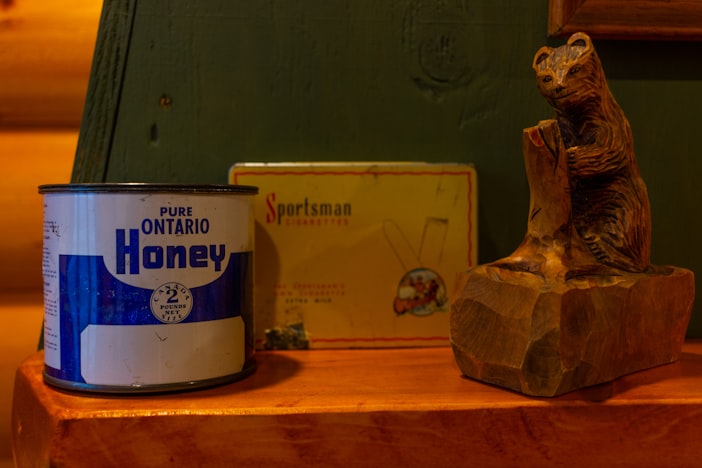
There's a moment at every farmer's market in America - it happens so reliably you could set a watch by it - where a customer picks up a jar of local honey, glances at the price tag, and their face does this thing. This subtle recalculation. Because the jar says $12, and the bear-shaped squeeze bottle at Kroger says $5, and the customer is now doing mental arithmetic that will lead them to exactly the wrong conclusion.
The conclusion being: somebody here is getting ripped off.
Here's the thing. Somebody is getting ripped off. It's just not who you think. It's probably the beekeeper.
The Number That Explains Everything
According to the USDA's National Honey Report, bulk honey sold in 55-gallon drums to commercial packers averaged $2.67 per pound for light honey and $2.80 per pound for amber in early 2026. That's domestic. American bees, American flowers, American barrels.
Now. Imported honey arrives at US ports for considerably less. As of mid-2024, import prices ranged from $1.36-$1.55 per pound from Argentina, $1.24-$1.55 from Brazil, 87 cents to $1.40 from India, and 84 cents to $1.22 from Vietnam. India alone accounted for 39% of US honey imports in 2023, followed by Argentina at 23%.
Eighty-four cents a pound. Let that settle for a moment.
That imported honey gets blended, filtered, and packed into the retail containers you see at supermarkets. The national average retail price for honey was $7.85 per pound in 2024 - which means that $5 bear bottle holding 12 ounces of honey represents a product that traveled thousands of miles, changed hands multiple times, and still landed on the shelf at a price your local beekeeper literally cannot match. Not because your local beekeeper is inefficient. Because the economics of small-scale honey production operate in what might charitably be called a completely different universe.
The Apiary Project has free tools for beekeepers - calculators, schedulers, and seasonal guides.
Browse the Tools →Fifty-One Pounds of Everything
The USDA's 2024 honey report puts the national average yield at 51.7 pounds per colony. That number averages across everything from North Dakota operations running thousands of hives in prime clover country to backyard beekeepers in suburbs where the nearest nectar source is a neighbor's questionable landscaping choices.
For a hobbyist running two to five hives, realistic yields range from 30 to 60 pounds per hive in a good year. Some years produce less. Some years produce nothing - the colony might swarm, the queen might die, a late frost might kill the spring nectar flow, or varroa mites might crash the colony before it ever builds enough population to produce surplus honey.
And "surplus" is the key word that changes everything. Bees make honey for themselves. A colony needs roughly 60-90 pounds of honey to survive winter, depending on climate. The beekeeper only harvests what exceeds that threshold. If the bees produced 80 pounds total and need 70 to survive, that beekeeper gets 10 pounds. From an entire year's work with that colony. Ten pounds. Roughly eight jars.
Take a beekeeper with four hives who gets a decent but not spectacular year - say 40 pounds surplus per hive. That's 160 pounds total. In 12-ounce jars, that's about 213 jars. In one-pound jars, it's 160. That's the entire annual production from four colonies and hundreds of hours of work. That's the inventory for every Saturday farmer's market from June through October. When it's gone, it's gone.
The Oklahoma State University Reckoning
Oklahoma State University's Extension Service published one of the most detailed breakdowns of small-scale honey production economics anyone has ever subjected to a spreadsheet. Their analysis - which accounts for equipment depreciation, labor, packaging, insurance, and variable costs - calculated a breakeven price of $11.72 per eight-ounce jar.
Not per pound. Per eight ounces. Just to break even.
The fixed costs alone run $623.76 per year: equipment depreciation at $215.84, interest on equipment investment at $53.96, repairs and maintenance at $53.96, and farmer's market liability insurance at $300. That's before a single bee flies.
Variable costs per harvest add another $314.13: harvesting labor at 15 hours (valued at minimum wage - minimum wage!), containers at $1.50 each for 120 jars, and management labor at 3.5 hours. Divide the combined $937.89 by 80 jars and there's your $11.72.
And the analysis doesn't include the cost of the bees themselves - nucleus colonies averaging $109 or package bees at $89 in 2024. It doesn't include replacement queens at $18 average, or supplemental feeding during nectar dearths, or mite treatments running $45-60 per year per hive, or the gas to drive to the farmer's market, or the $50-100 booth fee, or the three hours spent standing behind a table on a Saturday morning explaining to people why honey costs $12 a jar.
The economics of local honey production are, to put it politely, bananas.
Where 120 Hours Go
The time commitment surprises people who picture beekeeping as an occasional weekend activity where you wear a charming hat and the bees basically take care of themselves.
A University of Florida Extension analysis found hobbyist beekeepers spend 25-35 hours per hive per year. That's biweekly inspections during active season at 30-45 minutes per hive per visit. Varroa mite monitoring and treatment running 3-5 applications per year, each requiring setup, application, and follow-up. Spring buildup management - feeding, equalizing colonies, checking for healthy queens. Swarm prevention during peak season. The honey harvest itself: pulling supers, extracting, filtering, bottling. Fall preparation: assessing winter stores, reducing entrances, final treatments. Equipment maintenance: building, repairing, painting, scraping propolis off everything. Winter monitoring when it's 20 degrees and you're out there with an ear pressed against the side of a box listening for the cluster's hum.
For four hives, that's 100-140 hours per year. Divide 160 pounds of honey by 120 hours and you're producing 1.3 pounds of honey per hour of labor. At $12 per pound, that's $15.60 per hour before subtracting any costs. After equipment, treatments, packaging, and everything else, the effective hourly wage drops somewhere between "not great" and "you'd literally make more money working retail."
Commercial operations achieve dramatically better efficiency - roughly 4-7 hours per hive when managing 300-500 colonies - because fixed time costs get amortized across more production. A commercial beekeeper driving to check hives spends the same drive time whether checking 5 hives or 50. That's why commercial honey production can sell at $2.69 per pound and stay in business. Scale changes everything. Scale always changes everything.
The Equipment Rabbit Hole
The initial hive setup runs $270 for basic components. Bees cost another $89-$250 depending on whether you buy packages or nucleus colonies. Protective gear and tools add $200. A beginning beekeeper is looking at $559-$720 before a single bee flies.
But that's just the hive. To harvest honey, you need extraction equipment - the thing nobody mentions at the "Introduction to Beekeeping" workshop where they showed you the nice photos of golden frames and smiling people. A basic manual extractor costs $100-300. An electric model runs $300-1,500. You need an uncapping knife ($75), uncapping scratcher ($7), strainer ($34), and bottling bucket ($25). That's another $241-$1,641 in equipment that sits in your garage 50 weeks per year and gets used for two intense, sticky, slightly chaotic weekends of extraction.
Some beekeeping clubs share extractors, which cuts costs but adds scheduling complications and the particular social dynamics of six people who all need the same equipment during the same two-week window. The Flow Hive attempted to solve the extraction problem entirely, though at a premium price point of $569-$900 that creates its own cost calculations.
Then there's the replacement cycle. Foundation costs for frames run $1-3 per sheet. Hive bodies deteriorate and need replacement. Queens fail and need replacing - sometimes mid-season at premium prices. Colonies die over winter - the national average loss rate has hovered around 40-50% in recent years - and dead colonies need restocking come spring.
A beekeeper who starts with four hives, loses two over winter, and buys two replacement nucleus colonies in spring just spent $218-$500 on bees alone before the season even starts. That cost gets baked into every jar produced that year.
Meanwhile, at the Honey Factory
The supermarket honey equation works in a different dimension of reality. A commercial packing operation buys honey in 55-gallon drums - roughly 640 pounds per drum - at $2.67 per pound. They filter, blend, heat-treat for consistent texture, and bottle it on automated lines that fill thousands of containers per hour.
Their cost per jar: raw honey at roughly $2.00 per 12-ounce jar. Packaging at $0.20-0.50 thanks to industrial-scale purchasing. Labor measured in pennies per jar because a machine is doing it. Overhead, distribution, and margin stacking another $1-2 on top.
That $5 retail price contains plenty of profit for both the packer and the retailer. The economics work because volume obliterates per-unit costs. When you're filling 10,000 jars an hour, the $300 farmer's market insurance policy and the 15 hours of manual extraction labor don't exist in your spreadsheet. They don't even exist in the same spreadsheet application.
The trade-off is that supermarket honey typically comes from multiple origins, may be ultrafiltered (removing pollen and some compounds in the process), and bears little connection to any specific landscape or season. Whether that matters depends on what you're buying honey for.
The $12 Jar Contains Ghosts
The Bee Culture magazine's 2026 regional price survey shows the national retail average for a one-pound jar of honey at $11.53, with prices ranging from $6 to $20 depending on location, varietal, and market. Quart jars averaged $24.88. Cut comb - the most labor-intensive format - averaged $16.77 per pound.
Those prices reflect what the market bears, not what production costs demand. In many cases, beekeepers price below their true cost of production because they treat beekeeping as a hobby that happens to produce a sellable product. The honey sales offset costs rather than generating profit. The bees are the point; the honey is a side effect.
This creates a genuinely strange dynamic where local honey is simultaneously overpriced (from the consumer's perspective comparing it to supermarket honey) and underpriced (from the producer's perspective calculating actual costs). The beekeeper at the farmer's market charging $12 per pound is probably losing money when all costs are properly accounted for. The one charging $8 definitely is.
And then there's the number that really changes everything: colony losses. The Bee Informed Partnership's annual surveys consistently show loss rates between 35% and 50% for managed colonies in the United States. The 2024-2025 survey recorded commercial losses of 62% between June and February - the highest rate ever documented.
Every colony that dies represents sunk costs that produced nothing. The bees, the treatments, the feeding, the inspection time - all vanished. If a beekeeper starts the year with four colonies and loses two, the surviving colonies' honey has to absorb the cost of all four. Those two dead hives consumed resources all year without producing a single surplus ounce. At 40% annual losses, every jar of honey carries the ghost cost of 0.67 jars that were never produced from colonies that didn't survive. The beekeeper can't charge for honey that doesn't exist, but the costs of producing nothing don't disappear.
Some specialty honeys command premiums that change the math. Tupelo, sourwood, orange blossom, and buckwheat honeys from specific regions carry brand recognition and flavor profiles that support $15-25 per pound. A jar of genuine tupelo honey from the Apalachicola River basin in Florida sells at those prices because the production area is geographically limited and the flavor is distinctive enough that people seek it out specifically - it's terroir, basically, applied to insects.
Two Products That Share a Name
Imported bulk honey prices show no signs of rising to meet local production costs. If anything, the gap has widened as global production shifts to lower-cost countries while American beekeeping costs continue climbing. Equipment prices, treatment costs, and replacement bee prices all trend upward. Colony loss rates haven't meaningfully declined despite decades of research and intervention.
That $12 jar at the farmer's market represents a specific set of flowers in a specific place during a specific season, tended by a person who checked on those bees every two weeks, treated them for mites, worried about them during cold snaps, and spent a weekend covered in sticky residue extracting and bottling 160 pounds of honey from four colonies that may or may not survive to produce honey next year.
The $5 bear bottle represents a global commodity supply chain optimized for cost efficiency.
Both are honey. One is a product. The other is, for better or worse, someone's whole thing. The price difference is the distance between those two realities - and honestly, $7 seems like it's not quite enough.