Mead (The World's Oldest Alcoholic Drink and Its Modern Revival)
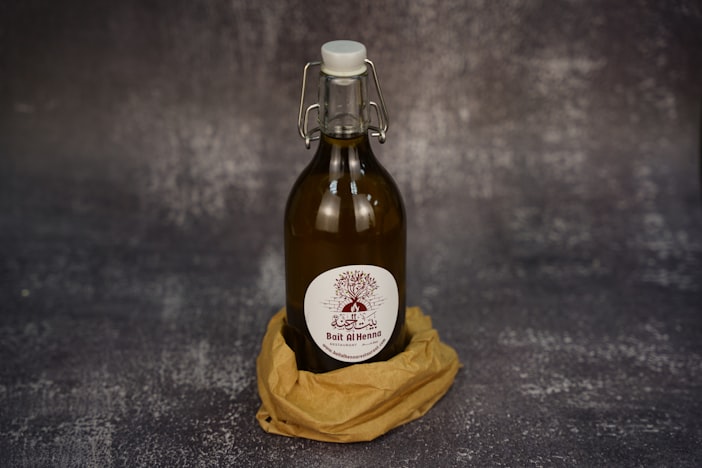
The discovery of alcohol was almost certainly an accident, and it almost certainly involved honey.
Here's the scenario that archaeochemists and food historians generally agree on: sometime before 7000 BC, in a warm climate, rainwater collected in a container that held honey - a hollow log, a clay vessel, a natural depression in rock near a wild bee colony. The water diluted the honey below 80 percent sugar concentration. Wild yeast - Saccharomyces and related species, present on the surface of virtually all fruit and in the air - landed in the solution. Fermentation began. Someone drank it. History changed.
The logic is simple. Honey is the most fermentable natural substance on Earth. It's 80 percent sugar by weight. Dilute it to roughly 20 percent sugar with water, and wild yeast will ferment it spontaneously - no human intervention required. No malting. No mashing. No processing. Just honey plus water plus time. Grain beer requires the conversion of starch to sugar before yeast can work on it - a process that humans had to invent. Grape wine requires grapes, which are seasonal and geographically limited. Honey diluted with water ferments itself.
Mead came first because it was the easiest alcohol to make by accident.
The Jiahu Evidence
In 2026, Patrick McGovern - a biomolecular archaeologist at the University of Pennsylvania Museum - published an analysis of residue found inside pottery jars from Jiahu, a Neolithic site in Henan Province, China. The jars dated to approximately 7000 BC. The residue contained chemical signatures of beeswax, rice, hawthorn fruit, and wild grape - a fermented beverage that combined honey with other fermentable ingredients.
The Jiahu drink wasn't pure mead in the modern sense - it was a mixed ferment, what McGovern calls a "hybrid beverage." But the honey component was unmistakable: beeswax biomarkers (long-chain fatty acids and wax esters) embedded in the ceramic matrix. Someone had combined honey with fruit and grain, allowed it to ferment, and drunk the result 9,000 years ago.
This predates the earliest evidence of barley beer (Sumeria, roughly 3500 BC) by more than 3,000 years. It predates the earliest confirmed grape wine (the Hajji Firuz site in Iran, roughly 5400 BC) by roughly 1,600 years. The Jiahu vessels are, as of 2026, the oldest chemically confirmed alcoholic beverage residue ever found.
McGovern's work didn't prove that mead was the first alcohol - absence of evidence isn't evidence of absence, and earlier vessels may not have survived. But it established that honey-based fermentation was happening earlier than any other confirmed alcohol production. The simplest explanation holds: honey was the first alcohol because it was the first substance that could become alcohol without anyone trying.
The Apiary Project has free tools for beekeepers - calculators, schedulers, and seasonal guides.
Browse the Tools →Not Just the Vikings
Mead has a Viking problem. In popular culture, mead is inextricable from Norse mythology - Odin's mead of poetry, the mead hall in Beowulf, horned helmets and drinking horns (the helmets are also a myth, but that's someone else's article). The association is so strong that most Americans, if they've heard of mead at all, think of it as "that drink the Vikings had."
The Vikings did drink mead. They also drank ale. And they arrived at mead roughly 6,000 years after the Chinese, 4,000 years after the Ethiopians, and 3,000 years after the Greeks. The Vikings are the marketing department, not the founders.
Ethiopia: tej. The Ethiopian honey wine called tej is arguably the oldest continuously produced mead tradition in the world. Brewed with wild honey and seasoned with gesho - a buckthorn relative (Rhamnus prinoides) whose leaves and stems add bitterness and contain natural fermentation-promoting compounds - tej has been documented in Ethiopian culture for over 3,000 years. In 2026, tej houses still operate throughout Ethiopia, serving fresh-brewed honey wine from clay vessels called berele. The drink is central to Ethiopian social life, religious ceremonies, and hospitality traditions.
Greece: omphacomel and hydromel. The Greeks distinguished between several honey-based beverages. Hydromel was simple honey water, sometimes fermented, sometimes not. Omphacomel was honey mixed with verjuice (juice of unripe grapes). Aristotle wrote about honey beverages. Pliny the Elder described hydromel preparation in Natural History. The Greeks considered mead inferior to wine - a telling cultural judgment, since wine grapes grew easily in the Mediterranean while mead was the prestige drink of northern peoples who couldn't grow grapes.
Poland: Polish mead. Polish mead traditions, documented since at least the 11th century, produced some of the most elaborate meads in European history. Polish meads are classified by the ratio of honey to water: czwórniak (1:3), trójniak (1:2), dwójniak (1:1), and półtorak (2:1). The higher the honey ratio, the sweeter and stronger the mead, and the longer the aging period - półtorak traditionally aged for 8 to 10 years. Polish mead held a protected designation in the EU, and some Polish meaderies have operated continuously for centuries.
Maya: balché. The Maya fermented honey from native stingless bees (Melipona beecheii) with the bark of the balché tree (Lonchocarpus violaceus), producing a mildly psychoactive ceremonial drink. The balché bark contains compounds that may have enhanced the intoxicating effects. Traditional Mayan beekeeping was intimately connected to balché production - the bees were kept specifically because the honey was needed for the drink, which was needed for the ceremonies, which maintained the relationship with the bee god Ah Muzen Cab.
The Vikings showed up to the mead party roughly 6,000 years late and got all the credit. History is like that sometimes.
The Fermentation
Mead fermentation is, in principle, the simplest alcohol production process that exists. Honey. Water. Yeast. Wait.
In practice, honey presents yeast with a paradox. Honey is extraordinarily high in sugar - roughly 80 percent by weight - which is actually too concentrated for most yeast to metabolize efficiently. At concentrations above about 30 percent sugar, osmotic pressure begins to inhibit yeast activity (the sugar draws water out of the yeast cells, stressing them). A traditional mead must (the pre-fermentation mixture) diluted to a starting gravity of 1.100 to 1.140 - roughly 24 to 33 percent sugar - is a stressful environment for Saccharomyces cerevisiae, the standard wine and beer yeast.
The yeast handles it, but slowly. A grape wine typically finishes primary fermentation in 1 to 3 weeks. A mead with similar alcohol potential may take 4 to 8 weeks, and historically - before modern yeast strains and nutrient supplements - fermentation could drag on for months. The honey's natural antimicrobial properties add to the challenge: low pH, hydrogen peroxide production, and the presence of compounds like methylglyoxal (particularly in manuka and some wildflower honeys) inhibit microbial growth, including the yeast that's supposed to be doing the fermenting.
The other challenge: honey is nutritionally deficient for yeast. Grape must (crushed grape juice) contains nitrogen compounds, vitamins, minerals, and amino acids that yeast needs to reproduce and metabolize efficiently. Honey has almost none of these. It's essentially pure sugar and water with trace aromatics. Modern meadmakers add yeast nutrients - diammonium phosphate (DAP), yeast hulls, and proprietary nutrient blends - to provide the nitrogen and micronutrients that honey lacks. Without supplementation, yeast stressed by high sugar and starved for nitrogen produces off-flavors: fusel alcohols that taste harsh, hydrogen sulfide that smells like rotten eggs, and acetic acid that turns the mead vinegary.
The ancient meadmakers didn't have DAP. What they had was fruit. And this may explain why the earliest meads - like the Jiahu beverage - were mixed ferments. Adding fruit to honey water provides the nutrients that honey alone lacks. The hawthorn fruit and wild grape in the Jiahu jars weren't just flavoring. They were yeast food. The ancient meadmakers may not have understood the biochemistry, but they understood that honey fermented better with fruit in it.
The Varieties
Modern mead terminology reflects a drink that has splintered into dozens of substyles, each defined by what goes in alongside the honey.
Traditional mead (show mead). Honey, water, yeast, nothing else. The purist's mead. The flavor comes entirely from the honey varietal - an orange blossom traditional tastes completely different from a buckwheat traditional. This is the style that exposes the meadmaker's skill most directly, because there's nothing to hide behind.
Melomel. Mead with fruit. The most commercially popular category. Blackberry, cherry, raspberry, peach, mango - any fruit can be added. The fruit contributes flavor, color, acidity, and (critically) yeast nutrients. A blackberry melomel made with wildflower honey is one of the most common gateway meads for first-time drinkers.
Cyser. Mead made with apple juice or cider instead of water. The result is a hybrid of mead and hard cider - honey sweetness with apple acidity and tannin. Cysers are popular in New England and the Pacific Northwest, regions with both apple orchards and beekeeping traditions.
Pyment. Mead made with grape juice. The hybrid of mead and wine. A pyment can taste like wine with honey overtones or like mead with grape character, depending on the ratio. Medieval European meads were frequently pyments because grape must was readily available and provided the yeast nutrients that straight honey lacked.
Metheglin. Mead with herbs and/or spices. The name comes from the Welsh meddyglyn, meaning "healing liquor." Cinnamon, clove, vanilla, ginger, lavender, chamomile, hops - the possibilities are extensive. Many historical meads were metheglins because the herbs served multiple purposes: flavoring, preservation, and (the medieval mind hoped) medicinal benefit.
Bochet. Mead made with caramelized honey. The honey is heated until it darkens and develops caramel, toffee, and marshmallow flavors before being diluted and fermented. The Maillard reactions that occur during caramelization produce a completely different flavor profile from raw honey. A well-made bochet tastes like liquid toffee with alcohol.
Braggot. Mead made with malted grain - a hybrid of mead and beer. The malted barley provides body, foam retention, and grain character that straight mead lacks. Braggots were common in medieval Wales and England, where honey and barley were both readily available and the line between "beer sweetened with honey" and "mead with grain" was blurry.
The Economics
The American mead industry in 2026 is small, growing, and wildly fragmented.
The American Mead Makers Association tracked approximately 350 meaderies in the United States in 2014. By 2024, that number had grown to over 700 - a 100 percent increase in a decade. For context, the number of craft breweries in the US grew from roughly 3,400 to 9,700 over the same period (185 percent growth). Mead is growing fast, but from a much smaller base.
The global mead market was valued at approximately $590 million in 2023, with projections reaching $1.1 to $1.4 billion by 2032, depending on the market research firm. North America and Europe are the primary markets. The growth rate - roughly 8 to 11 percent annually - exceeds the growth rate of the overall alcoholic beverage market.
The economics of mead production are fundamentally shaped by the cost of honey. A standard 5-gallon batch of beer requires perhaps $5 to $10 worth of grain. A standard 5-gallon batch of mead requires 12 to 18 pounds of honey, which at commercial honey prices of $5 to $8 per pound means $60 to $144 in honey alone - before yeast, nutrients, fruit, bottles, labor, or overhead. The raw material cost of mead is roughly 10 times the raw material cost of beer.
This cost structure has consequences. Mead retails for $15 to $30 per 750ml bottle for standard offerings, with specialty and aged meads reaching $50 to $100 or more. Mead can't compete with beer on price. It competes with wine, which has lower raw material costs but comparable retail pricing. The value proposition for mead is novelty, quality, and story - the same market positioning that artisanal honey producers use.
The beekeeper-to-meadmaker pipeline is real. An increasing number of small-scale beekeepers are diversifying into mead production as a way to add value to their honey crop. A pound of honey sells for $8 to $15 at retail. That same pound of honey, fermented into mead and bottled, sells for $15 to $30. The value multiplication is significant, though the capital investment (fermentation equipment, bottling line, licensing, compliance) is substantial.
The Regulatory Problem
Mead exists in a regulatory gray zone in the United States because it doesn't fit neatly into existing categories. It's not beer (no grain). It's not wine (no grapes - usually). It's not a spirit (it's not distilled). Federal regulation classifies most meads as "wine" under the Tax and Trade Bureau (TTB) framework, but state regulations vary enormously.
Some states regulate mead as wine. Some regulate it as beer. Some have created specific mead/honey wine categories. Some require a winery license to produce mead. Some allow a farm winery license if the meadmaker also keeps bees. The patchwork mirrors the state-by-state variation in beekeeping regulations and creates compliance headaches for meadmakers who want to sell across state lines or distribute nationally.
The tax implications vary too. Federal excise tax on wine (which includes most mead) is $1.07 per gallon for still wines under 14 percent ABV, compared to $0.58 per gallon for beer. The tax differential disadvantages mead relative to beer, and some meadmakers have lobbied for a separate, lower tax category.
The Terroir Connection
The most interesting development in modern mead is the emergence of terroir - the idea, borrowed from wine, that a mead should taste like the place it came from.
A mead made with tupelo honey from the Apalachicola River basin in Florida tastes different from a mead made with sage honey from the California chaparral, which tastes different from a mead made with buckwheat honey from upstate New York. The floral source of the honey determines the flavor profile of the mead, just as the grape varietal determines the flavor profile of wine.
But mead terroir goes deeper than varietal character. The same wildflower honey from the same apiary tastes different from year to year, because the forage available to the bees shifts with weather, rainfall, and bloom timing. A wildflower mead from a drought year tastes different from one from a wet year. The bees are sampling the landscape, and the landscape changes.
Some meadmakers are leaning into this variability as a feature. Single-apiary meads - made with honey from one location, one harvest - are the mead equivalent of single-vineyard wines. The bottle captures a specific place and time: this apiary, this year, these flowers, these bees.
The Medieval Decline, the Modern Return
Mead dominated northern European drinking culture for millennia, then nearly disappeared. The cause was economic, not culinary.
As grape cultivation spread northward through medieval Europe - pushed by the Roman Empire, maintained by the Catholic Church (which needed wine for sacramental purposes), and facilitated by the Medieval Warm Period (roughly 900 to 1300 AD) - wine became available in regions that had previously relied on mead. Wine production was more predictable, more scalable, and less dependent on the vagaries of bee colonies and nectar flows. A vineyard produces reliably. An apiary does not.
Simultaneously, the discovery that grain could be malted and brewed (beer) and later distilled (spirits) provided cheaper alternatives. Honey was expensive - it was the only sweetener in the European world until cane sugar became widely available in the 16th and 17th centuries. Using honey for alcohol production meant not using it for sweetening food. As sugar cane replaced honey as the primary sweetener, honey became relatively more expensive for alcohol production, and mead production declined further.
By the 19th century, mead was essentially extinct as a commercial product in most of the Western world. It survived in pockets: Ethiopian tej production never stopped. Polish mead traditions continued. Hobbyists and historical reenactors kept the recipes alive. But commercial mead production was negligible.
The revival began in the 1990s and 2000s, driven by three forces: the craft beverage movement (consumers seeking alternatives to mass-produced beer and wine), the local food movement (consumers interested in agricultural products from known sources), and - honestly - the fantasy genre. The Lord of the Rings films, Game of Thrones, and the broader cultural interest in medieval and Viking aesthetics introduced millions of people to the idea of mead as a drinkable, purchasable product rather than a historical curiosity.
The role of fantasy fandom in the mead revival is real and acknowledged by the industry. Multiple meadery founders have cited Tolkien or Renaissance faires as their initial exposure to mead. The mythology sells the first bottle. The quality sells the second.
The Honey Question
Every bottle of mead raises a question that the wine and beer industries don't face: where did the honey come from?
A significant fraction of commercial honey on the world market is adulterated - cut with corn syrup, rice syrup, or other cheap sweeteners. A mead made with adulterated honey is, by definition, not entirely mead. It's mead cut with corn wine or rice wine. The flavors are different. The fermentation dynamics are different. The product is fraudulent.
Premium meadmakers increasingly source honey directly from beekeepers rather than from commodity brokers, specifically to avoid adulteration risk. Some meadmakers keep their own bees. Some contract with local apiaries. The supply chain transparency that consumers demand from craft beverages extends to the honey - customers want to know which beekeeper produced the honey and which flowers the bees visited.
This creates a symbiotic relationship between meadmakers and beekeepers that benefits both industries. The meadmaker gets a reliable supply of authenticated, high-quality honey. The beekeeper gets a customer who buys in bulk and pays a premium for quality. The mead industry's growth has, in small but real ways, increased demand for domestic honey - a market dynamic that works against the flood of cheap imported honey that has depressed prices for American beekeepers.
9,000 Years
The drink is older than civilization. Older than agriculture, possibly - if the earliest mead was made from wild honey gathered from feral colonies before anyone thought to keep bees. Older than pottery, if the first fermentation happened in a hollow log or a skin bag that didn't survive the archaeological record.
Honey falls into water. Yeast finds it. Sugar becomes alcohol. Someone drinks it and feels different. This has been happening for at least 9,000 years and probably much longer.
The modern craft meadery with its stainless steel fermenters and pH meters and bench trials is making the same fundamental product as the Neolithic potter in Jiahu. The chemistry hasn't changed. The yeast hasn't changed. The honey hasn't changed - bees build the same comb, visit the same flowers, produce the same sugars, sealed with the same wax, that their ancestors produced 100 million years ago.
What changed is that we forgot about it for a few centuries, and now we're remembering. Seven hundred meaderies in the United States, and counting. The oldest drink in the world is being made by the newest generation of producers. The bees, as usual, don't care who drinks their honey or what they do with it. They just keep making it, 60 pounds per colony per year, flowers to comb to jar to glass, the same way they've always done.
The first person to taste mead didn't mean to make it. They just found honey in water and drank it. Nine thousand years later, it's a $600 million industry. That's a long time between the first sip and the business plan.