Feral Honey Bees (What the Arnot Forest Study Revealed About Survival)
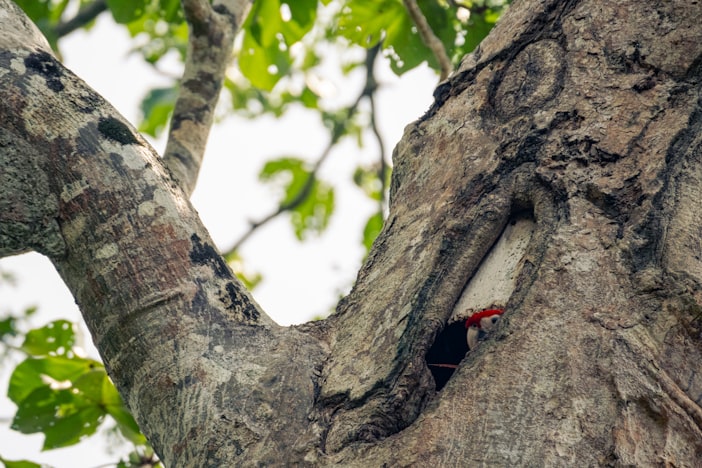
There's a forest south of Ithaca, New York - 4,200 acres of mixed hardwood owned by Cornell University - called the Arnot Forest. It has no apiaries. No beekeepers visit it. No one treats for mites or feeds sugar syrup or replaces queens. It has been, since at least 1978, a laboratory for one question: what happens to honey bees when humans leave them alone?
Thomas Seeley - the same Cornell professor who decoded honeybee democracy and spent 40 years studying swarm intelligence - has been monitoring the feral colonies in the Arnot Forest for nearly half a century. He conducts bee-lining surveys: setting out feeding stations, tracking the direction foragers fly back to their nests, triangulating the colony locations. In 1978, he documented the density and locations of the feral population. He came back in 2002, in 2011, and again in later years. The results tell a story that both sides of the treatment-free beekeeping debate cite, and that neither side fully acknowledges.
The Crash and the Recovery
In 1978, Seeley found feral colonies in the Arnot Forest at a density of about one colony per square kilometer. The colonies occupied natural tree cavities - hollows in living and dead trees, mostly at heights of 5 meters or more. The population was stable. The bees were doing what feral bees do: swarming, surviving, dying, being replaced. The system was in equilibrium.
Varroa destructor arrived in New York in the late 1980s. By the mid-1990s, the mite was everywhere in the state. The feral population crashed. Seeley's surveys in the early 2000s found dramatically fewer colonies. The mite did to feral bees what it did to managed bees worldwide - it vectored deformed wing virus, it fed on fat bodies, it shortened lifespans, it killed colonies. The difference was that nobody treated the feral colonies. Nobody could. They were in tree hollows 30 feet up in a forest.
But when Seeley returned in 2002 and conducted his survey, the population had recovered. The density was similar to 1978 levels. The colonies were there. They were alive. They were surviving with Varroa, without treatment, in the same forest.
The question was how.
The Apiary Project tracks every major threat to US honey bee colonies.
Explore the Issues Hub →The Feral Solution
Seeley and his collaborators - particularly David Seeley (no relation), Alexander Mikheyev, and others - compared the Arnot Forest feral bees to managed bees in nearby apiaries. The differences were consistent and significant.
Colony size. Feral colonies in the Arnot Forest are smaller than managed colonies. The average cavity volume is about 40 liters - compared to the 80 to 160 liters available in a two- or three-box Langstroth setup. Smaller cavity means fewer bees, which means fewer brood cells, which means fewer cells for mites to reproduce in. The mite population grows more slowly in a small colony.
Swarming rate. Feral colonies swarm more frequently than managed colonies. Swarming is, from a beekeeper's perspective, a loss - you lose half your workforce and your honey production drops. From an evolutionary perspective, swarming is reproduction. It also creates a brood break. When the old queen leaves with the swarm, the parent colony has a period without a laying queen. No brood means no capped brood cells. No capped brood cells means no mite reproduction. The brood break functions as a natural Varroa treatment - interrupting the mite's reproductive cycle for 2 to 3 weeks.
Spacing. Feral colonies in the forest are distributed at roughly one colony per square kilometer - far more spread out than the 20 to 50 colonies packed into a typical apiary. The spacing limits horizontal transmission. Drifting bees - foragers that accidentally enter the wrong hive - are a major vector for mite spread. In a crowded apiary, drifting rates of 5 to 10 percent are common. In a forest where the nearest colony is a kilometer away, drifting is essentially zero.
Genetic change. The Arnot Forest bees are genetically distinct from the managed populations nearby. A 2015 study by Mikheyev and colleagues, using whole-genome analysis, found that the feral population had undergone significant selection at loci associated with development time, immune response, and grooming behavior. The bees had evolved. Not through selective breeding by a human, but through the blunt instrument of natural selection: colonies that couldn't handle Varroa died, and the ones that could reproduced.
The Darwinian Argument
In 2019, Seeley published The Lives of Bees: The Untold Story of the Honey Bee in the Wild, which synthesized decades of Arnot Forest data into a broader argument. The book's central thesis: managed honey bee colonies are kept under conditions that systematically prevent natural selection from operating on disease resistance.
The argument runs like this. In nature, colonies live in small cavities. They swarm frequently, creating brood breaks. They're spaced widely, limiting disease transmission. Weak colonies die. Resistant colonies survive and reproduce. Natural selection improves the population's fitness over time.
In managed beekeeping, colonies live in large hives (to maximize honey production). Swarming is suppressed (because it reduces production). Colonies are packed into apiaries at high densities (for management efficiency). Weak colonies are treated with chemicals (to prevent death and economic loss). Queens are replaced annually with purchased queens from distant breeding operations (eliminating any locally adapted genetics). Every practice that maximizes short-term production also prevents the natural selection that would build long-term resistance.
Seeley described this as a mismatch between managed conditions and evolutionary conditions. The managed hive, he argued, creates an environment where Varroa thrives precisely because the beekeeper's interventions prevent the colony-level adaptations that feral bees have developed.
He proposed a set of principles he called "Darwinian beekeeping": smaller hives, wider spacing, allowing swarming, local queens, no chemical treatments, and acceptance of higher colony losses as the cost of building natural resistance.
The Treatment-Free Movement
The treatment-free beekeeping community - a vocal minority in the beekeeping world, concentrated among hobbyists and small-scale operations - received Seeley's work as vindication. Here was a Cornell professor, one of the most respected bee biologists alive, presenting data that supported what treatment-free advocates had been arguing for years: that the chemical treadmill of Varroa treatment was preventing bees from developing natural resistance, and that the losses attributed to "not treating" were actually the transition cost of building a resistant population.
Treatment-free beekeeping, at its core, means managing colonies without synthetic miticides (Apistan, Apivar) or organic acid treatments (oxalic acid, formic acid). Proponents argue that treating for Varroa creates a situation analogous to the antibiotic resistance problem in human medicine: you kill the susceptible mites, leaving resistant mites to reproduce, while simultaneously removing the selective pressure on bees to develop their own defenses.
The philosophy has prominent advocates. Kirk Webster in Vermont has run a commercial operation for decades without treatments, accepting high winter losses and replacing colonies through aggressive splitting and local queen rearing. Michael Bush runs a large treatment-free operation and publishes extensively about the approach. Solomon Parker's podcast and community have built a following around the treatment-free philosophy.
The idea is appealing. The execution is harsh. Treatment-free operations routinely lose 50 to 70 percent of colonies in the first few years. The survivors - if there are survivors - form the breeding stock for the next generation. The approach requires years of sustained losses before any genetic progress accumulates. For a hobbyist with 4 hives, losing 3 of them in one winter is devastating. For a commercial operator with 5,000 colonies and pollination contracts to fulfill in February, losing 3,500 isn't a philosophical position. It's bankruptcy.
The Counter-Argument
The commercial beekeeping industry's response to Darwinian beekeeping ranges from polite skepticism to open hostility. The core objections are practical.
Scale. The Arnot Forest has one colony per square kilometer. The Central Valley of California during almond pollination has thousands of colonies within a few square miles. The spacing principle of Darwinian beekeeping is physically impossible in the context of commercial pollination.
Economics. A commercial beekeeper with $200 invested per colony - equipment, queens, feed - can't afford to let half of them die to see which ones were resistant. The annual colony loss rate in commercial beekeeping already runs 40 to 55 percent. Adding deliberate non-treatment on top of existing losses would be economically catastrophic.
Mite bombs. Untreated colonies with high mite loads don't just die. Before they die, their foragers - disoriented, weakened, carrying mites - drift into neighboring colonies, bringing the mites with them. An untreated colony in an otherwise managed apiary doesn't just affect itself. It's a source of reinfestation for every colony within foraging range. The term "mite bomb" describes a collapsing, untreated colony whose mites redistribute to surrounding hives during the collapse.
The Arnot Forest is not an apiary. Critics point out that Seeley's feral colonies exist under conditions that are fundamentally different from managed beekeeping: small cavities, low density, no shared equipment, no transportation, no stress from migratory pollination, and no imported queens. Applying conclusions from feral forest colonies to managed apiaries, they argue, is like applying conclusions about wild wolves to dog breeding.
Randy Oliver, who runs the Scientific Beekeeping website and manages a commercial operation in California, has been one of the most measured voices on this topic. His position: the data on feral colony survival is real, but the mechanism - which specific adaptations confer resistance, and whether those adaptations can be maintained in managed populations at commercial scale - is still incompletely understood. Selective breeding for Varroa-resistant traits (hygienic behavior, grooming, mite-biting) within managed populations is a more practical path than "let them die and see who survives."
What the Feral Bees Actually Do
The specific mechanisms by which Arnot Forest bees survive Varroa are not fully mapped, but several candidate behaviors have been identified.
Varroa-sensitive hygiene (VSH). Worker bees detect mite-infested brood cells - possibly by smell, possibly by vibration - and uncap and remove the infested pupae, destroying the mite's offspring along with the developing bee. This behavior was first characterized by the USDA breeding program in Baton Rouge and is present at elevated levels in some feral populations.
Grooming. Bees that detect mites on their bodies or on nestmates can bite and remove them. Effective grooming is associated with higher proportions of damaged mites found on the bottom board. The Purdue "ankle-biter" program selects for this trait in managed stock.
Brood breaks through swarming. As described above, swarming interrupts the mite's reproductive cycle. Feral colonies that swarm frequently experience regular brood breaks that slow mite population growth.
Smaller colony size. Fewer bees means fewer brood cells means a lower carrying capacity for mites. The mite-to-bee ratio stays lower in small colonies, all else being equal.
Reduced mite reproduction. Some evidence suggests that in adapted populations, mite reproductive success (the number of viable offspring per reproductive cycle) is lower - possibly because of changes in brood development timing or brood cell environment that make conditions less favorable for mite reproduction.
The relative contribution of each mechanism is debated. It's probably not one thing. It's probably a combination of behavioral, physiological, and developmental traits that collectively reduce mite reproductive success and colony-level mite loads to a level the colony can tolerate indefinitely. The feral colonies don't eliminate Varroa. They live with it.
The Middle Ground
The useful insight from the Arnot Forest work isn't "stop treating" or "keep treating." It's that the conditions under which bees are kept affect whether natural resistance can evolve, and that some management practices actively prevent the evolution of resistance.
Annual queen replacement with purchased queens eliminates locally adapted genetics. Suppressing swarming eliminates natural brood breaks. Crowding colonies into dense apiaries maximizes horizontal mite transmission. Treating every colony regardless of mite load removes the selective pressure on resistant genotypes.
A beekeeper who uses locally raised queens, allows some degree of swarming, spaces colonies more widely, and monitors mite loads rather than treating on a calendar is creating conditions where natural selection can operate alongside management. This isn't treatment-free beekeeping. It's management that acknowledges evolutionary biology.
The phrase Seeley uses is "keeping bees as they would keep themselves." The phrase the industry hears is "let your bees die." The actual proposal is somewhere between those interpretations: manage in ways that don't systematically prevent the bees from developing the traits they need to survive.
The Forest Doesn't Care
The Arnot Forest bees are not a model for commercial beekeeping. They are a proof of concept. They demonstrate that Apis mellifera can evolve resistance to Varroa destructor in the absence of treatment, given enough time and enough death. They demonstrate that the resistance is real, measurable, and genetically heritable. They demonstrate that the conditions for evolution - small populations, wide spacing, frequent reproduction, strong selective pressure - are conditions that modern beekeeping systematically eliminates.
None of this solves the immediate problem of a commercial beekeeper who needs 2,000 colonies alive in February for almonds. None of it addresses the reality that feral colony survival depends on conditions that can't be replicated at commercial scale. None of it accounts for the mite-bomb problem or the ethics of knowingly allowing colonies to die when treatment is available.
But the forest doesn't care about commercial beekeeping. The forest is a 4,200-acre experiment that's been running since before Varroa arrived, and the result is clear: bees that are left alone, in natural conditions, with no human intervention, develop resistance to a parasite that managed bees can't survive without chemical support.
The question isn't whether feral bees can survive Varroa. They can. The question is whether any part of what makes them survivors can be brought into the managed population without the losses that natural selection demands.
The Arnot Forest has been answering questions about honey bees for 46 years. Seeley keeps going back because the forest keeps providing data that no managed apiary can produce - the data of what bees do when nobody is helping them. What they do, it turns out, is adapt. Slowly, painfully, through colony death and genetic selection and brood breaks and grooming and smaller nests.
They adapt. They just do it on a timeline that no business plan can accommodate.