How Bees Heat and Cool the Hive to 93 Degrees
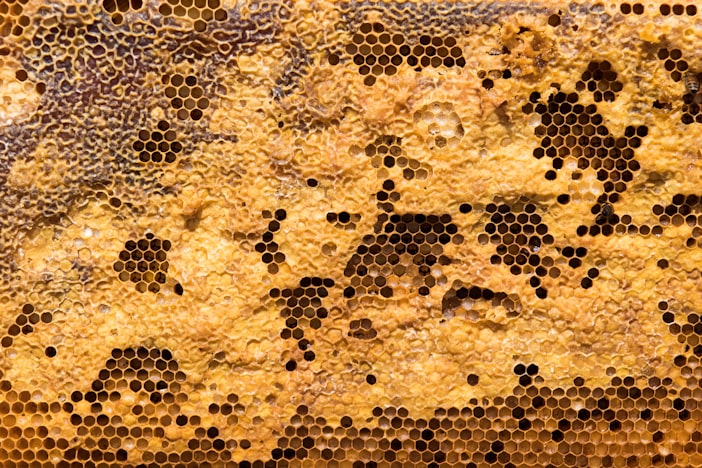
The brood nest of a honey bee colony is maintained at 34.5 to 35.5 degrees Celsius. Not approximately. Not roughly. Within a half-degree window - tighter precision than most home thermostats - sustained 24 hours a day, through ambient temperature swings from below freezing to above 40 degrees Celsius, through rain, wind, direct sun, and the metabolic heat generated by 40,000 endothermic insects packed into a wooden box.
The consequences of failure are immediate and measurable. Brood that develops at 32 degrees instead of 35 degrees emerges with reduced learning capacity, impaired waggle dance communication, and shorter lifespans. Brood that develops above 38 degrees dies. The window between "neurological damage" and "dead" is 6 degrees Celsius. The colony maintains its brood nest in the middle of that window with a system that has no thermostat, no central controller, and no individual bee that knows the temperature of the nest as a whole.
Heating
Bees generate heat the same way humans generate heat: by metabolizing food and contracting muscles. A honey bee's flight muscles - the massive thoracic muscles that power the wings at 230 beats per second - can be decoupled from the wings and contracted isometrically, producing heat without movement. This is shivering thermogenesis - the biological equivalent of running an engine in neutral.
Heater bees are workers that press their thorax against the wax surface of a capped brood cell and vibrate their flight muscles. The heat transfers through the wax into the developing pupa below. A single heater bee can raise the temperature of one cell by about 2.5 degrees Celsius. The behavior was described in detail by Jürgen Tautz and colleagues at the University of Würzburg, using thermal imaging cameras that revealed the temperature distribution across the comb surface with remarkable resolution.
The thermal images showed something unexpected: the brood nest isn't uniformly warm. There are hot spots and cool spots, and the hot spots correspond to the locations of individual heater bees. The temperature landscape is patchy - a mosaic of zones heated to slightly different temperatures by individual bees making individual decisions about where to press their thorax.
Heater bees also enter empty cells within the brood area - cells that are unoccupied, sitting between capped brood cells - and heat from inside. A bee sitting in an empty cell, vibrating her flight muscles, warms the six adjacent cells simultaneously. The empty cells in the brood nest aren't wasted space. They're heating infrastructure - distributed furnaces positioned by the bees' construction decisions.
The fuel cost is significant. A heater bee consumes honey at a rate 10 to 20 times higher than a resting bee. She heats for 30 to 45 minutes, then moves to a honey cell to refuel, then returns to heating. Other workers - food-storer bees - transfer honey to heater bees directly, mouth-to-mouth, reducing the heater bee's commute time. The colony has, in effect, a fuel-delivery service for its heating system.
The Apiary Project tracks honey bee health data so you don't have to.
Explore the Data Hub →Cooling
Above approximately 35 degrees Celsius in the brood nest, the colony switches from heating to cooling. The mechanisms are different but the principle is the same: local actions by individual bees, responding to local conditions, producing a collective result.
Fanning. Worker bees station themselves at the hive entrance or on the comb surface and fan their wings, creating airflow that moves heated air out of the hive and draws cooler air in. The fanning bees are visible from outside the hive - a row of bees on the landing board, all facing the same direction, wings blurring. Inside the hive, fanning bees create directional airflow across the comb, which convects heat away from the brood nest.
The airflow pattern isn't random. Studies using smoke tracers have shown that fanning bees organize their airflow into a circulation pattern: fresh air enters from one side of the entrance, passes over the comb, and exits from the other side. The organization emerges from the bees' local behavior - each fanner faces the direction of greatest temperature gradient - without any central coordination.
Evaporative cooling. When fanning alone isn't sufficient - when ambient temperatures approach or exceed brood nest temperature, making convective cooling impossible - the colony deploys water carriers. These are foragers that switch from nectar collection to water collection, flying to puddles, streams, bird baths, leaky faucets, and swimming pools within foraging range.
The water carriers return to the hive and distribute water to house bees, who spread thin films of water on the comb surface and on the tops of cells. As the water evaporates - aided by the fanning bees' airflow - it absorbs heat. The physics is the same as human sweating or a swamp cooler: the phase change from liquid to gas absorbs approximately 2,260 joules per gram of water. The colony can lower the hive temperature by several degrees through evaporative cooling.
On extremely hot days, water collection becomes the colony's primary foraging activity. The proportion of foragers bringing back water increases from near zero on cool days to 50 percent or more on hot days. The colony's water consumption can exceed 1 liter per day during heat waves. A colony without access to water within foraging range on a 40-degree day will overheat and lose brood.
The 0.5-Degree Program
Tautz's research at Würzburg revealed something about brood nest temperature that went beyond thermoregulation into developmental biology. The temperature at which a pupa develops doesn't just affect whether it lives or dies. It affects what kind of adult it becomes.
Pupae reared at 36 degrees Celsius - the warm end of the normal range - tend to become nurse bees. They perform in-hive tasks for longer. Their hypopharyngeal glands develop more fully. They transition to foraging later.
Pupae reared at 34.5 degrees - the cool end of the normal range - tend to become foragers earlier. They show better spatial learning and navigation ability. Their transition to foraging happens sooner.
The temperature difference is 1.5 degrees. The behavioral difference is the fundamental division of labor in the colony.
This means that heater bees - by choosing where to heat and how warm to heat - are programming the behavioral fate of the next generation. A heater bee that warms a patch of brood to 36 degrees is producing nurses. A region of brood that cools to 34.5 degrees is producing foragers. The colony is tuning its workforce composition through differential brood nest temperature - not by genetic switches, not by pheromone signals (though those play a role too), but by heat.
Whether this programming is deliberate - whether the colony "decides" it needs more foragers and allows certain brood areas to cool - or whether it's a statistical byproduct of heater bee distribution is not fully resolved. The temperature variation exists. The developmental effect is real. The mechanism of control, if there is one, is still under investigation.
The Winter Thermostat
The most dramatic thermoregulatory challenge is winter. A colony in Minnesota faces ambient temperatures of -30 degrees Celsius. The winter cluster must maintain its core above approximately 18 to 20 degrees Celsius (when broodless) and at 35 degrees Celsius in the center when the queen resumes laying in late winter.
The temperature differential between the cluster core and the outside air can exceed 60 degrees Celsius. This differential is maintained for months, using only stored honey as fuel, by bees that are physiologically specialized for longevity rather than peak metabolic output.
The cluster manages this by varying its density and structure. When ambient temperature drops, the cluster contracts: bees on the mantle (outer shell) pack tighter, reducing the surface area through which heat escapes. The mantle bees interlock their bodies, creating an insulating layer with an effective R-value comparable to fiberglass insulation. The core bees shiver - vibrating flight muscles to generate metabolic heat.
When ambient temperature rises, the cluster expands: bees on the mantle spread apart, increasing surface area and allowing more heat to dissipate. The cluster breathes - contracting in cold, expanding in warmth - like a living thermostat.
The fuel consumption is measurable. A colony consumes approximately 30 to 60 pounds of honey between November and March, depending on climate, cluster size, and insulation. A colony that enters winter with insufficient honey stores will starve before spring. The thermostat runs on sugar. When the sugar runs out, the temperature drops, and the colony dies.
The Ceiling Problem
Every beekeeper in hot climates has seen the phenomenon: on a 95-degree day, clusters of bees form on the outside of the hive, hanging from the landing board and the sides of the box. This is "bearding" - bees removing themselves from the hive interior to reduce congestion, lower the metabolic heat load, and free up space for fanning and evaporative cooling.
Bearding is a thermoregulatory behavior, not a sign of swarming or disease (though beekeepers new to hot climates often mistake it for both). The bees are essentially externalizing themselves to help the colony cool down. Fewer bees inside means less metabolic heat generation, more room for airflow, and more comb surface available for water film deposition.
Hive design affects thermoregulation. Screened bottom boards - a mesh floor instead of a solid one - were originally promoted as a Varroa management tool (mites that fall through the screen can't climb back up). They also improve ventilation and reduce the cooling burden in hot weather. In cold climates, screened bottom boards increase the heating burden in winter - more surface area for heat loss. The design that helps in July hurts in January.
Hive color matters. White or light-colored hives reflect solar radiation. Dark hives absorb it. In Arizona, a dark-colored hive in full sun can reach internal temperatures that exceed the brood's lethal threshold. In Minnesota, a dark-colored hive in winter absorbs solar heat that reduces the fuel cost of thermoregulation. The optimal color depends on geography - a conclusion that seems obvious but is violated routinely by beekeepers who buy whatever color is cheapest.
40 Watts
A strong colony generates approximately 30 to 40 watts of thermal output at peak - the equivalent of leaving a light bulb on inside the box. The metabolic heat comes from tens of thousands of individual bees, each generating milliwatts of heat through basal metabolism and, when actively shivering, significantly more.
Forty watts doesn't sound like much. But in an insulated cavity - a tree hollow with thick walls, or a wooden hive with proper construction - 40 watts is enough to maintain a 60-degree temperature differential between inside and outside. The insulation matters enormously. A thin-walled hive loses heat faster and demands more honey consumption to maintain temperature. A thick-walled hive or a hive with supplemental insulation loses less heat and extends the colony's winter fuel supply.
Thomas Seeley's research in the Arnot Forest found that feral colonies in tree hollows with thick walls (10 to 15 centimeters of wood) consumed significantly less honey over winter than colonies in standard thin-walled Langstroth equipment (2 centimeters of pine). The feral colonies weren't working harder. They were losing less heat. The tree was doing part of the job.
This finding has sparked a movement toward insulated hives in cold climates. Polystyrene hive bodies, insulated wraps, and moisture-wicking boards in the inner cover all reduce heat loss and winter fuel consumption. The physics is straightforward: reduce conductive and convective heat loss, and the 40-watt furnace keeps the cavity warmer for longer on less fuel.
No Thermostat
The most remarkable aspect of colony thermoregulation is what's missing: a central controller. No bee measures the temperature of the entire brood nest. No bee decides "the colony should heat" or "the colony should cool." There is no thermostat.
Instead, each bee responds to her local thermal environment. A bee that detects cold - through temperature sensors in her antennae and tarsi (feet) - responds by shivering. If she's on capped brood, she's a heater bee. If she's in the cluster mantle, she's insulation. A bee that detects heat responds by fanning. If it's very hot, she may go collect water. If it's extremely hot, she may leave the hive entirely and beard on the outside.
The collective result of thousands of individual temperature-response behaviors is a system that maintains half-degree precision across a structure the size of a filing cabinet, through ambient temperature swings of 70 degrees or more, for the entire year, without any central command.
This is emergent thermoregulation - the same principle that governs swarm decision-making, foraging allocation, and every other collective behavior in the colony. Simple rules, applied locally by individuals with limited information, producing sophisticated collective outcomes that no individual could achieve alone.
The brood nest is 35 degrees because 40,000 bees are each doing their small part - heating here, fanning there, carrying water, spreading out, clustering in - and the sum of those small parts is a precision-controlled environment that programs the development of the next generation, preserves the colony through winter, and maintains conditions under which honey can be ripened, bee bread can be fermented, and brood can develop.
Forty watts. No thermostat. Half-degree precision. The building runs itself.