Worker Bee Lifespan (Six Weeks, Six Careers, One Worn-Out Pair of Wings)
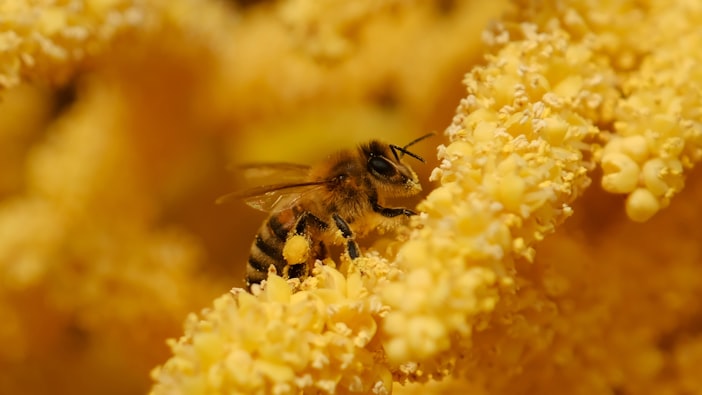
A worker honey bee born on June 1 will be dead by mid-July. Not from disease. Not from predators. Not from pesticides, though those don't help. She'll die from use. Six weeks of progressive labor that begins the moment she chews through her wax cell cap and ends when her wings are too tattered to fly, her flight muscles too depleted to generate heat, and her fat body reserves too exhausted to fuel another trip. She will have performed 10 distinct jobs, in roughly the same sequence as every other worker bee, following a schedule written in her physiology and modulated by the colony's needs.
A worker honey bee born on September 15 will live until March. Same genetics. Same species. Same hive. Different season, different physiology, different lifespan - six months instead of six weeks. The September bee is a winter bee, and she is, in almost every measurable way, a different animal from her summer counterpart.
The difference between these two lifespans is the story of how a honey bee colony works.
The Schedule
The progression of tasks a worker bee performs as she ages is called age polyethism - a term that translates roughly to "many jobs based on age." The sequence is not rigid. It's not a clock. But it follows a general pattern that has been documented and redocumented since the early 20th century, when researchers began marking individual bees with paint dots and tracking them through observation hives.
Days 1-2: Cell cleaner. The newly emerged bee's first job is the most humble. She cleans the cell she just emerged from, removing cocoon debris and fecal matter, polishing the walls with a thin layer of antimicrobial secretion. A cleaned cell is ready for the queen to lay in again. If the cell isn't clean enough, the queen skips it. Cell cleaning is quality control performed by the least experienced employee in the organization.
Days 3-11: Nurse bee. This is the most nutritionally demanding phase of a worker's life. Nurse bees feed larvae - visiting each larval cell up to 1,300 times per day, feeding a mixture of royal jelly (for young larvae) and a blend of honey and pollen (for older larvae). The royal jelly is produced by the hypopharyngeal glands in the nurse bee's head - paired glands that swell to maximum size during the nursing phase and shrink when the bee transitions to other tasks.
A nurse bee eats enormous quantities of pollen - the colony's protein source - to fuel royal jelly production. Her protein consumption during the nursing phase is the highest of her life. This protein consumption also builds up her fat body reserves and vitellogenin stores - the reserves she'll burn through later.
Days 12-17: House bee. The nurse transitions to general colony maintenance: receiving nectar from returning foragers, processing it by adding enzymes and evaporating water, capping ripe honey with beeswax, building comb, packing pollen into cells. House bees also handle corpse removal - carrying dead bees out of the hive and dropping them at least 50 meters from the entrance.
Days 12-25: Wax production. Overlapping with house bee duties, workers between about 12 and 18 days old have the most active wax glands - four pairs of glands on the ventral side of the abdomen that secrete tiny flakes of beeswax. A bee produces roughly 8 flakes at a time. She chews each flake, mixing it with mandibular secretions, and shapes it into comb. Wax production is metabolically expensive: bees consume roughly 6 to 7 kilograms of honey to produce 1 kilogram of wax. The conversion ratio is terrible. The comb is worth it because comb is storage, nursery, and communication medium in one structure.
Days 18-21: Guard bee. For a brief period, workers station themselves at the hive entrance and inspect incoming bees by antennating them - touching antennae to assess the chemical signature that identifies colony members. Bees that don't smell right get challenged. Robber bees from other colonies, wasps, and other intruders get attacked. Guard duty is short because the colony needs relatively few guards compared to nurses or foragers, and because the bee's physiology is already transitioning to the final phase.
Days 21-42: Forager. The last and longest phase. The forager flies out of the hive to collect nectar, pollen, water, or propolis. She makes 10 to 12 foraging trips per day, each lasting 30 minutes to an hour, each covering a round-trip distance of 2 to 6 miles. Over her foraging career, a single worker flies roughly 500 miles.
Foraging is what kills her. The cumulative physical cost - flight muscle depletion, wing wear, oxidative damage, immune suppression, and the depletion of fat body reserves and vitellogenin - accumulates with each flight until the bee can no longer sustain the metabolic output required. She doesn't retire. She doesn't slow down gradually. She flies until she can't, and then she dies - usually away from the hive, on a foraging trip from which she doesn't return.
The Apiary Project tracks honey bee health data so you don't have to.
Explore the Data Hub →Vitellogenin
The molecule that controls most of this is vitellogenin, a glycolipoprotein that functions as a kind of biological Swiss Army knife. In most egg-laying animals, vitellogenin is a yolk precursor - a protein that provisions eggs with nutrients. In honey bees, it does that too (the queen's eggs are packed with vitellogenin), but in worker bees, it has been repurposed for a suite of functions that have nothing to do with reproduction.
Gro Amdam, a Norwegian-American researcher now at Arizona State University, has done more than anyone to clarify vitellogenin's role in worker bee biology. Her work, beginning in the mid-2000s, established vitellogenin as a central regulator of worker lifespan, immune function, and behavioral development.
Antioxidant. Vitellogenin scavenges free radicals. The oxidative damage that accumulates during flight - reactive oxygen species generated by intense aerobic metabolism in flight muscles - is partially buffered by circulating vitellogenin. When vitellogenin levels are high, the bee handles oxidative stress better. When vitellogenin is depleted, oxidative damage accumulates faster.
Immune function. Vitellogenin binds bacterial cell wall components and facilitates immune recognition. Bees with higher vitellogenin levels show stronger immune responses. This is why nurse bees - with fat bodies full of vitellogenin - are more disease-resistant than foragers, whose vitellogenin has been depleted by weeks of flight.
Behavioral regulator. The transition from nurse bee to forager is driven, in part, by the relationship between vitellogenin and juvenile hormone. In young bees, vitellogenin is high and juvenile hormone is low. As vitellogenin declines, juvenile hormone rises, triggering the behavioral shift to foraging. Amdam showed that this relationship is a double-repressor feedback loop: vitellogenin suppresses juvenile hormone, and juvenile hormone suppresses vitellogenin. The switch from nursing to foraging flips when the balance tips - when vitellogenin drops below a threshold and juvenile hormone rises above one.
The implications are profound. The age at which a bee transitions to foraging isn't fixed. It's responsive to colony needs. If the colony loses its foragers (to a pesticide kill, a predation event, or bad weather), the pheromone signals within the hive change, and nurse bees transition to foraging earlier - precocious foraging. Their vitellogenin drops faster. They die sooner. The colony survives in the short term but at the cost of younger bees burned through faster.
Conversely, if the colony is suddenly flooded with new foragers (from a donated frame of emerging brood, for example), some foragers can reverse-transition back to nursing. Their vitellogenin levels rise. Their hypopharyngeal glands reactivate. They become nurses again. The system is flexible, not mechanical - responsive to the colony's needs as communicated through pheromonal and chemical signaling.
The Winter Bee
Everything about the summer bee's physiology is designed for production. She converts food into brood care, into comb, into nectar processing, into foraging, and she burns out. The winter bee is designed for something entirely different: persistence.
Winter bees - also called diutinus bees, from the Latin for "long-lasting" - are produced beginning in late summer and early fall, typically September and October in temperate climates. They emerge from the same cells, from eggs laid by the same queen, with the same genome as summer bees. The difference is environmental: shorter day length, declining nectar flow, and colony-level signals that shift the developmental program.
Winter bees have dramatically elevated vitellogenin stores. Their fat bodies are hypertrophied - enlarged, packed with protein and lipid reserves. Their hypopharyngeal glands remain developed but are not actively producing royal jelly (because there's no brood to feed in winter). Their juvenile hormone levels stay low. They don't transition to foraging because there's nothing to forage for. The behavioral switch that would deplete their vitellogenin and start the death clock never flips.
The result: a lifespan of 4 to 6 months instead of 6 weeks. Winter bees form the winter cluster - the thermoregulating ball of bees that maintains hive temperature through months of cold - and they sustain themselves on stored honey, consuming roughly 30 to 60 pounds of it between November and March depending on climate.
When spring arrives and nectar begins flowing, the surviving winter bees begin the transition to foraging and brood care. The queen starts laying. The first generation of spring brood is fed by the winter bees, who are now 4 to 5 months old and finally depleting their vitellogenin reserves. The winter bees die as the spring bees emerge. The colony regenerates from the inside out.
The colony's annual cycle, viewed through the lens of individual lifespans, is a relay race. The summer bees live fast and die young, running six-week legs. The winter bees live slow and die old, running a single six-month leg that bridges the gap between one production season and the next.
The Forager's Odometer
The physical toll of foraging is visible under a microscope. A newly emerged bee's wings are transparent, veined, and intact. A three-week forager's wings are worn at the edges - the membrane frayed and torn by thousands of cycles at 230 wingbeats per second. Wing area decreases measurably with foraging age. At some point, the wing damage is sufficient that the bee can no longer generate the lift needed for loaded flight (a forager carrying a full nectar crop weighs roughly 40 percent more than an unladen bee).
Flight muscles degrade too. The thoracic flight muscles of a forager bee show progressive mitochondrial damage - a consequence of the extreme aerobic metabolism required for sustained flight. A foraging honey bee operates at a metabolic rate roughly 10 times her resting rate during flight. The oxidative stress this generates is partially buffered by vitellogenin and other antioxidants, but the damage accumulates. Mitochondria fragment. ATP production declines. The muscle that beats the wings 230 times per second gets slower.
The gut microbiome also shifts with age. Nurse bees and forager bees have measurably different gut bacterial communities. The microbiome changes associated with the transition to foraging appear to be both a cause and a consequence of the physiological shift - the same metabolic reorganization that depletes vitellogenin also alters the gut environment.
And then the bee doesn't come home from a foraging trip. She dies in a field, on a flower, in flight - wherever the last reserve of energy runs out. Nobody collects her. Nobody notices. One of 60,000, she was replaceable before she was gone.
The Colony as an Organism
The 6-week summer lifespan and the 6-month winter lifespan aren't two versions of the same bee. They're two cell types in the same organism. The colony is the organism. The individual bees are its cells.
This isn't metaphor - it's the framework that bee biologists increasingly use. A nurse bee is analogous to an immune cell or a stem cell: sitting in the interior, provisioning, building, maintaining. A forager is analogous to a red blood cell: carrying resources from the exterior to the interior, wearing out in the process, being replaced by new cells produced continuously. The queen is the gonad. The drones are the gametes - produced seasonally, expelled when they're no longer needed, expensive to maintain and essential for reproduction.
The individual worker doesn't optimize for her own survival. She optimizes for the colony's survival. The summer bee's short, intense lifespan maximizes the colony's resource collection during peak bloom. The winter bee's long, quiescent lifespan minimizes resource consumption during the dearth. The colony allocates different lifespans to different seasons the way a body allocates different lifespans to different cell types - red blood cells last 120 days, gut epithelial cells last 5 days, neurons last a lifetime. Each lifespan is calibrated to the cell's function.
500 Miles
A foraging worker bee flies roughly 500 miles in her lifetime. She visits between 50 and 100 flowers per foraging trip. She makes 10 to 12 trips per day. Over a three-week foraging career, she visits somewhere between 10,000 and 25,000 individual flowers.
And she produces, over the entire course of her life, approximately one-twelfth of a teaspoon of honey.
That number is often cited as a charming fact. It's actually a staggering number when you work backward from it. A single jar of honey - one pound, roughly 454 grams - represents the lifetime foraging output of about 768 bees. The 125 million pounds of honey the US produces annually represents the lifetime output of roughly 96 billion forager-lifespans - each one a 6-week sprint of 500 miles that ends in a field somewhere, wings shredded, fat body empty, vitellogenin spent.
The jar costs $12 at the farmers market. The bees aren't paid.
The Replaceable Irreplaceable
Every worker bee is replaceable. The queen lays 1,500 to 2,000 eggs per day at peak production. A loss of 1,000 foragers to a summer storm is replenished in a day's laying. The colony doesn't grieve. It doesn't remember. It adjusts its pheromone signals, shifts the behavioral timeline of younger bees to fill the gap, and continues.
And every worker bee is irreplaceable in the sense that the system requires each bee to perform her sequence of tasks competently, at the right time, in the right order. A colony where every bee decided to forage on day 1 would have no nurse bees and no brood. A colony where every bee decided to nurse for 6 weeks would have no foragers and no food. The staggered lifespans, the age-polyethism schedule, the pheromonal feedback loops that accelerate or delay transitions - these are the coordination mechanisms that turn 60,000 replaceable individuals into an irreplaceable superorganism.
Six weeks. Ten jobs. Five hundred miles. One-twelfth of a teaspoon. And a winter bee sitting quietly in a cluster, burning through stored honey at a rate calibrated to last exactly until the first dandelion bloom - when she'll feed the first brood of spring, deplete the last of the vitellogenin she's been hoarding since September, and die in the same hive where she was born six months earlier.
The colony replaces her. The colony replaces everyone. That's the point. The colony is the organism. The bee is the cell. And the cell's job is to function, wear out, and make room for the next one.