Royal Jelly (The Substance That Makes a Queen and a $4 Billion Industry)
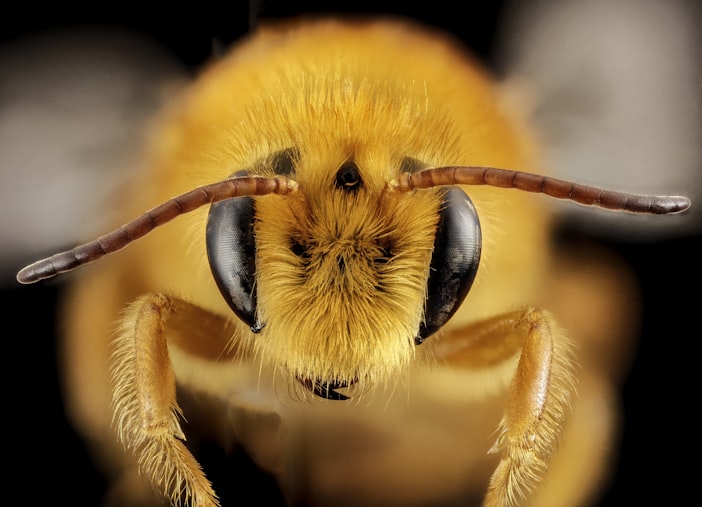
Every honey bee larva in a colony eats the same food for its first three days of life. Every single one - future workers, future drones, future queens. The food comes from two glands in the heads of nurse bees: the hypopharyngeal gland, which produces the protein component, and the mandibular glands, which add lipids and other compounds. The combined secretion is a pale, milky substance with a slightly acidic taste, a pH around 3.6, and a name that makes it sound more glamorous than a glandular secretion has any right to be.
Royal jelly.
After day three, the food diverges. Worker larvae get switched to a diet of honey and pollen. Queen larvae keep getting royal jelly - unlimited quantities, a continuous bath of the stuff, for the entire duration of their larval development. The result of this dietary difference is one of the most dramatic phenotype splits in biology: genetically identical organisms that differ in lifespan by a factor of 40, reproductive capacity by a factor of infinity (workers are sterile; queens lay 2,000 eggs per day), and body size by roughly 50%. Same genome. Different lunch.
The question of exactly what in royal jelly triggers the queen developmental pathway has been argued about in the scientific literature for decades, culminated in a landmark Nature paper, was challenged five years later in the same journal, and remains unsettled. Meanwhile, a $1.67 billion global industry sells the substance in capsules, liquids, and creams to humans on the basis of health claims that the European Food Safety Authority explicitly rejected.
What's Actually in It
Royal jelly is approximately 67% water, 12.5% protein, 11% simple sugars, 6% fatty acids, and 3.5% of a compound called 10-hydroxy-2-decenoic acid - 10-HDA for short. That last one matters: 10-HDA occurs naturally only in royal jelly. Nowhere else in nature. It comprises up to 90% of the fatty acid content and serves as the primary marker for authenticity and quality testing. If you're analyzing a substance to determine whether it's actually royal jelly, you're looking for 10-HDA.
The protein fraction contains nine major royal jelly proteins - MRJPs 1 through 9, of which five (MRJP1 through MRJP5) are present in the jelly itself and account for 82-90% of total protein content. MRJP1 is the most abundant. It is also the protein at the center of the most contentious scientific debate in bee biology since the waggle dance controversy.
The secretion comes from nurse bees aged roughly 6 to 15 days post-emergence. The hypopharyngeal glands develop to full size around day six, maintain production through day fifteen, and then shrink as the bee transitions to middle-aged tasks. A narrow window of production from a specific age cohort, secreted from glands that exist for about nine days of a 35-day life - the manufacturing process is as impermanent as the product.
And the product is extremely impermanent. At temperatures above 5 degrees Celsius, royal jelly begins losing its bioactive properties within 4 to 6 hours. Refrigerated, it remains stable for roughly three months. Maximum shelf life at or below 5 degrees: six months. This is not a substance that tolerates neglect.
The Apiary Project has free tools for beekeepers - calculators, schedulers, and seasonal guides.
Browse the Tools →The Royalactin Controversy
In 2011, Masaki Kamakura of Toyama Prefectural University in Japan published a paper in Nature that claimed to have found the answer. He identified a 57-kilodalton protein - MRJP1, which he renamed "royalactin" - as the master switch that triggers queen differentiation in honey bees.
Kamakura's argument was specific and dramatic: royalactin activates the epidermal growth factor receptor (EGFR), which in turn increases body size through p70 S6 kinase, decreases developmental time through MAPK signaling, and promotes ovary development through increased juvenile hormone. One protein. One receptor. One pathway. The queen-making mechanism reduced to a molecular toggle.
The paper landed with the force of a dropped hive body. Media coverage was extensive. "Scientists discover the protein that makes a queen" appeared in science headlines worldwide. The clean simplicity of the finding - one molecule, one switch - was irresistible narrative.
Then, in 2016, Anja Buttstedt and colleagues at Martin Luther University in Germany published their response, also in Nature: "Royalactin is not a royal making of a queen."
Buttstedt's team couldn't replicate the findings. With larger sample sizes, they fed larvae diets with and without royalactin and found that larvae receiving no royalactin developed into perfect queens. Larvae fed royalactin-enriched food showed no increase in queen development. They also excluded MRJP2, MRJP3, and MRJP5 as single key drivers. No individual protein, in their experiments, acted as a queen switch.
Kamakura responded that Buttstedt's team had used smaller quantities of royal jelly in their experiments. The critics noted that this defense actually undermined the original claim: if royalactin only works in the presence of sufficient royal jelly, then royalactin isn't the master switch - the whole royal jelly is. The single-protein theory requires that the protein work alone. If it needs everything else present to function, it's not a switch. It's a component.
The current scientific consensus, such as it exists: queen determination appears to involve the quantity of royal jelly fed - queens get unlimited amounts throughout development; workers get it only for three days - plus likely multiple interacting compounds, dietary signals, and possibly epigenetic modifications. There is no known single molecule that, in isolation, turns a worker larva into a queen. The mechanism is almost certainly more complicated than one protein and one receptor. Biology usually is.
500 Grams Per Colony
A well-managed hive during a five-to-six-month season produces approximately 500 grams - roughly 18 ounces - of harvestable royal jelly. Each individual queen cell contains about 200 milligrams. Without commercial harvesting techniques (just collecting from natural swarm cells), a hive produces barely 1 to 2 grams.
The commercial method is the Doolittle larval grafting technique: beekeepers insert artificial queen cups into colonies, hand-graft larvae aged 12 to 24 hours into the cups, and let nurse bees do what nurse bees do - start raising queens. The nurse bees fill the cups with royal jelly. Between day two and day four of larval development, before the cell is capped, the jelly is harvested with a small suction tool or spatula. The larvae are removed. The jelly is refrigerated immediately.
The process is labor-intensive. It requires manipulating individual larvae under magnification. The harvest window is narrow. The product spoils rapidly. Compare this to honey, which essentially doesn't spoil at all, or beeswax, which is stable indefinitely at room temperature, and the economics of royal jelly production become clear: it's expensive because it's difficult, perishable, and produced in tiny quantities.
At 500 grams per colony per season, a beekeeper running 100 colonies produces 50 kilograms of royal jelly. US retail pricing for raw royal jelly runs $8 to $14 per ounce - roughly $65 to $80 per pound. At the high end, 50 kilograms at $80 per pound is approximately $8,800 in gross revenue. Against that, the labor involved in grafting, harvesting, and cold-chain management makes royal jelly production a specialized operation that most beekeepers don't attempt.
China Produces 90% of It
In the 1980s, Chinese beekeepers developed a selectively bred lineage of Apis mellifera ligustica - Italian honeybees - optimized for royal jelly production. These bees produce significantly more jelly per colony than standard strains. The breeding program scaled. The production scaled with it.
China now produces approximately 3,500 to 4,000 tons of royal jelly annually - over 90% of the global supply. More than 70% of China's production is exported, primarily to Japan, Europe, and the United States. Annual export value: $31 million to $52 million, at wholesale prices ranging from $25 to $137 per kilogram depending on quality, form, and market conditions.
The dominance is so complete that the global royal jelly market is, in practical terms, a Chinese export market with international retail distribution. Japan is the largest consumer per capita. Asia-Pacific holds approximately 90% of global market share. The entire Western health supplement industry's royal jelly supply flows through Chinese production and export channels.
This creates a supply chain with the fragility typical of extreme concentration. A disease outbreak affecting Chinese bee populations, a regulatory shift in Chinese agricultural policy, or a trade disruption between China and its major export markets would have immediate effects on global royal jelly availability that no other producing country could offset.
EFSA Said No
In 2011 - the same year Kamakura published his royalactin paper - the European Food Safety Authority completed its assessment of royal jelly health claims and concluded that the evidence does not support the claim that consuming royal jelly offers health benefits to humans.
Not "insufficient evidence." Not "needs more research." The evidence does not support the claims.
The claims in question covered the territory that royal jelly marketing occupies: immune system support, anti-aging effects, cholesterol reduction, skin health, energy enhancement, fertility support. EFSA examined the available human clinical trials and found them inadequate - too small, poorly controlled, or showing no statistically significant effects.
The disconnect between the EFSA finding and the market is instructive. In the United States, royal jelly is classified as a dietary supplement. The FDA does not regulate supplements for safety or efficacy the way it regulates drugs. No medicinal use is approved. No formal safety assessment has been conducted. Different brands may have varying potency and quality. When EFSA says the evidence doesn't support health claims and the FDA declines to regulate the product at all, the result is a market where claims travel freely and regulatory pushback is minimal.
The global royal jelly market was valued at approximately $1.67 billion in 2026 and is projected to reach $2.15 to $2.54 billion by the early 2030s, growing at a compound annual growth rate of about 4.3%. A market growing at 4.3% annually for a product whose claimed health benefits were rejected by Europe's food safety authority. The marketing literature emphasizes anti-aging, immune boosting, and vitality. The scientific literature emphasizes the gap between in vitro findings and human clinical evidence. Both literatures continue to grow.
The Allergy Problem Nobody Mentions
Royal jelly triggers allergic reactions at rates that the supplement industry's marketing materials tend not to emphasize.
In an Australian study, 52% of allergic patients showed a positive IgE response to royal jelly. In Hong Kong, 16.8% of adult asthma patient serum samples contained royal jelly-reactive IgE. The reactions range from mild - rhinitis, eczema, contact dermatitis - to fatal. Anaphylaxis from royal jelly consumption has been documented in medical literature multiple times. Other reported reactions include urticaria, conjunctivitis, hemorrhagic colitis, acute asthma, and bronchospasm.
The risk profile is particularly concerning because royal jelly shares allergenic proteins with bee venom and pollen. A person with a known bee sting allergy or pollen allergy faces elevated risk from royal jelly consumption - a cross-reactivity that the "natural health supplement" framing doesn't always communicate clearly.
Fresh, Frozen, or Fiction
The preservation question is commercially significant because royal jelly's instability creates a fundamental tension between product quality and market reach.
Fresh royal jelly - 67% moisture, requires continuous refrigeration, loses properties in hours at room temperature, maximum six-month shelf life even refrigerated. This is the product as the bees make it. It's also a product that's incompatible with the global supplement supply chain, which involves warehousing, shipping, and shelf time measured in years, not months.
Freeze-dried (lyophilized) royal jelly - less than 1% moisture, stable at room temperature, approximately three-year shelf life. The moisture removal concentrates compounds like 10-HDA, which appears at roughly three times the concentration of fresh jelly (because the water is gone, not because there's more 10-HDA). Research teams have confirmed that fresh and freeze-dried royal jelly show equivalent bioactive properties, and that freeze-drying does not significantly degrade quality.
The debate between fresh and freeze-dried advocates persists in the supplement market, where "raw" and "fresh" carry premium pricing and marketing cachet. The scientific evidence suggests freeze-drying is a viable preservation method. The marketing evidence suggests "fresh" sells better. Both facts are true. They have nothing to do with each other.
What the Nurse Bees Know
The biology of royal jelly production is more interesting than the supplement industry that sells it.
Nurse bees don't produce royal jelly on a schedule. They produce it in response to demand. A colony raising a new queen after the old queen dies will provision emergency queen cells with royal jelly at extraordinary rates. Workers in the colony assess the nutritional needs of each larva and adjust feeding accordingly. The hypopharyngeal glands of nurse bees enlarge or shrink based on colony nutritional status and brood demand.
The vitellogenin system that governs nurse bee physiology connects directly to royal jelly production: bees with high vitellogenin levels maintain larger hypopharyngeal glands and produce more jelly. The same protein that controls lifespan in winter bees controls the glands that produce the food that determines caste. The systems interlock. Biology doesn't respect the organizational chart that humans want to impose on it.
A substance secreted by a gland that functions for nine days, from a bee that lives for 35, that determines whether a genetically identical organism becomes a sterile worker or a queen who lives 40 times longer and lays 2,000 eggs a day. The mechanism isn't fully understood. The royalactin theory didn't hold up. The quantity theory - that queens become queens simply because they're fed more - is probably closer to the truth but almost certainly incomplete.
The nurse bees in every colony in every hive produce royal jelly without understanding what it does. The scientists studying it don't yet fully understand how it does what it does. And the supplement industry selling it to humans has built a $1.67 billion market on health claims that Europe's regulatory authority examined and rejected.
The bees, as usual, were not consulted about any of this.