Migratory Beekeeping (The Routes That Keep American Crops Alive)
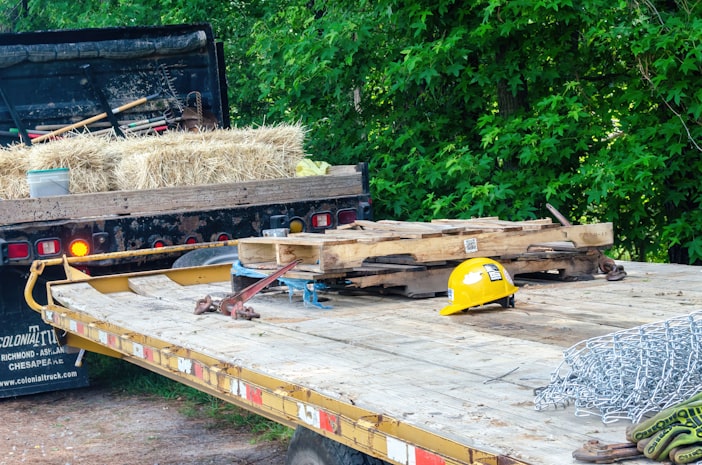
Somewhere on Interstate 5, at two in the morning, a flatbed truck is carrying 432 beehives north toward California's Central Valley. The hives are stacked four high, netted down, and vibrating with the collective anxiety of approximately 8.6 million honey bees who didn't ask to be on a truck.
This is not a metaphor. This is a Tuesday in February.
The scene repeats itself on highways across the country every winter. Between 3,000 and 6,000 trucks - depending on how many hives each one carries - haul roughly 1.7 million colonies into California every February. Scientific American calculated that more than 31 billion honey bees converge on the almond orchards of the Central Valley in a single month. By the time the bloom ends and those bees have done their work, the population in the orchards may exceed 80 billion. Eighty billion. In one valley. At the same time. Because the American food system requires it.
The logistics would make a military strategist nervous. The biology should make everyone nervous.
The Circuit
Migratory beekeeping follows a route dictated by biology and economics - flowers bloom in sequence across the country, and someone has to put bees in front of them at precisely the right moment. Miss the window by a week and the bloom is over, the contract is void, and the bees rode 2,000 miles for nothing. The annual cycle looks something like this:
January: Hives staged in southern holding yards - Florida, Texas, the Gulf Coast - get loaded onto trucks and start moving west. Beekeepers who spent the fall feeding colonies and treating for varroa mites now find out whether their investments survived. This is the moment of truth, and it arrives in the dark, on a loading dock, with a forklift.
February-March: The almond bloom. This is the Super Bowl. Approximately 810,000 acres of almond trees in California's Central Valley need pollination, and they all bloom within a roughly three-week window. The trees cannot self-pollinate - without bees, there are no almonds. Period. In 2026, the industry required an estimated 2.8 million colonies, which exceeds the entire US managed colony population of roughly 2.7 million. Let that math sit for a second. The almond crop alone needs more bees than America has. About 400,000 colonies come from California itself. The remaining 1.2 million-plus arrive by truck from every other state.
April: As almond petals fall, some hives stay in California for cherry, plum, and avocado pollination. Others head north to Washington State, where apple and cherry orchards are entering bloom. The caravan fragments, reforms, fragments again.
May-June: The operation splits further. Some beekeepers move east for Maine blueberry pollination or Michigan's blueberry and cherry crops. Others head to Texas for squash and watermelon. The largest operations begin positioning for the main honey production season.
June-August: The Dakotas. This is where the money changes shape. North Dakota, South Dakota, and Montana produce more honey than any other states - vast fields of alfalfa, sunflower, clover, and wildflowers provide the concentrated nectar flows that fill supers. Operations that spent the spring earning pollination fees now switch to honey production. The bees that were pollinating almonds in February are making wildflower honey in July. Same bees. Different business model. Different state.
September-October: Cranberry pollination in Wisconsin. Pumpkins across the East Coast. Late-season crops that need one more round of bee attention before everything shuts down for winter.
November: South again. Florida's Brazilian pepper and citrus provide late-season forage. Some operations park in southern Texas. The colonies need to build winter stores, requeen if necessary, and prepare for the whole cycle to restart in January. And it will restart. It always restarts.
The Apiary Project tracks honey bee health data so you don't have to.
Explore the Data Hub →What Fits on a Truck
The standard configuration puts 432 hives on a 48-foot flatbed trailer - six hives per pallet, pallets stacked and strapped. Some operators squeeze 544 hives per load by mixing hive sizes. Each truckload carries somewhere between 5 and 7 million bees. The bees do not enjoy the experience.
Hives get netted to prevent escape during transit, but the combination of vibration, temperature swings, confinement, and disrupted foraging creates measurable stress. Research published in Scientific Reports found that migratory bees live approximately one day less than stationary bees - which doesn't sound dramatic until you remember that a forager bee's entire working lifespan is roughly 20 days. That's a 5% lifespan reduction. Compounding across a colony of 50,000 bees, that affects everything downstream.
The trucking itself isn't cheap. Current rates run $2.80-$3.33 per mile for bee-specific hauling. A load from Oregon to California almonds costs approximately $1,360. From the East Coast to California, it's $8,000 or more. Drivers need specialized knowledge - bees need ventilation, loads shift differently than standard freight, and the cargo stings. That last part tends to limit the applicant pool.
And then there's the disorientation problem. When colonies arrive at a new location, forager bees must completely relearn their surroundings. RFID tracking research found that up to 45% of marked adult bees were lost within seven days of relocation. Gone. Roughly 38% of displaced bees drifted into neighboring colonies rather than returning to their own - which means diseases, parasites, and pathogens get mixed between operations parked in the same staging area. Your bees become their bees become everyone's problem.
The Money
Pollination fees vary dramatically by crop, and the numbers reveal which agricultural products depend most heavily on managed bees - and which ones know it.
Almonds pay the most. Averaging $181 per colony in 2024, nearly triple the average for all other crops. Blueberry growers in Maine pay $90-110 per hive. Cranberry operations in Wisconsin pay $65-82 per colony. Washington apple growers paid $59.50 per colony in 2023, up 2% from the prior year. Florida citrus - which doesn't strictly require cross-pollination - sits at the bottom at $40-60 per hive.
The total value of US pollination services hit $400.8 million in 2024, down 3.3% from the previous year. Average price per colony across all regions increased to $209 in 2026.
But the almond money tells the real story. A beekeeper hauling 1,000 colonies to California and collecting $181 per hive earns $181,000 for roughly four weeks of pollination. Subtract trucking costs, labor, colony losses, and the expense of getting those colonies strong enough to meet almond contract specifications - which typically require eight or more frames of bees per hive - and the margin is still substantial enough to build an entire business model around.
Which is exactly what happened. The shift from honey production to pollination services as the primary revenue source for commercial beekeeping tracks almost perfectly with the expansion of California almond acreage over the past three decades. The almonds got bigger. The checks got bigger. The trucks kept rolling.
How a Tuesday in February Became the Center of American Agriculture
Nobody planned this system. It emerged from the collision of agricultural specialization, pollinator decline, and one specific tree crop's explosive growth.
The origins trace to 1907, when a beekeeper named Nephi Miller first moved hives seasonally to chase different nectar flows - not for pollination contracts but for honey production. The concept spread slowly. By the mid-twentieth century, a modest pollination-for-hire industry existed, but most farms maintained their own bee colonies or relied on feral populations for pollination. There were enough wild bees. The system worked. Nobody needed trucks.
Two things changed. First, post-war agricultural chemicals devastated wild pollinator populations. Farms that once had plenty of feral bees visiting their crops suddenly didn't. Second, farms specialized. A grower running 500 acres of almonds didn't have the expertise or desire to also manage beehives. The economic logic separated: specialists grow the crop, other specialists bring the bees.
The interstate highway system made long-distance trucking practical. California almond acreage expanded from a few hundred thousand acres in the 1980s to over 810,000 acres by the 2020s. Each new acre needed more bees. The price signal was clear - almond pollination fees climbed from under $50 per colony in the 1990s to over $180 today - and beekeepers responded by building operations specifically designed for migratory service.
Then Colony Collapse Disorder hit in 2006. Operations like Hackenberg Apiaries - which trucked 3,000-plus hives nationally - lost 80% of their colonies in a single fall. The sudden shortage of available pollinators drove fees sharply upward and cemented the economic model: keeping bees alive became so expensive that only pollination revenue could justify the investment.
Today, approximately 1,600 beekeepers participate in the California almond migration alone. The industry has consolidated around large operations - Adee Honey Farms, the nation's largest, maintains over 80,000 colonies across five states with nearly 100 employees. These aren't hobbyists with a few hives in the backyard. They're logistics companies that happen to deal in insects.
The Biological Cost
The research on migratory stress keeps accumulating, and none of it is what you'd call encouraging.
Beyond the lifespan reduction and forager disorientation, studies published in PLOS ONE documented that migratory colonies show increased levels of the AKI virus complex and decreased antiviral gene expression. The constant movement creates what amounts to a nationwide pathogen superhighway - diseases and parasites from one region get introduced to bees in every region along the route.
When a Florida operation parks next to a North Dakota operation in a California almond staging yard, their bees mingle. Foragers drift between hives. Parasites transfer. Varroa mites with resistance to one treatment end up in colonies that never encountered that resistance pattern before. The genetics of disease and the genetics of treatment resistance get stirred across the entire country every February. It's an epidemiologist's nightmare scenario, and it happens on schedule, annually, as a feature of the system rather than a bug.
Transport physically affects the bees' biology in ways that go beyond stress. Research found that nurse bee hypopharyngeal glands - the glands that produce royal jelly for feeding larvae - shrink after transportation. Colonies that just endured a cross-country truck ride are literally less capable of feeding their next generation. Temperature regulation suffers during transit. Insufficient ventilation can kill colonies outright through overheating. Even adequate ventilation still exposes bees to temperature swings they'd never experience in a stationary hive.
The Bee Informed Partnership's 2026 survey documented overall managed colony losses of 55.6% - the highest rate ever recorded since tracking began in 2010-2011. Winter 2024-2025 losses hit 40.2%. Summer 2024 losses reached 28.3%. These numbers represent all managed colonies, not just migratory operations, but the stress of constant movement compounds every other risk factor. It's hard to fight a virus when you're also jet-lagged.
The Irony Nobody Talks About
Here's the thing that makes migratory beekeeping genuinely strange to contemplate: the system exists because agriculture destroyed the pollinators that would have done the job for free.
Before industrial farming, before neonicotinoid pesticides, before habitat loss eliminated the hedgerows and wildflower margins that supported native bee populations, before monoculture replaced diverse farming landscapes with single-crop deserts that bloom for two weeks and offer nothing for the other fifty - before all that, pollination happened without trucks. It just happened. Bees lived where the flowers were because the flowers were everywhere.
Now we load 31 billion honey bees onto flatbed trailers and drive them thousands of miles because the alternative is $7 billion worth of almonds not existing. The bees arrive stressed, immunocompromised, and carrying each other's parasites. They work for three weeks. Then they get loaded back on trucks and driven to the next crop.
The system works. American almond production hits roughly 700 billion nuts per year. The pollination economy generates over $400 million annually. Colony losses are devastating, but beekeepers replace dead colonies and keep going because the economics demand it.
But the system is also fragile in ways that nobody fully understands. What happens when colony losses exceed the industry's ability to replace them? What happens if yellow-legged hornets establish across the Southeast and start hitting the staging yards where colonies rest between migrations? What happens when the cost of keeping bees alive exceeds the revenue from moving them around?
Nobody knows. The bees are already on the truck.
What a Migration Day Actually Looks Like
Loading hives happens at night, for a reason that becomes obvious if you've ever tried to move bees during the day: daytime loading means thousands of foragers return from collecting trips to find their home gone. They cluster on the ground where the hive used to sit, confused and homeless. They don't rejoin the colony. They die.
Night loading means all the foragers are home. Entrance reducers go on. Nets get draped over pallets. Forklifts stack pallets on the trailer. The driver secures everything with straps and 2x6 lumber, checks ventilation gaps, and starts driving before sunrise.
The route matters. Experienced bee haulers avoid mountain passes where temperature drops could chill brood. They avoid long stops in urban areas where heat radiates off pavement. They drive at night when cooler temperatures keep the bees calmer and reduce the risk of overheating. Some operations use cooling systems mounted on trailers for summer moves. It's freight logistics, except the freight has opinions.
At the destination, unloading reverses the process. Forklifts place pallets in the orchard or field. Entrance reducers come off. The bees emerge, orient to their new surroundings, and within a few hours begin foraging as if they've always been there.
Except they haven't. And their bodies know it. The colony rebuilds its mental map of the landscape from scratch. Foragers that remember the last location fly out and find nothing familiar. The ones that make it back start over. The ones that don't - that 38% that drift into someone else's hives - take their mites and viruses with them.
The next morning, the beekeeper walks the rows, checking that hives are alive, queens are present, and populations are strong enough to meet the grower's contract specifications. Then the real waiting begins - for the bloom, for the bees to do their work, for the phone call about the next job.
In six weeks, they'll do it all again.