Nosema (The Gut Parasite That Split Beekeepers Over One Drug)
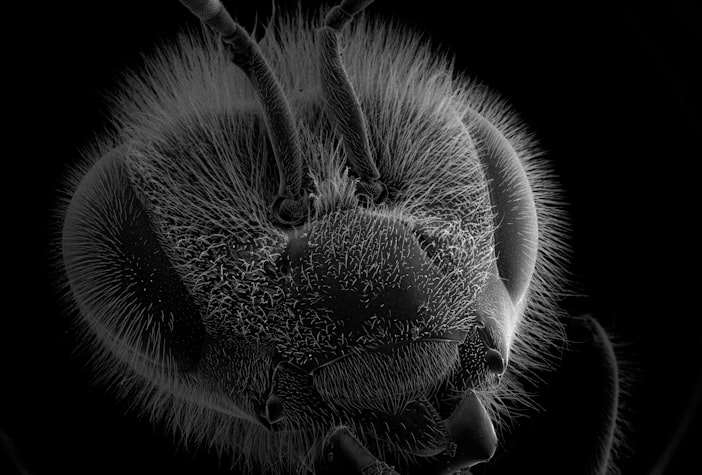
The polar tube fires in microseconds. That's the part nobody tells you about Nosema disease - the infection mechanism sounds like it belongs in a science fiction film, not in the midgut of a honey bee. The parasite's spore sits in the gut lumen, waiting. When conditions are right - the pH, the temperature, the chemical triggers - a coiled tube inside the spore extends explosively, piercing the membrane of an epithelial cell and injecting the spore's contents directly into the host's cytoplasm. The whole process is over before a human could blink. One moment the cell is healthy. The next, it's been invaded by an organism that has no mitochondria, cannot produce its own energy, and will spend the rest of its reproductive cycle stealing ATP from its host like a metabolic pickpocket.
This is Nosema - a microsporidian parasite that has been quietly dissolving honey bee guts for at least as long as anyone has been looking. Enoch Zander described the first species, Nosema apis, in 1909. For nearly a century, it was considered the only microsporidian that infected European honey bees. A nuisance, mostly. A winter disease that caused dysentery, stained hive entrances brown, and cleared up in spring. Beekeepers knew about it the way drivers know about potholes - annoying, unavoidable, rarely fatal on its own.
Then, in 2006, a research team in Spain looked more carefully.
Two Species, One Name, Zero Agreement
Mariano Higes, Raquel Martin, and Aranzazu Meana at the Centro Apicola Regional in Guadalajara, Spain, had been investigating unexplained colony losses. Colonies were depopulating - not dramatically, not with the mass die-offs that would later define Colony Collapse Disorder, but steadily. Fewer bees. Lower honey production. Queens still laying. Food still present. Bees just... leaving, and not coming back.
When the team ran molecular diagnostics on samples collected from Spanish apiaries, twelve samples from different regions, the sequenced products from eleven of them matched not Nosema apis but a different species entirely: Nosema ceranae. A parasite first described by Ingemar Fries in 1996 from samples of the Asian honey bee, Apis cerana, collected in Beijing. A parasite that was supposed to be confined to Asian bees.
It was not confined to Asian bees. In 2004, 90% of approximately 3,000 Spanish bee samples had tested positive for N. ceranae. In 2005, 97% of 800 samples. The parasite had jumped hosts - from the Asian honey bee to the European honey bee - and established itself so thoroughly that by the time anyone noticed, it was essentially everywhere.
The discovery set off a cascade of reports from around the world. Within a few years, N. ceranae had been detected on every continent where honey bees are managed. More troubling, it appeared to be displacing N. apis as the dominant Nosema species in Apis mellifera colonies globally. Not coexisting. Replacing. The old parasite was being outcompeted by the new one, and the new one behaved differently in almost every way that mattered.
And then the taxonomists got involved. Molecular phylogenetics revealed that the genus "Nosema" was polyphyletic - meaning the organisms classified under that name didn't actually share a single common ancestor. Both species were formally reassigned to the genus Vairimorpha. So Nosema ceranae became Vairimorpha ceranae, and Nosema apis became Vairimorpha apis, and the entire beekeeping world proceeded to ignore the reclassification almost entirely. The disease is still called nosemosis. The parasite is still called Nosema in every field manual, every extension bulletin, and every beekeeper conversation. The taxonomy committee's work stands in the literature. The language hasn't moved.
The Apiary Project tracks every major threat to US honey bee colonies.
Explore the Issues Hub →The ATP Thief
What makes Nosema ceranae different from its predecessor isn't just geography. It's biology.
N. apis was a seasonal pathogen. It peaked in winter and spring, when bees were confined to the hive, when fecal contamination spread easily in close quarters, when immune defenses were at their lowest. It produced visible symptoms - the brown streaking on frames and hive walls that beekeepers called dysentery. It was unpleasant and diagnostic. You could see it.
N. ceranae is present year-round. It produces no visible dysentery. Infected colonies look normal until they don't - and by "don't," the pattern is typically a gradual population decline that could be attributed to half a dozen other causes. The parasite infects more gut cells than N. apis at the same temperature. It's more virulent. And it's largely invisible to standard visual inspection.
The infection mechanism is the same for both species - the polar tube, the injection, the intracellular parasitism - but N. ceranae adds a twist that borders on elegant, if you can call a parasitic strategy elegant. After hijacking the host cell's ATP for its own reproduction, N. ceranae inhibits genes in the Wnt signaling pathway - the pathway responsible for gut tissue renewal and homeostasis. The parasite doesn't just damage the gut. It prevents the gut from repairing itself. It steals the cell's energy and then disables the construction crew that would rebuild what it broke.
The result is what researchers have called a "starved-like phenotype." Infected bees have higher hunger levels and lower survival rates - not because food isn't available, but because their damaged guts can't extract enough nutrition from the food they eat. In laboratory studies where infected bees were fed unlimited food, their survival matched uninfected bees. The parasite doesn't kill by starvation in the traditional sense. It kills by making digestion insufficient. The food is there. The gut can't use it.
Individual variation in infection outcomes is dramatic. Feed the same dose of spores to a group of bees, and the results range from zero spores detected to over one million gut spores per bee. The highest recorded infection level: 41.4 million spores in a single bee. Same dose. Same exposure. Wildly different outcomes. Whatever determines an individual bee's susceptibility, it isn't uniform.
The Nine-Day Sentence
Infected bees live nine days less than uninfected bees, on average. In a worker whose adult life spans roughly 35 summer days, nine days is a quarter of a lifetime. But the mechanism of death is more interesting than the statistic suggests.
Infected bees are nearly twice as likely to forage precociously - transitioning from in-hive duties to foraging flights much earlier than their age would normally dictate. This sounds like a minor behavioral shift until you consider what it means for the colony. Precocious foragers die at higher rates. They're less experienced. They're physiologically unprepared. And many of them simply don't come back - they die in the field, away from the hive, leaving no trace of what happened.
This is why N. ceranae infections look like gradual depopulation rather than mass death. The bees aren't dying in piles on the bottom board. They're dying individually, in fields and on flowers, one by one, each failure invisible to the beekeeper who opens the hive and sees fewer bees but no obvious cause. The cluster gets smaller. The brood pattern thins. Production drops. The colony weakens along a curve that could be attributed to a bad queen, poor nutrition, varroa, or just bad luck.
Colony collapse from Nosema occurs when more than 80% of bees are infected with more than 10 million spores each - the point at which the queen cannot produce enough eggs to compensate for the rate of worker loss. The tipping point for noticeable production impact is lower: when 10-20% of bees are infected, honey yield begins to decline.
50% of Samples
The USDA's Animal and Plant Health Inspection Service national honey bee survey, running since 2009, has detected Nosema in an average of 50% of all samples nationally. Half of every sample set. Every year. Among positive colonies, 73% have low-level infections, 16% moderate, and 11% high-level infections.
A study of symptomatic colonies from 2015 to 2022 found 99.7% prevalence - essentially universal - with spore counts ranging from 1 to 16.8 million spores per bee among states, national average 6.8 million. In Virginia alone, an estimated 69.3% of hives were infected with N. ceranae specifically.
The standard detection method hasn't changed much since before anyone understood what they were looking at: crush 100 forager bees in 100 milliliters of water, place a sample on a hemocytometer, count spores under a compound microscope. Five grid blocks, multiply by 50,000, equals spores per bee. The traditional treatment threshold for N. apis was 1 million spores per bee. The problem is that light microscopy cannot reliably distinguish between N. apis and N. ceranae - the spores have slight morphological differences, but not enough to separate them under a standard microscope. Only PCR - molecular analysis - can identify which species is present. Most beekeepers do not have access to PCR.
The Drug That Might Make It Worse
Fumagillin was isolated in 1949 from the fungus Aspergillus fumigatus and originally used as a human amebicide. Katznelson and Jamieson published the first promising results for treating Nosema in honey bees in Science in 1952. For the next sixty years, it was the only antibiotic approved for Nosema control in US honey bees, sold commercially as Fumagilin-B.
It was also banned in the European Union and many countries outside the Americas.
Against N. apis, fumagillin worked. It suppressed spore production, reduced prevalence, improved colony outcomes. Against N. ceranae - the species that now dominates worldwide - the story became considerably more complicated.
In 2013, Wei-Fone Huang and colleagues at the University of Illinois published a paper in PLOS Pathogens that landed in the beekeeping world like a lit match in dry grass. The study found that fumagillin initially suppressed N. ceranae spore production, as expected. But six months after treatment, disease prevalence and hive performance in treated apiaries were similar to untreated ones. The drug wore off. That part wasn't surprising.
What was surprising: as fumagillin degraded and diluted over the foraging season, bees and parasites were exposed to declining drug concentrations. At these sub-therapeutic concentrations, N. ceranae spore production increased up to 100% higher than in untreated infected bees. The drug, at low doses, didn't just stop working. It appeared to stimulate the parasite. And at those same declining concentrations, fumagillin still altered structural and metabolic proteins in bee midgut tissue - meaning it continued to harm the bees while no longer suppressing the disease.
The conclusion was uncomfortable: the standard application protocol might actually exacerbate N. ceranae infection rather than suppress it. A drug used for sixty years, the only approved option, potentially making the problem worse during the tail end of every treatment cycle.
There was also the DCH problem. Both commercial fumagillin formulations contain dicyclohexylamine as a counter-ion in a 1:1 ratio. DCH shows a statistically significant risk of bee mortality from oral exposure. And DCH degrades far more slowly than fumagillin in honey - a half-life of 368 to 852 days for DCH versus a maximum of 246 days for fumagillin. The active ingredient breaks down. The toxic byproduct doesn't. DCH residues have been detected in 265 honey samples at concentrations of 5 to 219 micrograms per kilogram.
The CCD Connection That Wasn't (Exactly)
In 2010, Jerry Bromenshenk and colleagues published a study finding that invertebrate iridescent virus type 6, combined with N. ceranae, was present in every killed colony they studied. Neither alone seemed deadly. Together, they were described as "always 100% fatal." The media coverage was immediate. The combination - virus plus gut parasite - looked like the answer to Colony Collapse Disorder.
Except a 2009 USDA survey had found N. ceranae in about half of CCD-affected colonies - and also in about half of healthy control colonies. The parasite was as common in survivors as in casualties. USDA bee scientists stated that N. ceranae "may be a factor but cannot be the sole cause" since the pathogen appeared equally in healthy and collapsing colonies.
The current scientific position: Nosema is one stressor among many. It interacts with varroa, with viruses, with nutrition, with pesticides. Especially with pesticides. Every combination tested between N. ceranae and neonicotinoid pesticides showed synergistic effects on bee mortality - meaning the combined impact was worse than the sum of the individual effects. Imidacloprid plus Nosema significantly weakened bees in ways that neither stressor alone could explain. Glucose oxidase activity - part of the bee's immune defense system - decreased significantly only when both stressors were present simultaneously.
The parasite isn't the whole story. But it's a consistent chapter in almost every version of the story that ends badly.
The Mushroom Guy
In 2018, Paul Stamets - mycologist, author, TED speaker, and a person whose enthusiasm for fungi is approximately as understated as a smoke cannon at full blast - published a paper in Scientific Reports that made the beekeeping world do a collective double-take.
The study started with an observation: bees had been documented foraging on mushroom mycelium in the wild. Not on mushrooms themselves - on the network of fungal threads growing through decomposing wood. Why would bees seek out fungal tissue? Stamets hypothesized they were self-medicating.
His team tested extracts from amadou (Fomes fomentarius) and reishi (Ganoderma lucidum) mushroom mycelium on honey bee colonies. The results were dramatic: colonies fed mycelium extract showed a 79-fold reduction in deformed wing virus and a 45,000-fold reduction in Lake Sinai virus compared to control colonies. The extracts reduced viral loads in a dose-dependent manner, with amadou mycelium reducing DWV more than 800-fold in the first trial.
The paper was about viruses, not Nosema directly. But the connection to colony health was immediate and obvious - deformed wing virus is vectored by varroa mites, and viral loads are a major component of the multi-stressor cascade that includes Nosema. A treatment that dramatically reduces viral burden could shift the entire equation.
The catch: the mycelium extract wasn't available at levels beekeepers could purchase. Stamets noted they were "ramping up production of the extracts as rapidly as is feasible, given the hurdles we must overcome to deploy this on a wide scale." As of 2026, commercial availability remains limited, and the gap between a published study and a product on the shelf remains exactly as wide as pharmaceutical development always is.
What's Next (Maybe)
The search for alternatives to fumagillin has produced a scattershot of promising leads and no clear successor.
Nutraceuticals - sulforaphane from cruciferous vegetables, carvacrol from oregano oil, naringenin from citrus fruit - showed the most promise among ten tested compounds in laboratory settings. Probiotics, including Enterococcus faecium, significantly reduced infection and increased honey production in first-year field trials. A 2024 study found that HiveAlive, a plant-based product, combined with bacterial strains Bifidobacterium coryneforme and Apilactobacillus kunkeei, showed "significant and rapid reduction in pathogen load."
RNA interference - oral ingestion of dsRNAs targeting spore wall protein genes - led to significant reductions in N. ceranae in laboratory studies, including through genetically engineered gut bacteria designed to deliver the RNAi continuously. Bleomycin, an anti-cancer drug, reduced Vairimorpha ceranae infection in a 2024 study published in Microbiology Spectrum, though with "some evident host toxicity," which is the kind of qualifier that keeps a drug firmly in the research category.
Randy Oliver of Scientific Beekeeping framed the central question about N. ceranae as "Kiss of Death or Much Ado about Nothing?" A 2023 paper in Communications Biology leaned toward the latter, concluding that N. ceranae infections were "significant but not biologically relevant" to winter colony losses. The debate continues. The parasite continues. The taxonomy committee continues to insist it should be called Vairimorpha. Nobody is listening.
A microsporidian with no mitochondria, no ability to produce its own energy, and a polar tube that fires in milliseconds has been quietly parasitizing honey bees for over a century. The only approved treatment for it might make it worse at low doses. The most promising alternative involves mushroom extract from a mycologist who thinks fungi can save the world. And half of every national survey sample contains it.
The bees, characteristically, have not issued a statement.