Bee Venom (What Apitoxin Does in the Body and Why Medicine Cares)
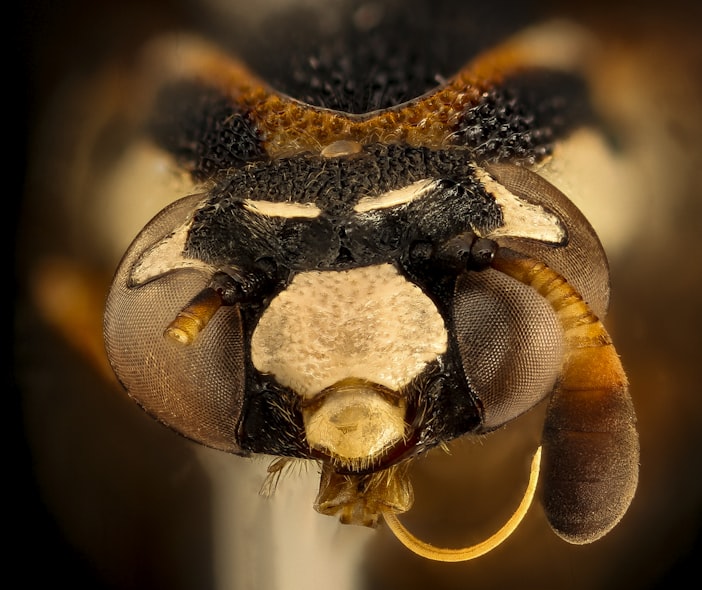
A honey bee sting delivers approximately 0.1 micrograms of dry venom. The liquid itself is 88% water - colorless, odorless, with an acidic pH that the nervous system interprets as a sharp, burning pain followed by localized swelling. Most people's relationship with bee venom ends there: it hurts, it swells, you move on.
But that 0.1 micrograms contains a cocktail of compounds that has attracted the attention of cancer researchers, neurologists, dermatologists, the South Korean pharmaceutical industry, and the K-beauty market - and has been the subject of one of the stranger regulatory disagreements in modern medicine. It takes roughly one million stings to collect a gram of it. That gram, depending on purity and source, sells for $300 to $600. Gold, for reference, trades at about $60 to $70 per gram. Bee venom is five to ten times more expensive than gold, and considerably harder to collect.
The scientific name is apitoxin. The history of people deliberately getting stung by bees for therapeutic purposes goes back further than you'd expect. And the science of what the venom actually does - at the molecular level, to cancer cells, to neurons, to the immune system - is more interesting than either the believers or the skeptics usually admit.
The Pharmacology of a Sting
Melittin makes up 50 to 60 percent of dry bee venom by weight. It's a 26-amino-acid peptide, amphipathic - meaning one end is water-loving and the other end is water-repelling - that at high concentrations folds into alpha-helical tetramers and proceeds to punch holes in cell membranes. It's the primary pain-causing component, the primary biologically active component, and the compound that has generated the most research interest.
Phospholipase A2 - PLA2 - accounts for another 10 to 12 percent. A 128-amino-acid polypeptide chain with four disulfide bridges, it catalyzes the hydrolysis of phospholipids. In plain language: it degrades cell membranes from the chemical side while melittin is destroying them from the structural side. Together, melittin and PLA2 constitute over 80 percent of dry bee venom.
Then it gets stranger.
Apamin - just 2 percent of the venom, an 18-amino-acid neurotoxin with two disulfide bridges - is the only polypeptide neurotoxin in bee venom that crosses the blood-brain barrier when injected peripherally. It irreversibly blocks calcium-activated small-conductance potassium channels - SK channels - in neurons. An 18-amino-acid peptide from an insect that weighs less than a gram, doing what most pharmaceutical companies spend billions trying to achieve: getting past the blood-brain barrier.
Adolapin, at roughly 1 percent, inhibits cyclooxygenase and prostaglandin synthesis - the same biochemical pathway targeted by aspirin and ibuprofen. MCD peptide - mast cell degranulating peptide, also called Peptide 401 - makes up 2 to 3 percent and is a potent anti-inflammatory and mast cell degranulator. Hyaluronidase, at about 2 percent, dilates blood vessels and increases tissue permeability, essentially paving the road for everything else to spread.
The remaining fraction includes histamine, epinephrine, dopamine, norepinephrine, and various minor peptides. A single sting delivers a pharmaceutical cocktail that any drug company would need separate patents for each component. The bee produces all of it in one gland and delivers it through one stinger.
The Apiary Project tracks honey bee health data so you don't have to.
Explore the Data Hub →The Six-Decade Practitioner
Charles Mraz was a beekeeper in Middlebury, Vermont. He kept bees. He also spent sixty years - from the late 1930s until his death in 1999 - treating people with bee stings for arthritis pain. Not as a doctor. Not as a licensed practitioner of anything, technically. As a beekeeper who had noticed something about bee stings and pain, and who decided to do something about it.
He wasn't the first. Philip Terc, an Austrian physician, published "Report about a Peculiar Connection between the Bee Stings and Rheumatism" in 1888 - a title that might win an award for gentle understatement. Hippocrates recognized the healing properties of bee venom for joint problems in the fourth century BC. Charlemagne used bee stings for gout in the 800s. Ivan the Terrible - separated from Charlemagne by seven hundred years and several thousand miles - also used bee stings for gout. The same treatment, independently applied, across millennia. Either it did something, or people have been remarkably persistent in their delusions about insect stings.
Mraz became the most prominent American apitherapist of the twentieth century. He authored "Health and the Honey Bee," helped found the American Apitherapy Society around 1989, and treated an estimated thousands of patients over six decades. At the 1993 AAS meeting, Pat Wagner described how Mraz's bee sting therapy had treated her multiple sclerosis, crediting him with what she called an astonishing improvement.
The medical establishment's position on all of this was, and largely remains: interesting anecdotes, insufficient evidence. Which brings us to the evidence that has actually accumulated.
Sixty Minutes to Kill a Cancer Cell
In September 2020, Ciara Duffy and colleagues at Perth's Harry Perkins Institute of Medical Research published a paper in npj Precision Oncology - a Nature journal - that landed like a stone in a pond.
Melittin, the primary peptide in bee venom, completely destroyed cancer cell membranes within 60 minutes. Within 20 minutes, it had substantially reduced the chemical messages essential to cancer cell growth and division. The effect was particularly pronounced in triple-negative and HER2-enriched breast cancer - the most aggressive subtypes, the ones with the fewest treatment options, the ones oncologists dread seeing on a pathology report.
The mechanism: melittin suppresses activation of EGFR and HER2 by interfering with phosphorylation of these receptors in the plasma membrane. It doesn't just kill the cells. It shuts down the signaling pathways that tell them to grow.
When combined with docetaxel - a standard chemotherapy drug - melittin proved "extremely efficient" at reducing tumor growth in mice. Duffy's work, conducted in the Cancer Epigenetics laboratory under Associate Professor Pilar Blancafort, opened theoretical doors to other cancers where EGFR and HER2 are overexpressed: lung, glioblastoma, colorectal, gastric, ovarian, endometrial, bladder.
The study is still pre-clinical. Formal toxicity assessments and maximum tolerated doses are required before human trials can begin. The gap between "destroys cancer cells in a petri dish" and "treats cancer in a human body" is the gap where most promising compounds go to die. But the Duffy paper is the kind of result that makes researchers stop and pay attention - not because it proves a treatment works, but because the mechanism is clear, specific, and reproducible.
The Trial That Said No
If the cancer research represents the hope side of bee venom science, the multiple sclerosis trial represents something rarer and arguably more valuable: an honest answer.
A randomized crossover trial - the gold standard of clinical investigation - tested bee venom therapy in patients with relapsing MS. The result: treatment with bee venom did not reduce disease activity, disability, or fatigue, and did not improve quality of life. No significant reduction in new gadolinium-enhancing lesions. No reduction in relapse rate. The therapy was well tolerated - no serious adverse events - but it didn't work.
This is one of the few complementary therapies for MS that has been formally investigated in a clinical trial and found ineffective. That distinction matters. Most alternative medicine claims exist in a comfortable space where they've never been rigorously tested, which allows both believers and skeptics to maintain their positions indefinitely. The bee venom MS trial closed that particular door with data rather than opinion.
The Brain Barrier Breaker
The Parkinson's research tells a different story. In mouse models, high dosages of bee venom provided substantial protection to substantia nigra dopaminergic neurons - the specific neurons whose death causes Parkinson's disease. The results were published in PLOS ONE and attracted funding from the Michael J. Fox Foundation.
The key compound is apamin - that 18-amino-acid neurotoxin that crosses the blood-brain barrier. Apamin blocks SK channels, causing hyperpolarization of midbrain dopaminergic neurons, partially rescuing them from spontaneous death. It provided the same level of protection to dopaminergic cell bodies as whole bee venom.
A clinical trial of 40 patients at Hoehn and Yahr stages 1.5 to 3 tested monthly bee venom versus placebo injections. Separately, researchers found that bee venom increased the neuroprotective effects of L-dopa/carbidopa and rasagiline - standard Parkinson's medications - supporting its potential role as an "add-on" therapy.
The arthritis data is older but consistent. Adolapin demonstrated potent analgesic and anti-inflammatory effects in rat models through inhibition of PLA2 and cyclooxygenase - the same pathways. MCD Peptide 401 substantially inhibited edema with an ED50 of approximately 0.1 mg/kg. South Korea ran a Phase III clinical trial with 363 patients with knee osteoarthritis, using purified bee venom marketed as Apitox. The result was positive enough for South Korea to approve it as a clinical treatment.
The FDA has not. Apitox remains classified as experimental in the United States. The FDA has approved clinical trials for bee venom in rheumatoid arthritis, tendonitis, bursitis, and MS - but has not approved it as a treatment for any disease. The only FDA-approved use of bee venom is injectable purified venom for desensitization of allergic patients.
South Korea says it's medicine. The FDA says it's experimental. They're looking at the same data. The 363-patient trial happened. The regulatory conclusion depends on which country's agency reads the results.
One Million Stings
Collecting bee venom commercially looks nothing like getting stung in a garden.
The standard method uses electric stimulation grids - a glass plate with thin wires stretched across it. A mild electrical current, typically 16.8 volts, is applied. Bees walking across the plate sting the glass, depositing venom droplets on the surface. Because the stinger doesn't embed in glass the way it does in skin, the bee theoretically survives - the venom sac contracts, deposits its contents, and the bee walks away.
Theoretically.
The plates are placed at hive entrances, typically for one-hour sessions between 10:00 AM and 1:30 PM. A single sting delivers approximately 0.1 milligrams. A full venom sac holds 0.15 to 0.3 milligrams, but bees don't inject all of it. The math: approximately one million stings to produce one gram of dry bee venom. Or roughly 20 hives to produce that same gram.
The colony impact data is the part the industry doesn't advertise. Some operations report approximately 60 percent of hives experiencing colony collapse after venom collection. The electrical stimulation triggers the alarm pheromone cascade - isopentyl acetate released from the sting apparatus signals danger, and the colony responds accordingly. Repeated collection sessions stress colonies in ways that don't show up immediately but compound over time. The economic appeal - venom collection can increase beekeeping income by up to 200 percent - exists in tension with the biological reality that the collection process can destroy the colonies producing the venom.
The Queen's Face Cream
In 2000-something, Deborah Mitchell, a British beekeeper and skincare entrepreneur, developed a bee venom face mask. Her first customer was Camilla - now Queen Consort. The product's association with royalty launched bee venom into the cosmetics stratosphere.
South Korea took it from there. The global bee venom extract market reached approximately $350 to $417 million in 2026, projected to grow to $679 million by 2035. In a country where 61 percent of consumers prefer products with biologically active natural extracts, bee venom ranked among the top five novel ingredients in K-beauty in 2023.
Benton's Snail Bee High Content line - combining snail mucin and bee venom in masks and essences - exports to over 40 countries and has achieved cult status in the skincare community. The claims: boosted collagen production, diminished fine lines, improved skin firmness and elasticity, reduced inflammation, antibacterial properties.
The science behind cosmetic bee venom is thinner than the medical research but not nonexistent. Melittin does stimulate collagen production. It does reduce inflammation. Whether the concentrations used in face masks achieve clinically meaningful effects on skin aging is a question the clinical trial system hasn't addressed with the same rigor it's applied to cancer and arthritis.
The market doesn't wait for clinical trials. The market responds to Camilla's complexion and Instagram reviews. And the market is valued in hundreds of millions.
The 60-to-100 Problem
Between 60 and 100 Americans die each year from Hymenoptera stings - honey bees, yellow jackets, hornets, and wasps. Systemic allergic reactions to insect stings occur in approximately 3 percent of adults. An adult who has had a previous systemic reaction and is not immunized has roughly a 60 percent chance of systemic reaction to a subsequent sting.
Venom immunotherapy - VIT - exists and is remarkably effective. One controlled trial demonstrated 97 to 98 percent effectiveness in preventing sting-induced anaphylaxis. For honeybee venom specifically, the protection rate runs 77 to 84 percent for complete protection; for vespid (wasp) venoms, 91 to 96 percent. The protective effect persists for years after stopping treatment.
VIT is one of the most successful immunotherapies in all of medicine. It is also one of the least discussed. Most people who are allergic to bee stings don't know it exists. Most primary care physicians don't bring it up unless asked. The treatment that prevents nearly all sting deaths operates in a strange informational blind spot - available, effective, and largely invisible.
The Regulatory Divide
The FDA's position on bee venom therapy is clear: not approved for any disease. Experimental. Unproven. Products sold as supplements fall under the dietary supplement category with minimal FDA oversight - the same regulatory gray zone that royal jelly occupies.
South Korea's position is equally clear: Apitox is clinically approved for osteoarthritis, backed by a 363-patient Phase III trial.
The divergence isn't about the data. Both countries have access to the same published research. The divergence is about regulatory philosophy - what standard of evidence a national health authority requires before it calls something medicine. The FDA's threshold is higher. South Korea's pathway moved faster. Neither position is irrational given the evidence. Both positions have consequences for patients.
In the middle of this regulatory divide, bee venom products circulate freely as supplements, cosmetics, and "wellness" products - categories where the evidentiary bar is measured in marketing budgets rather than clinical trials. The gap between what the research shows and what the products claim is filled, as usual, by commerce.
0.1 Micrograms
Philip Terc published his paper in 1888. Charles Mraz started stinging people in the 1930s. Ciara Duffy's melittin destroyed cancer cells in 60 minutes in 2020. The MS trial delivered an honest "no" sometime in between. South Korea approved it. The FDA didn't. Camilla put it on her face. K-beauty put it in everyone's skincare routine.
The venom itself hasn't changed. It's still 0.1 micrograms per sting, still 26 amino acids of melittin plus a supporting cast of enzymes and peptides, still delivered through a barbed stinger by an insect that dies if the barb catches in skin. A million stings to make a gram. A gram worth more than gold. A molecule that crosses the blood-brain barrier, another that destroys cancer cell membranes in under an hour, and a regulatory landscape that can't decide whether any of it counts as medicine.
The bees, characteristically, have no position on the debate. They produce the venom for defense, not pharmacology. That humans have found it interesting is, from the colony's perspective, entirely beside the point.