The Different Types of Honey and What Makes Each One Distinct
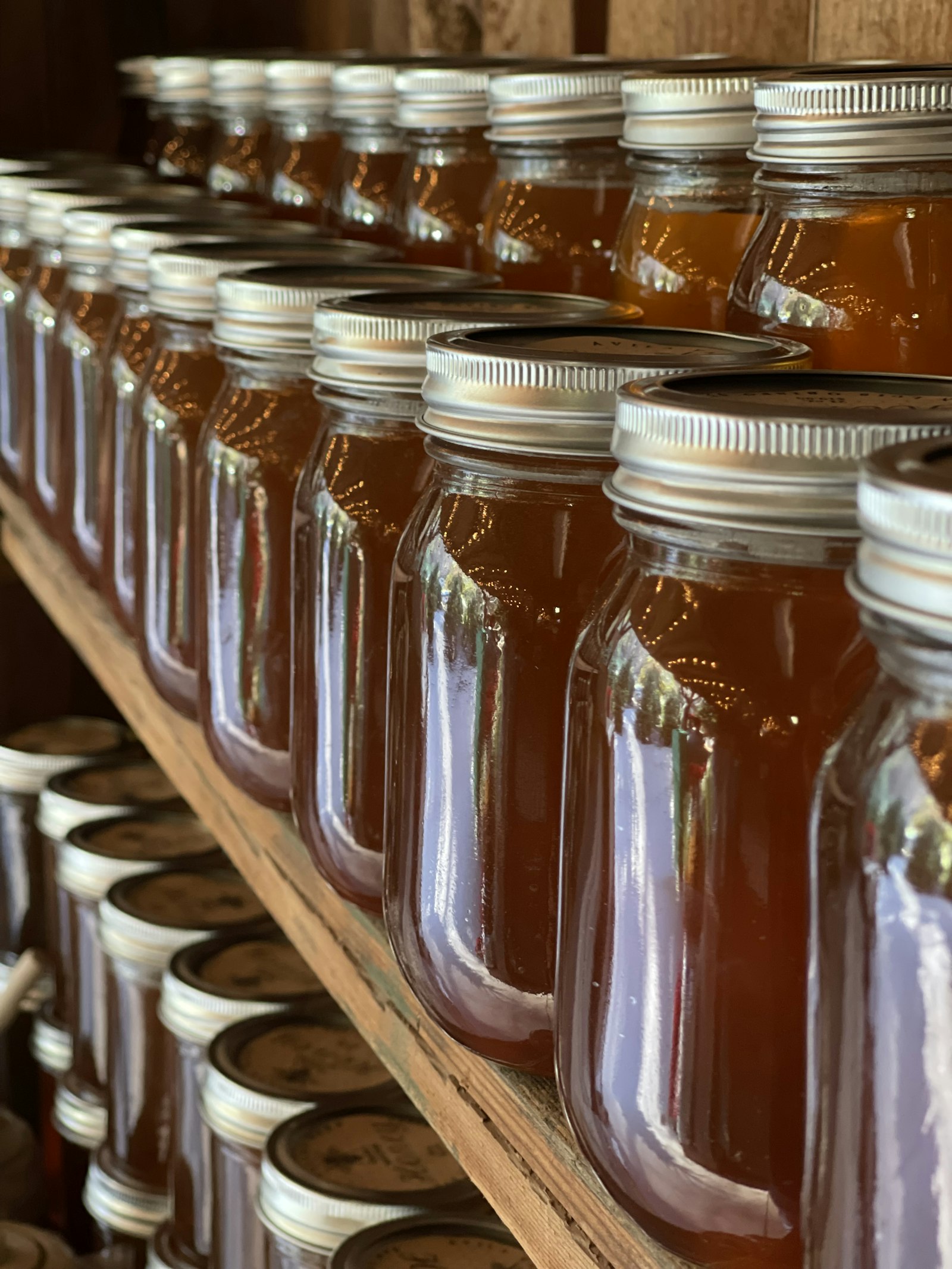
The wildflower honey sitting in your cabinet and the manuka honey in the specialty food aisle at a nice grocery store are both made by bees doing essentially the same job. The bee collects nectar, enzymes transform the sugars, water evaporates, and you get honey. The process is almost identical. The product is completely different.
What separates one jar from another isn't the bee. It's the flower.
Honey is the concentrated, enzymatically transformed essence of a plant's nectar. When bees forage from a single dominant floral source, the resulting honey carries the chemical fingerprint of that plant with astonishing fidelity. The sugar ratios differ. The mineral content shifts. The color, viscosity, crystallization rate, even the antimicrobial properties - all of it changes based on what the bees were visiting. This is why honey actually has terroir in a way that most foods don't.
Monofloral vs. Multifloral
The basic split in honey classification is monofloral - from a single dominant plant source - versus multifloral, or wildflower honey, which is what you get when bees forage across a diverse landscape. Neither is inherently better, but they're fundamentally different products with different characteristics.
Monofloral honeys require that at least 45 to 60 percent of the pollen in the honey come from one plant species, depending on which country's standards you're using. For strongly characterful plants, that threshold is more than enough to produce something unmistakably itself.
The Apiary Project tracks honey bee health data so you don't have to.
Explore the Data Hub →Clover Honey
Clover honey is the baseline. It accounts for the majority of honey produced in the United States - mostly from white clover (Trifolium repens) and sweet clover (Melilotus officinalis) - and it's the standard against which most commercial honey is implicitly measured. Light amber in color, mild in flavor, high in fructose relative to glucose, which means it resists crystallization longer than most honeys.
The mildness is a feature, not a flaw. It's the honey that doesn't compete with other flavors, which is exactly what commercial baking applications require. It's also the variety that's been most successfully imitated by blended and adulterated products, because there's relatively little to distinguish from. The mild is easier to fake.
Buckwheat Honey
Buckwheat honey is the opposite of clover. Dark amber to almost black, intensely flavored, with a molasses-like robustness that surprises people expecting something gentle. The darker color comes from higher mineral and polyphenol content - buckwheat nectar is richer in these compounds than most other floral sources.
It's produced primarily in the northeastern United States and parts of the upper Midwest, wherever buckwheat (Fagopyrum esculentum) is cultivated. The crop itself has declined significantly over the last century as corn and soybeans took over agricultural land, and with it, buckwheat honey has become increasingly hard to find from domestic producers.
Tupelo Honey
Tupelo honey comes from white tupelo (Nyssa ogeche), a tree that grows in a narrow band of river swamps in the Florida Panhandle and adjacent Georgia. The harvest window is approximately two to three weeks in late April and early May, when the trees bloom. After that, the season is over.
The chemistry is unusual. Tupelo honey has one of the highest fructose-to-glucose ratios of any commercially available honey - around 1.50, compared to clover at approximately 1.10. This fructose dominance means the honey essentially never crystallizes under normal storage conditions. It also has a distinctive greenish amber tint and a mild, almost fruity flavor that long-time honey enthusiasts describe as unmistakably itself.
The limited geography, narrow season, and specific tree species make authentic tupelo honey genuinely scarce. There's a well-documented history of fraud in the tupelo market, with blended or misrepresented products sold as pure tupelo. The economic dynamics of premium local honey make high-value monofloral varieties particularly attractive to adulterate.
Manuka Honey
Manuka honey comes from the Leptospermum scoparium shrub, native to New Zealand and parts of southeast Australia. It is the most studied and most expensively marketed honey in the world, primarily because of its elevated methylglyoxal (MGO) content - a compound responsible for antimicrobial activity that survives in the honey rather than breaking down as it does in most other varieties.
The strength of this activity is measured by the Unique Manuka Factor (UMF) or MGO rating systems, and has spawned a major certification industry in New Zealand. Genuine high-UMF manuka honey is genuinely scarce. The amount of manuka honey sold worldwide has been estimated at several times what the actual New Zealand harvest could possibly produce, suggesting significant levels of mislabeling or dilution in the global market.
This doesn't mean all labeled manuka is fake. It means the market has specific verification challenges.
Acacia Honey
Acacia honey (from Robinia pseudoacacia, black locust - not technically an acacia but marketed as one) is known primarily for two things: its extremely pale, almost water-white color, and the fact that it almost never crystallizes. Its fructose-to-glucose ratio is high, its water content sits at the upper edge of acceptable limits, and the result is a liquid that stays liquid for years under normal storage.
This makes it popular in markets where consumers strongly prefer liquid honey - and it has made it one of the most counterfeited honey varieties in Europe, where imported blended honey has repeatedly been fraudulently labeled as high-value acacia honey.
Orange Blossom Honey
Orange blossom honey is produced across Florida, California, Texas, and parts of Arizona, wherever citrus orchards operate at scale. It's a light, mildly floral honey with a subtly citrusy finish that makes it immediately identifiable to people who've had a good example of it. The color ranges from light amber to almost water-white depending on the exact citrus species and blend.
It's also one of the more reliably available specialty honeys in US markets, largely because the citrus industry is substantial enough to support significant apiary operations - and because commercial pollination contracts move large numbers of hives through citrus-growing regions every spring.
Wildflower and Raw Honey
Wildflower honey is defined by what it isn't: monofloral. It reflects the diverse forage landscape around the hive during the production season, which means it varies substantially by region and time of year. A spring wildflower honey from the mid-Atlantic will be chemically distinct from a summer wildflower honey from the high desert Southwest, even if both labels just say "wildflower."
Raw honey - a separate classification that cuts across floral varieties - is honey that hasn't been subjected to significant heat treatment or ultrafiltration. It retains pollen grains (useful for geographic verification), natural enzymes, and the crystallization behavior inherent to that floral source. Most commercially processed honey is heated to prevent crystallization and filtered to extend shelf life, which alters both the texture and some of the chemistry.
A honey can be raw or processed independent of whether it's monofloral or multifloral. The two attributes describe different things entirely. What ultimately determines honey quality comes down to a combination of floral source, water content, processing decisions, and storage - in roughly that order.
The Terroir Argument
Wine people have made terroir - the idea that a place expresses itself through what grows there - a central part of their culture. Honey is actually a stronger candidate for terroir than wine in some ways. Wine involves a cultivated grape variety that changes relatively slowly. Honey is the direct chemical expression of whatever's blooming within flight range of the hive during a specific season.
The foraging radius of a honeybee is roughly two to three miles. Everything within that radius that's blooming when the bees are actively foraging ends up in the jar. This is why producers who emphasize single-origin, local honey are making a claim that has real chemical backing. The honey from a particular apiary in a particular landscape during a particular season is genuinely that place at that time, captured and preserved by the bees. It's not marketing language. It's just chemistry.