Varroa Treatment Timeline (When Beekeepers Treat and What Delays Cost)
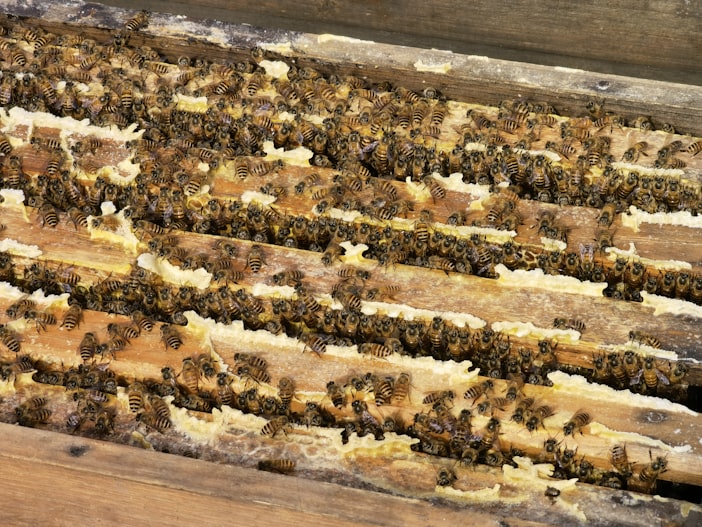
A colony that starts April with 50 mites has roughly 500 by June. By August it has 2,000. By October it has 8,000 to 10,000. At that point, every emerging bee is parasitized. Deformed wing virus, transmitted by the mites, is rampant. The colony is dead before Christmas. And treating in October doesn't save it - because the winter bees were already damaged when they were developing, and damaged winter bees can't hold a thermal cluster through January.
The mite has a schedule. The reproductive math is relentless: each Varroa destructor reproduction cycle takes roughly 12 days, matching the capped brood period for worker bees. A single foundress mite produces approximately 1.5 viable female offspring per cycle. With overlapping generations and continuous brood rearing from spring through fall, the population roughly doubles every 3 to 4 weeks during the brood season.
Understanding the schedule is, for most beekeepers in 2026, the difference between keeping bees and buying bees again next spring.
The Threshold Question
Every colony has mites. The question isn't whether - it's how many. The answer determines the management response and, ultimately, the colony's survival.
The standard monitoring method is the alcohol wash: a sample of approximately 300 bees taken from the brood nest, washed in alcohol to dislodge mites, counted. The result is expressed as mites per hundred bees. Below 1 percent (fewer than 3 mites per 300 bees) means acceptable condition - no immediate treatment needed, but monitoring should continue monthly. At 1 to 3 percent, treatment is recommended, particularly in late summer when mite populations are climbing toward their annual peak. Above 3 percent means treat immediately.
Colonies above 3 percent in late summer have significantly reduced overwinter survival - studies from multiple state extension programs show roughly 50 percent lower survival rates compared to colonies entering winter below 2 percent. Above 5 percent, the colony is already experiencing significant damage: shortened bee lifespans, reduced brood viability, elevated virus levels. Treatment may still save the colony, but the damage to the current generation of bees is done. The colony needs both treatment and time to rebuild before winter.
These thresholds come from longitudinal studies tracking colony survival against fall mite levels at the University of Minnesota, the USDA Beltsville lab, and state extension programs across the US. The 3-percent figure consistently appears as the inflection point - the level above which winter survival drops sharply.
The Apiary Project has free tools for beekeepers - calculators, schedulers, and seasonal guides.
Browse the Tools →The Calendar
Varroa management follows the biological calendar of the colony, not the beekeeper's convenience.
In spring (March through May), mite populations are at their annual low. The colony overwintered with a small mite load, reduced by the broodless period in late fall and winter. As the colony ramps up brood production, the mites begin reproducing in the expanding brood nest. Most beekeepers don't treat in spring unless fall treatment failed and mite levels are already elevated.
In early summer (June through mid-July), mite populations are growing but typically haven't reached damaging levels yet. This is honey production season, and most operations avoid treating during the honey flow to prevent contamination of the crop. Monitoring is critical - a mite wash in late June or early July establishes the baseline for treatment timing.
Late summer (late July through August) is the critical window. The honey harvest is complete or nearly so. The colony is shifting from maximum production to winter preparation. The bees raised in August and September are the winter bees - the long-lived generation (four to six months instead of six weeks) that will carry the colony through winter. These bees are physiologically different from summer bees: larger fat bodies, higher vitellogenin levels, greater disease resistance.
If mites parasitize the pupae that will become winter bees, those bees emerge with compromised fat bodies, elevated virus loads, and reduced lifespans. They're winter bees that can't do the job of winter bees. A colony that raises its winter generation under heavy mite load enters November with bees that are already damaged, even if a late October treatment killed the mites afterward. The damage was done inside the sealed cells.
A follow-up in fall (September through October) is a second monitoring check. If the late-summer treatment was effective, mite levels should be below 1 percent. If mites have rebounded - because neighboring collapsing colonies are redistributing mites through robbing and drifting - a second treatment may be necessary.
Winter (November through February) in colder climates brings a broodless period of several weeks to months. All mites are phoretic (riding on adult bees) rather than sheltering in brood cells. This broodless window opens an opportunity for oxalic acid treatment - highly effective against phoretic mites, reaching 90 to 95 percent reduction in a single application during a true broodless period. This gives the colony a clean start for spring.
The Treatments
Beekeepers have several tools, each with specific timing requirements.
Formic acid (MAQS, Formic Pro) is an organic acid that kills mites on adult bees and - unlike most other treatments - penetrates capped brood cells to kill mites inside. Effective at 50 to 85 degrees Fahrenheit over a 7-day treatment period. The brood penetration makes it useful during the late-summer window when brood is present. Downside: it can cause queen loss in roughly 2 to 5 percent of applications, particularly at high temperatures.
Oxalic acid (Api-Bioxal) kills phoretic mites on contact but doesn't penetrate capped brood - which makes it most effective during broodless periods. Vaporization (using a heated wand to sublimate the crystals into gas that fills the hive) is the most common application method in 2026. A single winter application can remove 90 to 95 percent of the mite population. Multiple applications at 5 to 7-day intervals can be used during brood-rearing periods to catch mites as they emerge from cells.
Thymol (Apiguard, ApiLife VAR) is an essential oil derived from thyme, effective at 60 to 100 degrees Fahrenheit over 2 to 4 weeks. It doesn't penetrate capped brood effectively, making it best suited for late summer or early fall when brood is declining. Well-tolerated by bees at recommended doses.
Amitraz (Apivar strips) is the most widely used treatment in US commercial beekeeping - synthetic miticide strips placed in the brood nest for 42 to 56 days, killing mites as bees contact the strips. Highly effective, typically producing 95-plus percent reduction, but resistance has been documented in some mite populations and is expected to spread based on historical patterns with earlier synthetic treatments. Amitraz cannot be used during honey production.
The older synthetic miticides - fluvalinate (Apistan) and coumaphos (CheckMite+) - have widespread resistance across US mite populations and are rarely effective as standalone treatments in 2026, though some beekeepers still use them in rotation.
The Resistance Problem
Varroa mites develop resistance to synthetic miticides. This has happened repeatedly. Fluvalinate was introduced in the late 1980s and was highly effective for about a decade before resistance became widespread. Coumaphos replaced it; resistance to coumaphos emerged within 8 years. Amitraz is currently the workhorse synthetic. The beekeeping community anticipates eventual widespread amitraz resistance based on the historical pattern.
Organic acids and essential oils (formic acid, oxalic acid, thymol) are considered resistance-proof or near it, because their mechanisms of action are broad-spectrum - pH destruction and respiratory disruption - rather than targeting specific biological pathways. Mites are unlikely to evolve resistance to being dissolved in acid or suffocated in thyme vapor. This is one of the reasons organic treatments are increasingly popular despite being somewhat less convenient than synthetic strip treatments.
The IPM Framework
Integrated Pest Management, borrowed from agricultural pest control and applied to Varroa, combines monitoring, threshold-based response, cultural practices, and chemical treatments into a system that aims to keep mite levels below damaging thresholds rather than attempting to eliminate mites entirely (which isn't possible in managed apiaries within flight range of other colonies).
The core of it: monitor with an alcohol wash every 4 to 6 weeks during the active season, and treat when monitoring shows mite levels approaching 3 percent rather than on a prophylactic calendar schedule. This reduces unnecessary chemical exposure, slows resistance development, and matches treatment timing to actual need.
Cultural controls add value: drone comb trapping places a frame of drone-sized comb in the brood nest, the colony fills it with drone brood (which mites preferentially infest because the longer development period gives mite offspring more time to mature), and the beekeeper removes and freezes the frame periodically to kill the mites inside. This non-chemical method can remove 30 to 40 percent of the mite population per cycle and reduce the need for chemical treatments.
Rotating treatments between chemical classes - organic acids, essential oils, synthetic miticides - reduces selection pressure for resistance within any single class. And selecting for resistance genetically, breeding from colonies that show lower mite levels and higher hygienic behavior, is the long-term path. The chemical calendar buys time. The genetics solve the problem.
The August Rule
If there's a single sentence that captures the Varroa treatment calendar, it's this: treat after the honey harvest, before the winter bees.
In most of the United States, that means August. In the deep South, it might mean September. In northern climates with short seasons, it might mean late July. The date varies by region; the principle doesn't. The treatment must reduce mite levels before the colony raises the generation of bees that will carry it through winter.
A colony that enters winter with healthy, low-mite winter bees and a small residual mite population is positioned to survive until spring, when the cycle begins again. A colony that enters winter with parasitized winter bees - even if a late treatment killed the mites - enters with damaged bees that die prematurely, and the winter cluster shrinks below viable size by February.
The mite doesn't care about the beekeeper's schedule. It reproduces on a biological clock set by the bee's brood cycle. The beekeeper who synchronizes treatment to that biological clock - monitoring in June, treating in August, checking in October, cleaning up in December - runs an operation where colonies survive. The one who treats when it's convenient, or when the catalog arrives, or when the neighbor mentions it, runs an operation where the mites set the schedule and the colonies pay for it.
The mite has a calendar. The beekeeper needs one too. And August - hot, humid, post-harvest, pre-winter-bees August - is the month that determines whether the apiary sees April.