Why Honey Bee Colonies Split in Half (The Biology Behind Swarming)
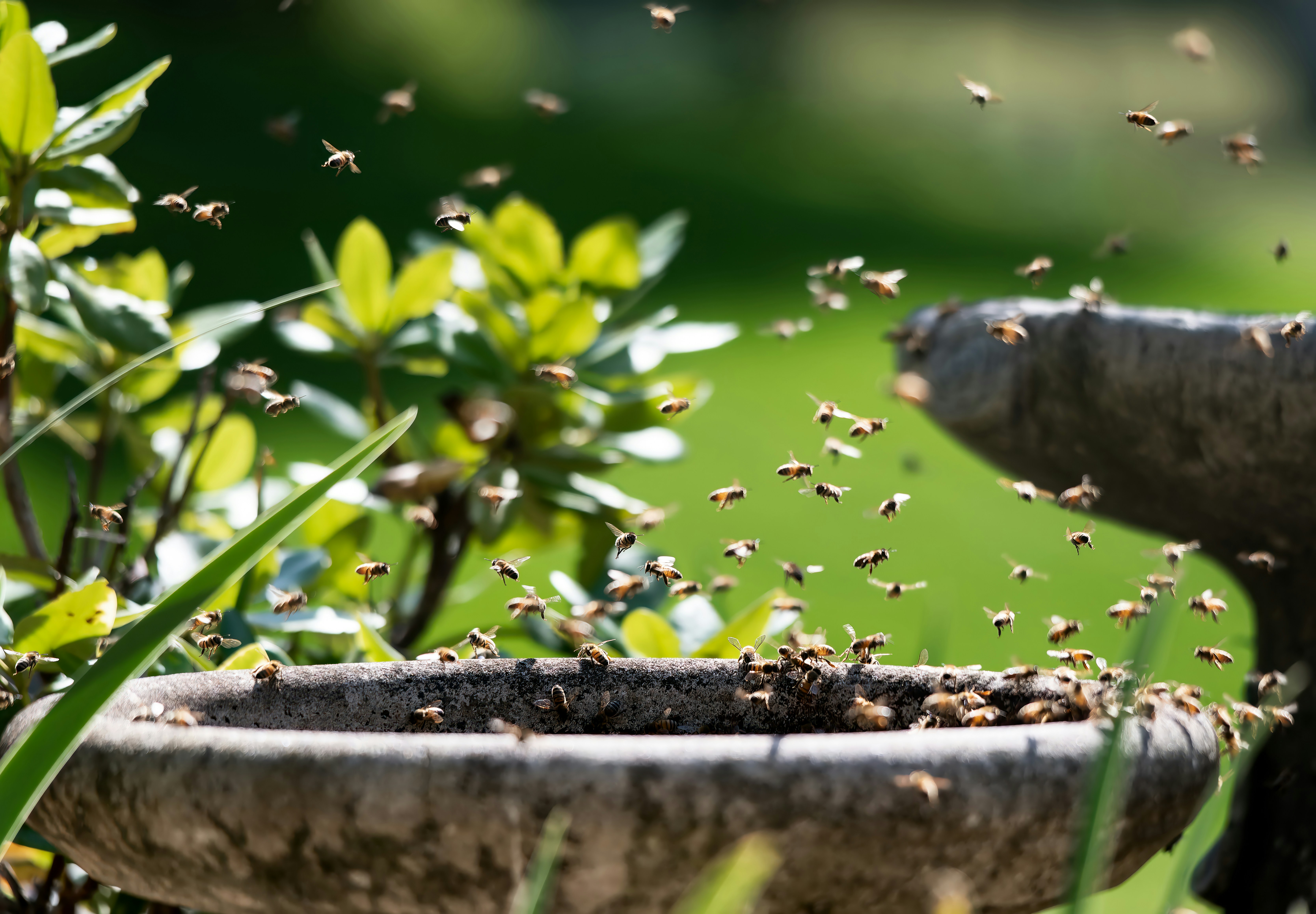
There's a moment in mid-spring - different dates in different latitudes, but the moment is the same everywhere - when a honey bee colony arrives at a decision that the beekeeper cannot prevent, can only delay, and has been trying to manage for roughly five millennia with results that range from partially successful to absolutely futile.
The colony is going to swarm.
What happens next is one of the most spectacular events in insect biology, one of the most frustrating events in beekeeping, and one of the least understood events in the public imagination (where swarming is associated with aggression, when it is in fact the opposite - a swarm of bees is the gentlest configuration of honey bees that exists, because they have no brood or food stores to defend and their honey stomachs are full, which makes stinging physically awkward).
Swarming is reproduction. Not the reproduction of individual bees - that happens inside the hive, constantly, with the queen laying 1,500 to 2,000 eggs per day at peak season. Swarming is the reproduction of the colony itself. The superorganism divides. One becomes two. It's cell division at the scale of 50,000 individuals.
The Decision
The triggers for swarming are multiple, interconnected, and not fully understood - which is why beekeepers, despite 5,000 years of practice, still can't reliably prevent it.
Congestion. When the colony's population exceeds the hive's capacity - when every frame is covered with bees, every cell is filled with brood or stores, and the workers are literally standing on each other - the physical crowding triggers swarming behavior. The mechanism is partly pheromonal: the queen's pheromone, distributed through the colony by trophallaxis (mouth-to-mouth food sharing) and body contact, becomes diluted when the colony is so large that the pheromone can't reach all workers. Workers at the periphery of the nest, receiving insufficient queen pheromone, begin building queen cells - the elongated, peanut-shaped wax cells in which new queens are reared.
Season. Swarming is overwhelmingly a spring event - occurring when colony populations are peaking, forage is abundant, and the remaining warm season provides enough time for both the swarm and the parent colony to build up stores for winter. In the northern US, the swarm season runs roughly from April through June. In the South, it can start as early as February.
Genetics. Some genetic lines swarm more readily than others. Africanized honey bee genetics produce colonies with strong swarming tendencies - smaller colony sizes at which swarming is triggered, more frequent swarm attempts per season. European genetic lines vary in swarming tendency, and commercial queen breeders have selected against strong swarming behavior for decades, with moderate success.
Age of queen. Colonies headed by young queens (first-year) swarm less frequently than colonies headed by older queens. The reason appears to be pheromonal: young queens produce higher concentrations of queen mandibular pheromone (QMP), which suppresses queen cell construction. As the queen ages, her pheromone output declines relative to the colony's growing population.
The combination of these factors means that swarming is most likely in a strong, crowded colony with an older queen in a year with an early, abundant nectar flow. Which describes, unfortunately, exactly the kind of colony that a beekeeper wants to have producing honey.
The Apiary Project has free tools for beekeepers - calculators, schedulers, and seasonal guides.
Browse the Tools →The Preparation
The colony doesn't swarm spontaneously. The preparation takes 1 to 2 weeks and follows a predictable sequence:
Queen cells are built. Workers construct 5 to 20 queen cells, typically along the bottom edges of frames or in areas where the comb is irregular. The queen lays fertilized eggs in these cells. The larvae are fed royal jelly exclusively - the dietary difference that transforms a worker-destined larva into a queen.
The queen is slimmed. In the days before swarming, workers reduce the queen's feeding. Her abdomen, normally distended with developing eggs, contracts. Her flight muscles, which have atrophied from months of exclusive egg-laying, begin to regenerate. She needs to fly. She hasn't flown since her mating flight, weeks or months ago. She needs to be light enough to get airborne.
Scout bees begin searching. Before the swarm even leaves the hive, scout bees begin investigating potential nest sites - tree cavities, wall voids, chimneys, and other enclosed spaces with appropriate volume (approximately 40 liters, per Thomas Seeley's research). The scouts will continue their search and evaluation after the swarm departs.
Foraging decreases. In the days immediately before swarming, the colony's foraging activity drops. Workers that would normally be collecting nectar and pollen remain in the hive, gorging on honey stores. A swarm bee carries a full honey stomach - roughly 40 milligrams of honey - which provides fuel for the journey and initial wax construction at the new nest site.
The Event
On a warm, calm morning (swarms rarely launch in rain, cold, or high wind), the colony erupts. Ten to twenty thousand bees pour out of the hive entrance in a chaos of flight that, seen from a distance, looks like smoke. The queen runs out of the entrance and takes flight - often clumsily, because she's not an experienced flier.
The swarm coalesces on a nearby structure - a tree branch, a fence post, the eave of a building - typically within 100 meters of the parent hive. The bees form a cluster: a dense, hanging mass of bees with the queen somewhere in the center, maintained at a stable temperature by the metabolic heat of the clustered workers. The cluster can be the size of a football or a basketball, depending on the number of bees.
This temporary cluster is not the new home. It's a staging area. The swarm will remain here for hours to days while scout bees evaluate potential nest sites and the colony makes a collective decision about where to go.
The House Hunt
Thomas Seeley's research on swarm decision-making, published in his book Honeybee Democracy and documented in decades of field studies, revealed that the scout bees' selection of a new nest site is a remarkably sophisticated collective decision process.
Approximately 300 to 500 scout bees (roughly 3 to 5 percent of the swarm) leave the cluster and evaluate potential nest sites. Each scout inspects a candidate site - measuring its volume by walking the interior walls, assessing the entrance size and orientation, evaluating the height, checking for moisture and ventilation. She then returns to the cluster and, if the site meets her criteria, performs a waggle dance on the cluster's surface, advertising the site's location and quality.
The vigor and duration of the dance encode the scout's assessment of the site's quality. A superior site elicits a vigorous, prolonged dance. A mediocre site elicits a brief, unenthusiastic dance. Other scouts follow these dances to the advertised sites, inspect them independently, and return to dance their own assessments. A positive feedback loop develops: better sites recruit more inspectors, who return to dance more enthusiastically, which recruits still more inspectors.
The decision is reached when a quorum of scouts converges on a single site - when roughly 80 percent of active scouts are dancing for the same location. This quorum detection mechanism ensures that the swarm doesn't split between two mediocre options but instead waits until consensus emerges on the best available choice.
The process takes hours to days, depending on the availability and quality of sites. Once the quorum is reached, the scouts generate a specific signal - high-frequency buzzing runs through the cluster - that triggers the swarm's departure. All 10,000 to 20,000 bees take flight simultaneously. The scouts navigate the swarm to the selected site, and the colony moves in.
The Parent Colony
The colony that the swarm left behind is not a defeated colony. It's the other product of the reproductive event. It retains the hive, the comb, the brood, the food stores, and approximately half the adult population. It also retains multiple developing queen cells.
The first virgin queen to emerge faces a choice: kill her sisters or risk being killed by them. Typically, the first queen out seeks the other queen cells and stings the developing queens through the cell walls. If two virgin queens emerge simultaneously, they fight - a combat that ends with one dead and one alive. The survivor is the colony's new queen.
After emerging and dispatching her rivals, the virgin queen undergoes a maturation period of 3 to 5 days, then leaves the hive on one or more mating flights, mates with 12 to 20 drones at a drone congregation area, returns to the hive, and begins laying fertilized eggs within 2 to 4 days of her final mating. The colony, now queenright with a new, young, well-mated queen, resumes normal operations.
The entire cycle - from the departure of the swarm to the new queen's first eggs - takes approximately 2 to 4 weeks. During this period, the parent colony has no laying queen, no new eggs, and no young larvae. The population declines (no new bees emerging) and the existing bees age. If the virgin queen fails to mate successfully - lost to predation during the mating flight, damaged by weather, unable to find a drone congregation area - the colony becomes hopelessly queenless and dies.
The Beekeeper's Dilemma
Swarming is reproduction. Preventing swarming is preventing reproduction. The beekeeper who wants productive colonies - colonies that channel their energy into honey production rather than reproduction - is working against one of the most fundamental biological imperatives in nature.
The tools available: providing ample space (adding supers before the colony is crowded), removing queen cells (which delays but doesn't prevent swarming if the underlying triggers persist), splitting the colony preemptively (dividing it before it divides itself), requeening with young queens (whose higher pheromone output suppresses queen cell construction), and managing the brood nest to reduce congestion.
None of these methods is 100 percent effective. A colony that has committed to swarming will swarm despite the beekeeper's interventions, sometimes within hours of having all visible queen cells removed. The swarm impulse, once fully initiated, runs deeper than individual queen cells - it's a colony-level reproductive state that involves hormonal, behavioral, and structural changes across thousands of individual bees simultaneously.
The beekeeper's dilemma is that the conditions that make swarming likely - a large, healthy, well-fed colony in good forage conditions with a strong queen - are exactly the conditions that make honey production likely. Managing one without triggering the other is the central skill challenge of productive beekeeping, and it's a challenge that 5,000 years of practice has made manageable but not solvable.
The bees swarm anyway. They always have. They were swarming before there were beekeepers, before there were hives, before there were humans. It's reproduction. It's not optional. The colony that doesn't swarm doesn't reproduce, and in evolutionary terms, a superorganism that doesn't reproduce is a dead end.
Every swarm trap nailed to a tree is a concession: the beekeeper acknowledging that the bees will do what they do, and the best available strategy is to catch them doing it.