Honey Bee vs. Bumblebee: Two Very Different Stories
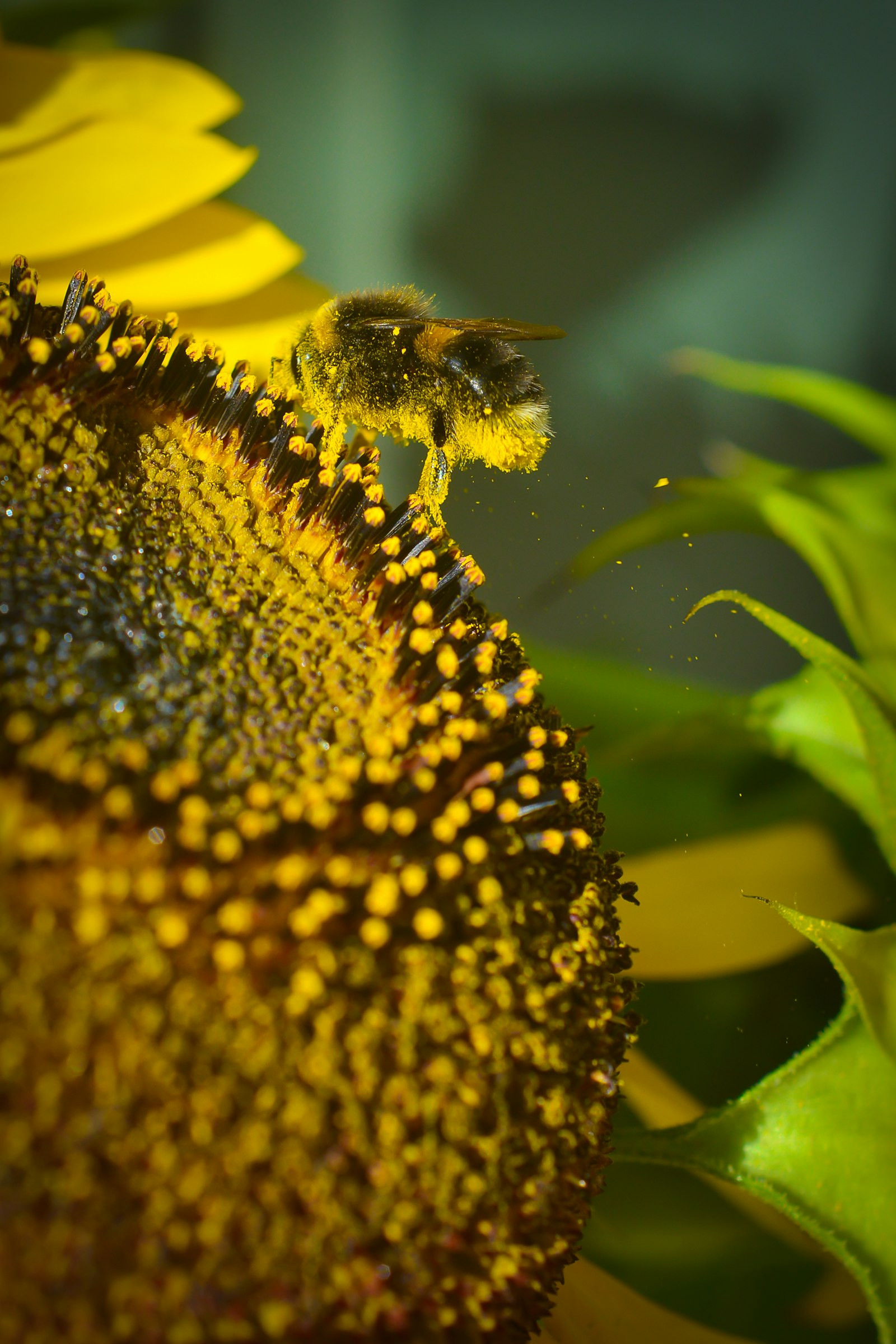
One of them arrived in North America on a European ship sometime in the early 1600s. The colonists brought it deliberately, the way you'd pack a useful tool, because it made honey and pollinated crops and they knew how to keep it.
The other one had been here for millions of years already.
Honey bees and bumblebees get grouped together in common speech the way people group dolphins and sharks: same general shape, same general habitat, apparently similar purpose. But the differences go much deeper than the fuzzy vs. sleek distinction that most people notice first. They have different colony structures, different winter strategies, different relationships with North American ecosystems, and very different conservation situations going forward.
Where They Actually Come From
Honey bees - Apis mellifera - are not native to North America. Full stop. They evolved in Europe and Africa, were domesticated by humans somewhere around 7,000 years ago, and didn't arrive here until colonization brought them over. Every honey bee in the US is descended from those imported populations, plus some escaped African honey bee genetics that arrived later from South America.
Bumblebees are a different story. There are roughly 250 species of bumblebee in the world, and about 46 species native to North America. They evolved here. Their biology is tuned to North American plants in ways that honey bees' isn't - some bumblebee species have tongue lengths precisely matched to specific native wildflowers that honey bees simply can't reach.
This distinction matters more than it sounds. When people worry about "saving the bees," they're often imagining honey bees, which are managed livestock maintained by beekeepers. The genuinely wild native pollinators - including most bumblebee species - are a separate concern entirely, and one that The Apiary Project covers in depth in our native pollinators section.
The Apiary Project makes the case for evidence-based pollinator conservation.
See How to Take Action →The Colony Structure Is Completely Different
A honey bee colony is a perennial operation. The same colony - rebuilt, restocked, but continuous - can persist for years. Peak population runs 50,000 to 80,000 workers through summer. They store enormous quantities of honey precisely because the colony needs to survive winter as a unit, maintaining a cluster temperature around 95°F through months of cold. The colony does not pause. It shrinks, conserves, and waits.
A bumblebee colony is annual. In spring, a single mated queen emerges from underground, finds a suitable nest site (an abandoned rodent burrow is a common choice), and starts a colony from scratch. She raises the first brood herself. By late summer, a successful bumblebee colony might reach 50 to 500 workers - an order of magnitude smaller than a honey bee colony at peak. In fall, new queens and males are produced. The males die. The old queen dies. The workers die. Only the new mated queens survive, hibernating underground until the following spring.
There is no honey to preserve a bumblebee winter population because there's no bumblebee winter population. They don't need it.
Buzz Pollination: The Thing Honey Bees Can't Do
Here's something that doesn't come up enough: bumblebees can sonicate flowers. They grab onto a bloom and vibrate their flight muscles at a frequency that dislodges pollen from anthers that don't release it otherwise - tomatoes, blueberries, peppers, eggplants. This is called buzz pollination, and honey bees physically cannot do it.
Commercial tomato growers used to introduce bumblebee colonies into greenhouses specifically for this reason, back when the only alternative was hand-pollinating with vibrating wands. The industry still uses bumblebees this way. It's one of the places where the "honey bees pollinate everything" story gets complicated by reality.
For open-pollinated crops and wildflowers that don't require sonication, honey bees are highly effective - their sheer numbers and the systematic way foragers work flowers makes them productive pollinators. But saying honey bees can replace bumblebees misses the point. They evolved for different things.
The Varroa Problem (Honey Bees Only)
Varroa destructor mites - the single biggest driver of managed honey bee losses globally - don't affect bumblebees. They're specific to Apis honey bees, reproducing in capped brood cells in a way that's tied to honey bee colony biology.
This is relevant because the story of honey bee health and the story of bumblebee health, while both involving pollinator decline, involve completely different mechanisms. Honey bee losses are heavily driven by varroa and the viruses it vectors - something The Apiary Project tracks extensively in our varroa crisis coverage. Bumblebee declines are driven by different factors: habitat loss, climate shifts, pesticide exposure on forage plants, and pathogens that spread partly through shared flowers.
The policy responses that address honey bee problems don't necessarily address bumblebee problems, and vice versa. Treating varroa doesn't restore bumblebee habitat. Planting wildflower strips helps bumblebees more than it helps managed honey bee operations where the beekeeper controls the forage situation.
What Decline Actually Looks Like for Each
Honey bee colony numbers fluctuate based on how many beekeepers are actively maintaining hives, what the economic conditions are, and how well the industry manages varroa. There's a commercial infrastructure around honey bees that doesn't exist for bumblebees - when managed colony numbers drop, beekeepers can breed and split colonies to recover. It's not painless, but there's a mechanism.
Bumblebee decline doesn't work that way. Some North American species - the rusty-patched bumblebee, the western bumblebee, the American bumblebee - have lost 90% or more of their historical range within a few decades. There's no commercial bumblebee keeping operation that restocks the wild population. When wild bumblebee populations contract, they contract.
Habitat loss is the most consistent factor across declining bumblebee species: the conversion of meadows, field margins, and native plant communities to row crops, lawn, or pavement removes the floral diversity that bumblebees - with their varied tongue lengths and seasonal timing - depend on more than honey bees do. A honey bee can work monoculture crops. Most bumblebees need a broader menu.
Telling Them Apart
The visual shorthand most people learn is correct but incomplete. Bumblebees are larger, rounder, and covered in dense hair - the look of something that prioritizes retaining warmth for early-season flying. Honey bees are slimmer, less hairy, more aerodynamic-looking.
But within each group there's significant variation. Bumblebee species range from the very large eastern bumblebee (Bombus impatiens, the one you'll most commonly encounter in the eastern US) to smaller species that are easy to mistake for something else. Honey bees also vary by genetics and lineage - Italian, Carniolan, Russian, and Africanized bees all look somewhat different and behave differently.
The easiest field distinction: if it's flying early in spring when temperatures are still in the 40s, it's almost certainly a bumblebee. Honey bees don't forage below around 55°F. The bumblebee queens emerge early because they have a whole colony to build from zero, and they don't have the luxury of waiting for warmer weather.
The Shared Name Is Mostly a Coincidence
They're both in the family Apidae. They both collect pollen and nectar. In casual language, both get called "bees" in a way that flattens what are actually very different evolutionary stories and ecological roles.
The organizations working on honey bee health and the organizations working on native bee conservation - many of them documented in The Pollinator Community - overlap but aren't the same. The American Bee Journal is not primarily focused on wild bumblebees. The Xerces Society for Invertebrate Conservation is not primarily focused on managed honey bee operations. Both conversations matter. They just aren't the same conversation.
Calling them both "bees" and leaving it there is a bit like calling wolves and golden retrievers both "dogs" and concluding their conservation situations must be similar. The name is technically accurate. The rest doesn't follow.