Discover 18 posts about bee science
Six weeks or five years - same species, same hive, completely different lifespans. The biology behind why is stranger than you'd expect.
Bees see ultraviolet light invisible to humans and are blind to red entirely. The flowers evolved their color patterns for bee eyes, not ours.
Bees learn odor-reward associations in a single trial. They pass cognitive tests that stumped pigeons. A brain with 960,000 neurons outperforms expectations.
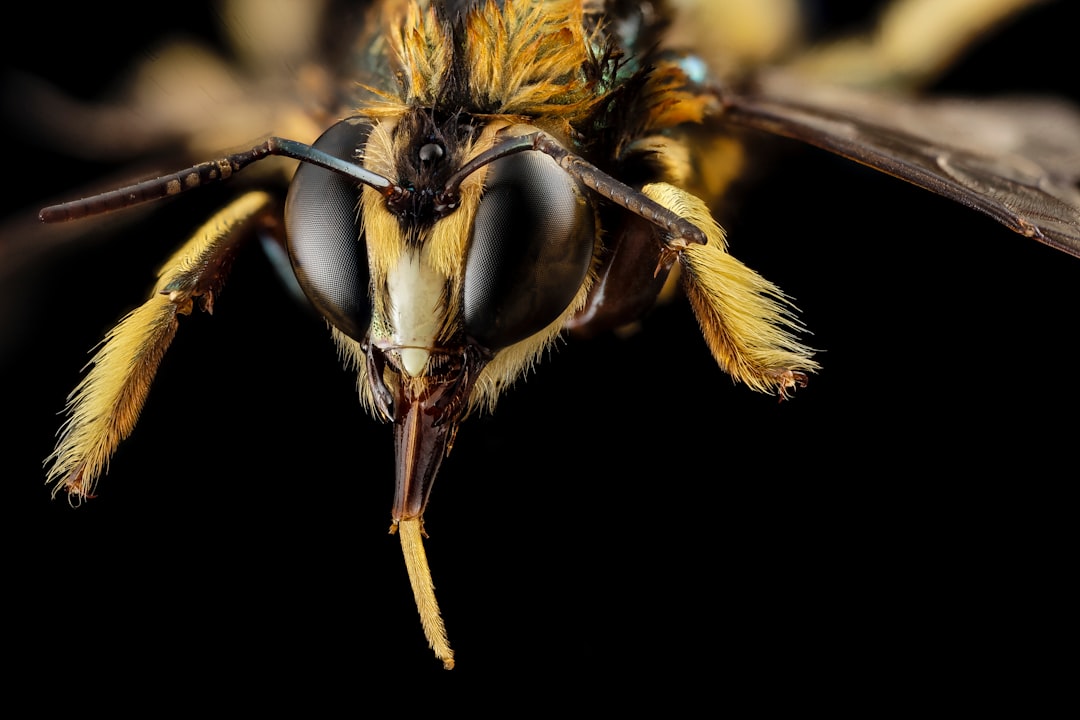
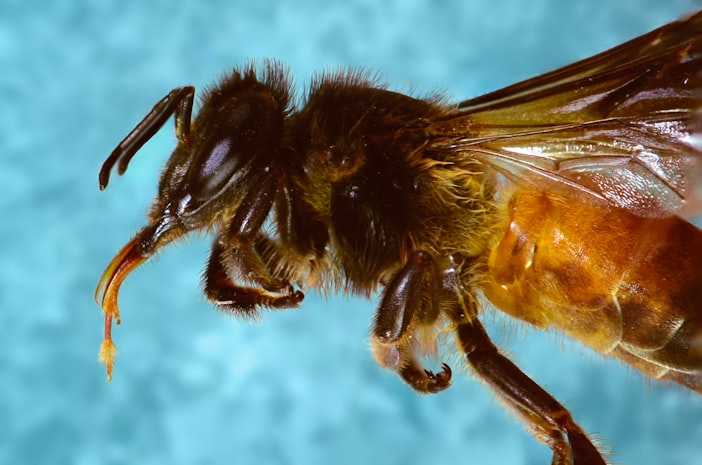
A bee's tongue laps at 200 cycles per second, using fluid dynamics that shift between dipping and suction based on nectar viscosity. Understood only since 2011.
For decades, physicists said bees flew in ways that shouldn't work. Then someone actually filmed a bee wing at 6,000 frames per second. The real answer is stranger than the myth.
A bee flies up to 8 km from the hive and returns to within centimeters of the entrance. The toolkit: a sun compass, landmarks, and possibly magnetic sensing.
The honey bee genome was sequenced in 2006. Fewer immunity genes than expected, more olfactory receptors than any insect studied. The implications were big.
Forager bees sleep 5-8 hours per night in consolidated bouts, with antennal drooping and muscle relaxation. Young nurse bees skip sleep - they work 24/7.
Melittin, the main compound in bee venom, destroys cell membranes on contact. Most people swell. About 2% develop systemic reactions. The immunology is wild.
Fanning workers, water carriers, heater bees, and 0.5-degree precision with no thermostat. A colony runs climate control that would impress an HVAC engineer.
Thousands of drones converge 10-40 meters above the same spot every afternoon. GPS confirms these areas persist for decades. Nobody knows how they find them.
Bees don't actually build hexagons. They build circles. Surface tension does the rest. Mathematicians spent 2,000 years trying to prove this shape was optimal before finally managing it in 1999.
Bees don't eat raw pollen - they ferment it. Lactic acid bacteria transform it into bee bread with 3x the nutritional availability. It takes about 3 weeks.
A summer worker bee burns through six careers in 42 days and dies with worn-out wings. Her winter sister hatches the same, does almost nothing for six months, then does it all anyway. Same bee, completely different biology.
A queen breeder grafts 12-hour-old larvae into wax cups with a toothpick-sized tool. The industry produces over a million queens a year, mostly in three states.
A swarm of 10,000 bees with no leader chooses the best nest site through a voting system. Scout bees dance for their preferred option until consensus emerges.
Eight core bacterial species colonize every honey bee gut. Disrupt them with antibiotics and the bee becomes vulnerable to pathogens it normally shrugs off.
Melittin destroys cell membranes. Apamin blocks potassium channels. The venom causing anaphylaxis is being tested against cancer, arthritis, and Parkinson's.